
Dosing Pump vs. Piston Pump for Chemical Injection: A Buyer’s Comparison
Dosing Pump vs. Piston Pump for Chemical Injection: A Buyer’s Comparison
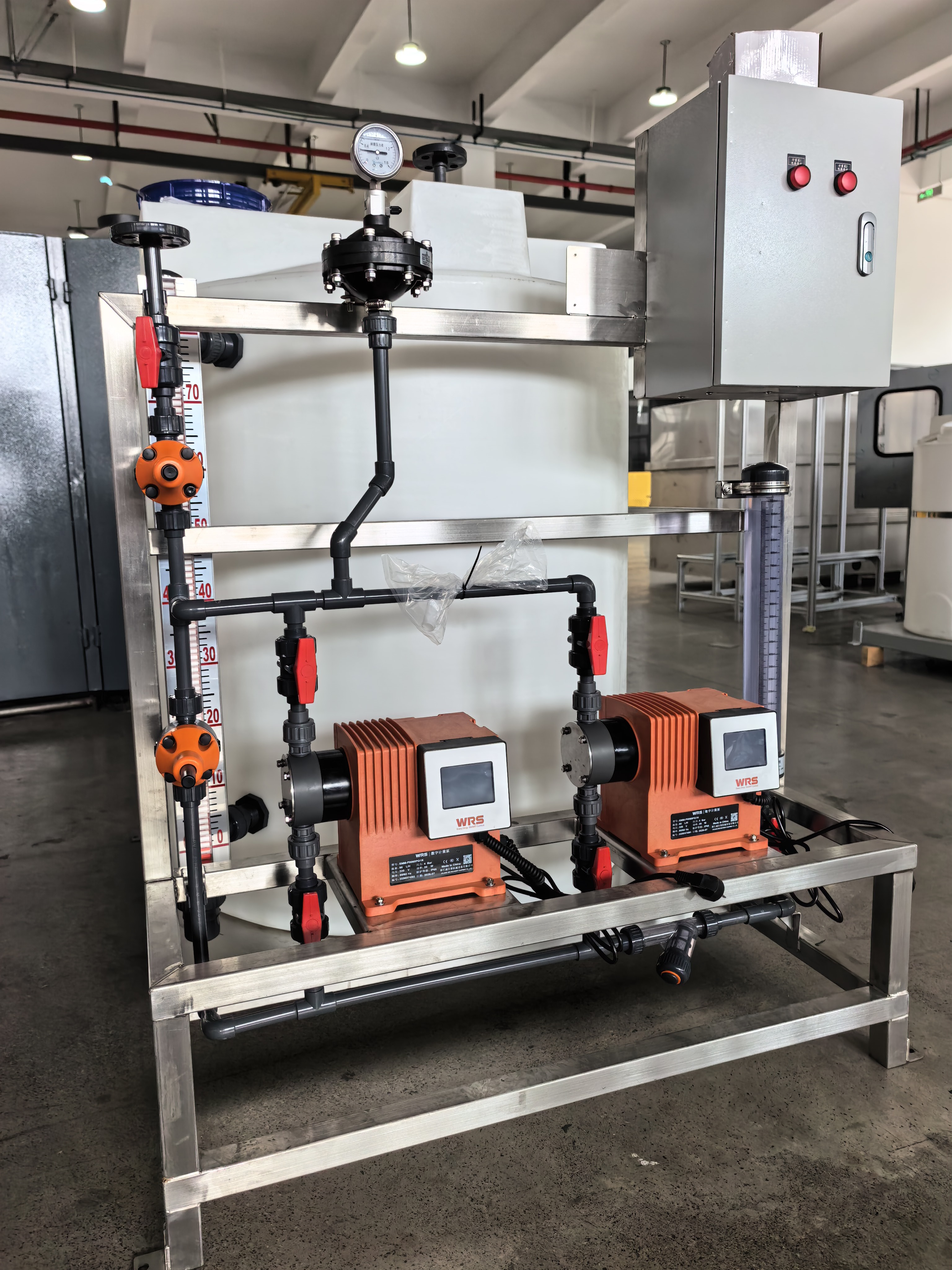
Chemical injection projects rarely fail because a buyer typed the wrong pump category into a request for quotation. They fail when the selected pump cannot handle the maximum flow, discharge pressure, chemical compatibility, motor specification or installation format required by the process. This guide compares documented WRS dosing pump and piston pump product facts. It is intended for buyers in the evaluation and execution phase who need a structured way to choose between pump lines for chemical injection tasks.
What This Comparison Covers
WRS PTE LTD is the brand under which the WRS metering and dosing equipment range is supplied. The manufacturing entity in the product documentation is ZHEJIANG WRS MACHINERY EQUIPMENT CO., LTD, founded in 2016, with a 15,000 square meter factory, around 120 employees, 15 engineers in the R&D team and an annual output of 30,000 units. The documented product list includes metering pumps, solenoid dosing pumps, diaphragm dosing pumps, piston dosing pumps, digital dosing pumps, chemical dosing systems, dosing pump check valves, dosing pump pulse dampeners and chemical injection pumps.
In this article, the term dosing pump refers to the documented WRS solenoid, digital and mechanical diaphragm models. The term piston pump refers to the WRS PM and PD piston dosing pump models. Both families are dosing-capable. The decision is not about whether a chemical can be injected; it is about which physical pump arrangement is more appropriate for the duty point.
The Buyer Problem in Chemical Injection
Chemical injection is not the same as general liquid transfer. The pump must move a chemical into a line, vessel or bath, often against the pressure already present in that system. The pump head also must survive contact with the chemical being dosed. A mismatch in material can lead to corrosion. A mismatch in pressure can make the pump unable to inject against line pressure. A mismatch in flow can force an operator to overfeed or underfeed the process.
WRS selection guidance for dosing pumps treats flow rate as the most important parameter. The starting point is the maximum flow rate needed at the site. After that, the choice is refined by pressure, pump head material and motor. This same logic is applied to the comparison below.
Industry Background: Why Both Types Appear in Chemical Injection
Market research helps explain why dosing pumps and piston pumps are both common in chemical injection projects. Grand View Research estimated the global dosing pump market at around USD 8.86 billion in 2024 and reported that diaphragm dosing pumps accounted for approximately 55.7 percent of market revenue in that year. HTF Market Intelligence estimated the global chemical injection pump market at USD 3.5 billion in 2024. These figures provide market context, but they do not replace a duty-based selection. The correct pump still depends on the buyer’s operating pressure, flow rate, chemical type and installation requirement.
Detailed Solution: Two WRS Pump Lines with Documented Product Facts
WRS Dosing Pump Line: Solenoid, Digital and Mechanical Diaphragm Models
The WRS dosing pump line is not a single model. It contains several pump designs with different flow classes, pressure ratings and control options.
For low-flow dosing, the solenoid models ML0008PR1C and EML0020PR1C are documented with a flow range of 1–20 L/H and a pressure range of 1–10 Bar. Both models use 220V/110V input and IP65 protection. Material options are PVC, PVDF and SS316, depending on the specified model. The ML model is listed with manual control; the EML model is listed with remote control. Documented applications include water treatment, candy manufacturing, coating and surface treatment, pure water and swimming pools.
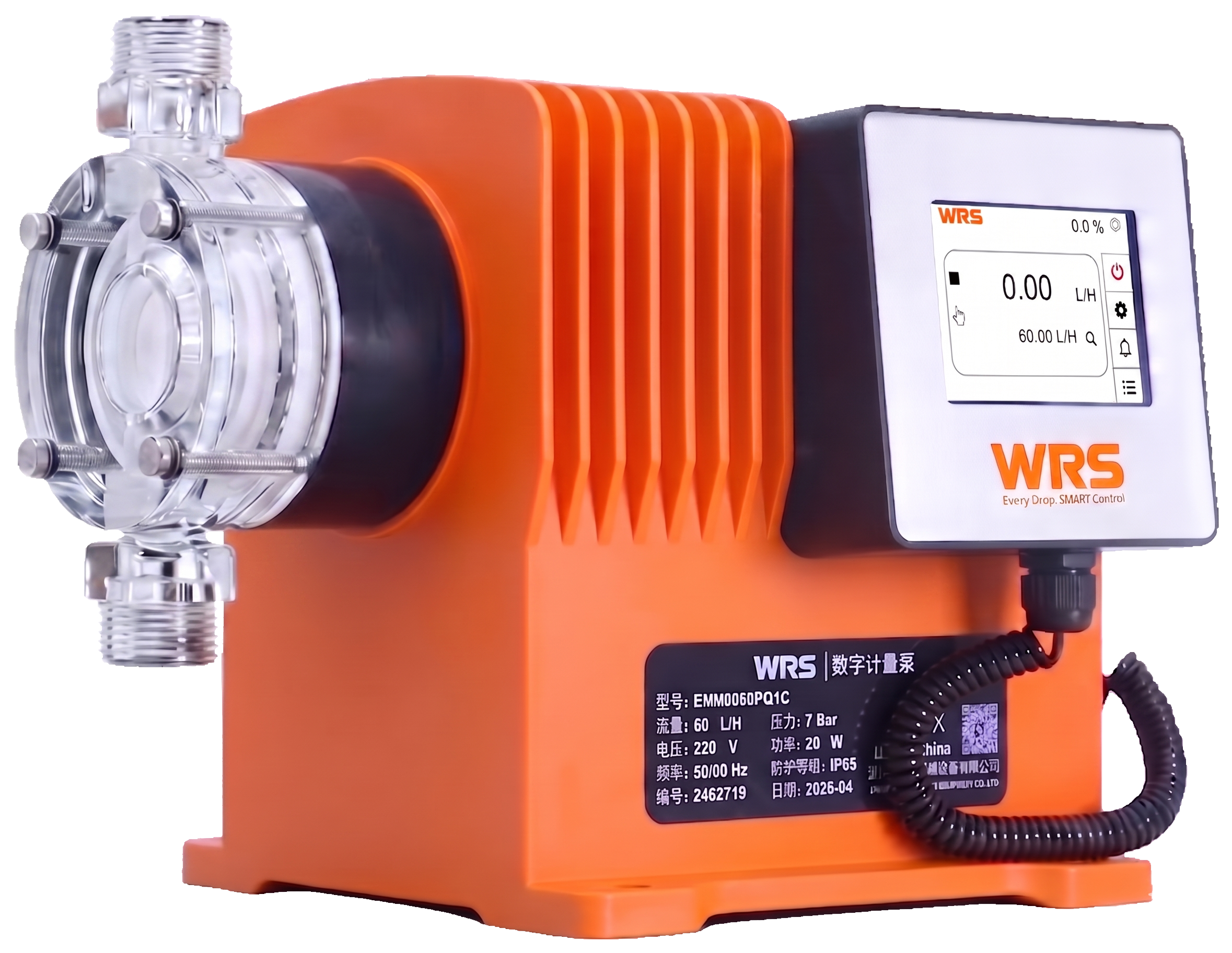
For medium and higher flow ranges, WRS digital dosing pumps provide additional options. The product records include EMML0060FP1E at 60 L/H and 4 Bar with Rc 1/2 inch thread; EMGP0200FP1C at 200 L/H and 4 Bar; and EMAP1000PQ1C at 1000 L/H and 4 Bar with DN25 socket connection. These digital models are documented with IP65 protection. Pump head materials are model-specific and include PVC, PVDF and SS316 or SS316L. The 1000 L/H digital model is documented with PVC and PVDF material options. Documented end-use industries for this digital group include water treatment, semiconductor, food and beverage, battery production, paper and pulp, and new energy.
WRS also lists mechanical diaphragm dosing pump models in the MA/MG/MB series. These models are intended for more demanding process and wastewater chemical dosing duties. The documented pressure range for the mechanical diaphragm group is 3–10 Bar. Pump head material options include PVC, PVDF and SS316. Certain mechanical diaphragm models can be supplied with frequency and explosion-proof motors, according to the product data. Documented industries for the MA/MG/MB mechanical diaphragm range include wastewater treatment, chemical industry, coating and surface treatment, mining process and foundry industry.
Material selection is a central part of the dosing pump decision. For highly corrosive liquids, WRS material guidance recommends a PVDF pump head material. This is a documented recommendation and should be applied before finalizing a model.
WRS Piston Pump Line: PM and PD Piston Dosing Pumps
The WRS PM and PD piston pumps are described in the product data as piston dosing pumps. Two documented model codes are PM060SS1PFN11 and PD105SS1PFN11. Both are listed at 600 L/H and 8 Bar. Both use SS316 material.
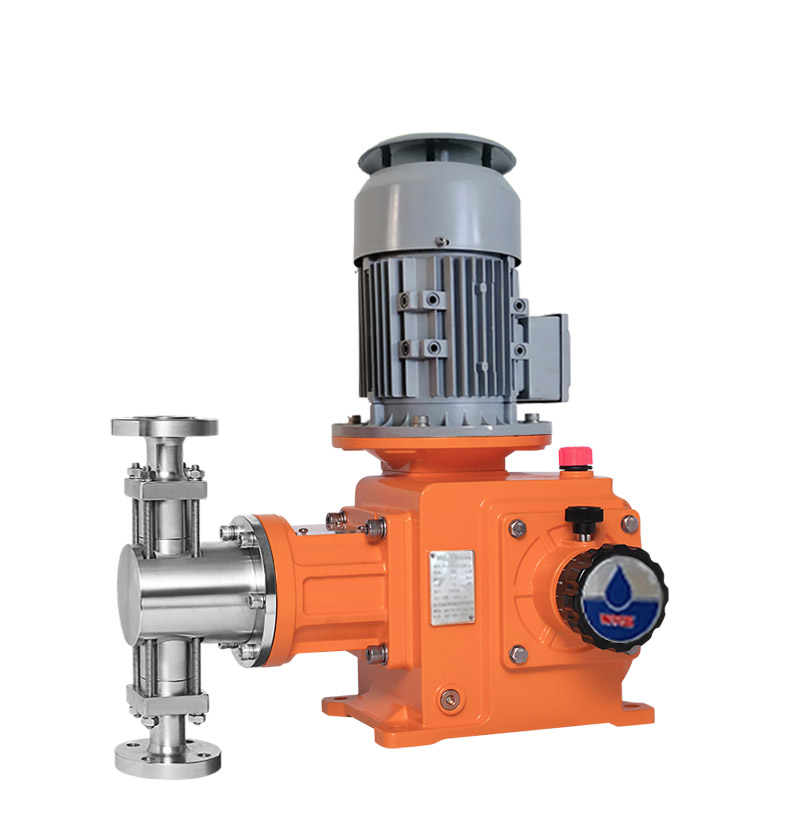
The PM060SS1PFN11 model is documented with a DN25 flange connection and a 0.75 kW motor. The PD105SS1PFN11 model is documented with a DN50 flange connection and a 4.0 kW motor. Both piston pump records state that the pumps are available with frequency and explosion-proof motors.
The documented application list for the PM and PD piston pump models includes oil and gas industry, hydrogen energy, electric power, chemical industry, pharmacy, new material industry and new energy. The SS316 material specification is relevant for chemical injection duties where the process engineer wants a stainless steel liquid end and flange-connected piping.
Decision Criteria to Use Before Buying
Buyers often ask for a simple answer: dosing pump or piston pump. The useful answer depends on five documented decision criteria.
Flow rate. WRS selection guidance starts with maximum flow at the site. In the documented WRS product records, the solenoid and digital pump examples cover 1–20 L/H, 60 L/H, 200 L/H and 1000 L/H. The PM and PD piston pumps are rated at 600 L/H. A buyer should calculate the maximum process demand and then look at the specific model line that can meet that number with margin, rather than choosing a category first.
Discharge pressure. The pressure rating of the pump must be higher than the pressure at the chemical injection point. The WRS solenoid pump line is documented at 1–10 Bar. The digital pump examples above are documented at 4 Bar. The mechanical diaphragm MA/MG/MB series is documented at 3–10 Bar. The PM and PD piston pumps are documented at 8 Bar. If the injection point is close to 8 Bar, the piston pump line should be checked carefully.
Pump head material and chemical compatibility. WRS dosing pump material options include PVC, PVDF and SS316, with SS316L also appearing on certain digital models. WRS recommends PVDF pump head material for highly corrosive media. The PM and PD piston pumps are documented only with SS316 material. A chemical compatibility review must be made against the actual liquid before a buyer assumes that an SS316 piston pump is the right answer.
Accuracy and control expectations. No generic accuracy percentage is published in the WRS product facts used for this article. Instead, the documented control choices include manual control, remote control, digital pump models and frequency motor availability. For a stated accuracy target, the practical step is to test the pump at the required flow and pressure point. WRS quality-control documentation includes 100 percent testing. Buyers should use a pre-shipment test to verify the actual pump rather than assume an accuracy value from the category name.
Maintenance and support. The WRS troubleshooting record for dosing pumps states that if discharge flow drops or becomes unstable, the inlet or outlet may be blocked. The documented response is to check the strainer, tubing and valves, and to clean or replace parts as needed. WRS after-sales documentation includes remote support and factory local service in more than 10 countries. Maintenance planning should include spare materials such as tubing, valves and pump head components.
Step-by-Step Breakdown for Chemical Injection Buyers
- Define the chemical and its corrosiveness. If the liquid is highly corrosive, add PVDF pump head material to the selection criteria.
- Define the maximum flow rate required at the site. Compare that number with the documented flow ratings of the dosing pump and piston pump models.
- Define the minimum discharge pressure at the injection point. Compare it with the documented pressure ratings of the pump line.
- Shortlist the pump architecture: solenoid, digital or mechanical diaphragm dosing pump versus PM/PD piston pump.
- Check the connection format. The WRS digital dosing pumps in this comparison are available with Rc 1/2 inch thread or DN25 socket. The PM060 piston pump uses a DN25 flange. The PD105 piston pump uses a DN50 flange.
- Check the electrical and control environment. WRS solenoid models are documented at 220V/110V. IP65 protection is present on many models. Voltage customization is documented under WRS ODM production capability. Frequency and explosion-proof motors are documented for certain mechanical diaphragm models and for both PM/PD piston pump models.
- Confirm compliance. WRS holds CE certification, and the product records link both dosing pump and piston pump models to that CE data. Confirm the exact model code before ordering for the EU market.
- Plan validation and execution. The documented MOQ is one unit. WRS quality control includes 100 percent testing, and procurement acceptance includes pre-shipment test. Use a single-unit order or pre-shipment test to validate the pump before series delivery.
Use Cases for Chemical Injection
Wastewater Treatment and Process Water Chemical Dosing
Wastewater dosing often favors the dosing pump line because of the documented material options and application coverage. Product records for the MA/MG/MB mechanical diaphragm models list wastewater treatment, chemical industry, coating and surface treatment, and mining process. The digital pump line also lists water treatment, semiconductor, food and beverage, battery production, paper and pulp, and new energy as documented industries.
A related WRS case record shows an Australian engineering company that purchased 20 units for wastewater treatment. The recorded operating duration was five years. The recorded result was stable operation, and the customer highlight was high quality and easy maintenance. That case does not claim that one pump type is better for every project, but it supports the dosing pump line as a valid wastewater treatment choice.
Low-Flow Chemical Dosing in Pure Water, Coating and Pool Applications
For low-flow injections such as chemical addition to pure water systems or surface treatment baths, the WRS solenoid dosing pumps ML0008PR1C and EML0020PR1C are documented at 1–20 L/H and 1–10 Bar. They are IP65 protected and listed with PVC, PVDF and SS316 material options. Manual control and remote control are both available in the documented product records.
SS316 Flange-Connected Chemical Injection with Motor Options
For projects in oil and gas, hydrogen energy, electric power, chemical industry, pharmacy, new material industry and new energy, the WRS PM and PD piston pump models are directly relevant. Both documented models are SS316, rated at 600 L/H and 8 Bar. The PM060SS1PFN11 pump uses a DN25 flange and 0.75 kW motor. The PD105SS1PFN11 pump uses a DN50 flange and 4.0 kW motor. Both can be specified with a frequency or explosion-proof motor. This combination is relevant for a chemical injection skid where the process specification requires stainless steel wetted materials and flanged pipe connections.
Comparison Table
| Comparison Criterion | WRS Dosing Pump Line | WRS PM/PD Piston Pump Line |
|---|---|---|
| Documented model examples | ML0008PR1C, EML0020PR1C, EMML0060FP1E, EMGP0200FP1C, EMAP1000PQ1C, MA/MG/MB series | PM060SS1PFN11, PD105SS1PFN11 |
| Flow examples from product records | 1–20 L/H, 60 L/H, 200 L/H, 1000 L/H; MA/MG/MB series available as higher-flow mechanical diaphragm models | 600 L/H |
| Pressure range from product records | 1–10 Bar for solenoid models; 4 Bar for digital models; 3–10 Bar for mechanical diaphragm MA/MG/MB models | 8 Bar |
| Pump head and wetted material options | PVC, PVDF, SS316, SS316L, depending on model; PVDF recommended for highly corrosive liquids | SS316 |
| Connection examples | Rc 1/2 inch thread or DN25 socket, depending on model | DN25 flange on PM060; DN50 flange on PD105 |
| Motor and control options | 220V/110V, manual or remote control, IP65, digital models; frequency and explosion-proof motors available on certain mechanical diaphragm models | 0.75 kW on PM060; 4.0 kW on PD105; frequency and explosion-proof motors available |
| Documented application examples | Water treatment, pure water, swimming pools, candy manufacturing, coating and surface treatment, semiconductor, food and beverage, battery production, paper and pulp, new energy, wastewater treatment, chemical industry, mining process | Oil and gas, hydrogen energy, electric power, chemical industry, pharmacy, new material industry, new energy |
| Validation and maintenance support | 100 percent testing; pre-shipment test available; remote support; local factory service in more than 10 countries; troubleshooting guidance covers blocked inlet or outlet, strainer, tubing and valves | 100 percent testing; pre-shipment test available; remote support; local factory service in more than 10 countries |
Frequently Asked Questions
Are WRS dosing pumps and piston pumps CE-certified?
WRS holds CE certificate number 3N240528.ZWMTU36 issued by ECM. The listed scope covers dosing pump series that include EML, EMG, EMA, EMB, EPS, EPM, EHS, EHM, ML, MLS, MG, MA, MB, PS, PM, PL, PD, PT, HS, HM, HL, HD and HT. The product records also link both dosing pump and piston pump models such as PM060SS1PFN11 and PD105SS1PFN11 to this CE data. The certificate issue date is 2024-05-28 and the expiry date is 2029-05-27. Buyers should ask the supplier to confirm that the exact model code appears in the certificate scope.
Can WRS customize dosing pumps and piston pumps?
WRS production capability is documented as ODM. Voltage is listed as a customization option. Certain mechanical diaphragm dosing pump models and the PM/PD piston pump models can be supplied with frequency or explosion-proof motors. WRS monthly capacity is documented as 5,000 units, and the quality-control record includes 100 percent testing. Customization should be discussed using the exact flow rate, pressure, chemical, material, voltage and motor requirement.
What commercial terms should a buyer plan for?
Documented WRS commercial terms include FOB delivery, 100 percent payment in advance, MOQ of one unit and acceptance by pre-shipment test. Because the final cost depends on the pump model, pump head material, motor option and accessories, a quote should be prepared for an exact specification rather than for a generic pump category. Comparing quotes by model code is more reliable than comparing broad pump family names.
Can a single unit be ordered for validation before series purchase?
Yes. WRS documents an MOQ of one unit, so a buyer can order one pump for validation. The quality-control process includes 100 percent testing, and the procurement acceptance method includes pre-shipment test. This allows a buyer to confirm flow behavior, material compatibility and installation fit before placing a larger order.
What is the documented lead time for WRS pump orders?
The WRS capability record lists a three-day lead time and a monthly capacity of 5,000 units. The lead time for a specific order should still be confirmed when the model, voltage, motor, pump head material and connection are finalized. To confirm current lead time and technical details, contact WRS sales representative Isak at isak@wrsindustry.com or WhatsApp +86 173 0642 4430.
Next step for buyers: Define the maximum flow and pressure for your chemical injection point, then request a quotation for the specific model code. More technical material is available in the WRS Diaphragm Separator brochure.
Conclusion
Dosing pump versus piston pump is not a question of one product line being universally better. It is a question of matching the pump architecture to the chemical injection duty. WRS dosing pump models in the solenoid, digital and mechanical diaphragm groups offer documented flow classes from low-flow dosing to higher-flow process dosing, with PVC, PVDF and SS316 material options and pressure ratings between 1 and 10 Bar. WRS PM and PD piston pump models offer an SS316 liquid end, 600 L/H flow, 8 Bar pressure, DN25 or DN50 flange connections, and frequency or explosion-proof motor availability.
Use the maximum flow rate as the first selection parameter, then refine by pressure, chemical compatibility, control mode and motor. Confirm CE status by exact model code. Validate with one unit or a pre-shipment test before series execution. This structured approach will produce a more predictable chemical injection pump specification than selecting a pump family by name alone.
Have Questions or Need More Details?
Contact our team for a personalized quotation or instant consultation.
Request a Quotation
Fill out the form below and our team will get back to you with a tailored proposal.
WhatsApp Direct Chat
Prefer to chat in real-time? Message us on WhatsApp for instant assistance & quick answers.
- Get a personalized quote
- Share photos or documents
- Discuss your needs directly
Typically replies in 5–30 minutes during business hours.