Dosing Pump Explained: Hydraulic, Piston and Solenoid Pump Concepts for New Buyers
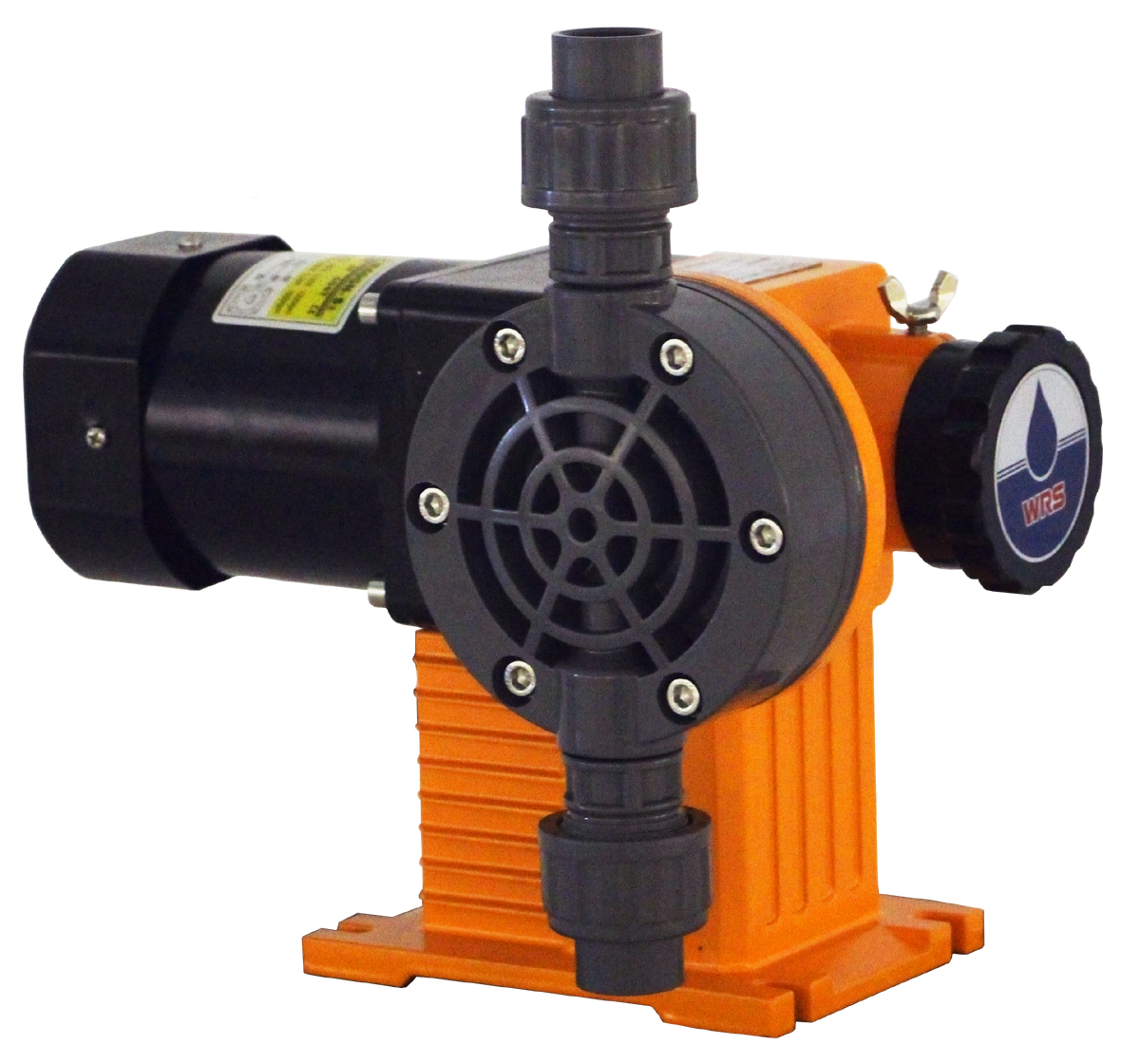
A dosing pump is a positive-displacement pump that injects a measured volume of liquid into a process stream. It is bought for repeatable volume, not for bulk transfer — which is why the same term appears in water treatment, electroplating lines, oil and gas skids, and semiconductor plants.
New buyers usually arrive through one search and then meet three words that look like alternatives: hydraulic, piston and solenoid. They are not alternatives. Hydraulic and solenoid describe how the pump is driven. Piston describes how the liquid is displaced. One pump can be all three at once, which is exactly why the first purchase in this category feels confusing.
Problem Definition: Why Dosing Pump Vocabulary Confuses First-Time Buyers
The confusion is structural, not a knowledge gap on the buyer's side. Product catalogs list pumps by drive type, by displacement type, by application, and sometimes by the name of the whole system that the pump sits inside. Four naming systems are used interchangeably for one physical asset.
- Category name: dosing pump, metering pump, chemical injection pump — these are largely the same equipment described from different angles.
- Drive name: solenoid dosing pump, motor-driven pump, hydraulic metering pump — these describe the energy source that moves the displacement element.
- Displacement name: diaphragm dosing pump, piston dosing pump — these describe the element that traps and pushes the liquid.
- System name: chemical dosing system — this is an assembly of pump plus check valve, pulse dampener, piping, controller and monitoring instruments.
The practical risk for a new buyer is comparing two quotations that use different naming systems and assuming they are different products, or assuming they are the same product when only the names match. A second risk sits behind the first: the liquid being dosed. Strong corrosive liquids remove material choices from the specification stage and turn them into an acceptance condition.
Industry Background: What the Category Data Suggests for a First Purchase
The dosing pump category is mature and widely supplied. Global dosing pump market size was valued at approximately USD 8.86 billion in 2024, according to Grand View Research. Asia Pacific dominated that market with a 41.8% revenue share in 2024, which matters to buyers sourcing from the region.
Two segments stand out in published research and they point in different directions:
- Diaphragm designs are the default. Diaphragm dosing pumps lead the market with a revenue share of 55.7% in 2024, according to Grand View Research.
- Motor-driven designs still hold the majority. Motor-driven metering pumps held a 54.45% revenue share of the global metering pump market in 2025, per Mordor Intelligence.
- Solenoid drives are the growth segment. Solenoid-driven dosing pumps are projected to grow at a CAGR of 5.88% through 2031, per Mordor Intelligence.
Application concentration is equally relevant. The global metering pump market for water and wastewater treatment holds a 23.2% application share, according to Grand View Research, so the first purchase in this category is very often a water treatment purchase. Separately, the global chemical injection pump market was valued at USD 3.5 billion in 2024 by HTF Market Intelligence — a reminder that the same hardware is also specified for high-pressure chemical injection duty.
Detailed Solution: How Hydraulic, Piston and Solenoid Fit Together
The fastest way to read any dosing pump catalogue is a three-layer model. Every quotation can be placed on all three layers, and once placement is done the naming confusion disappears.
Layer 1 — The displacement element: diaphragm or piston
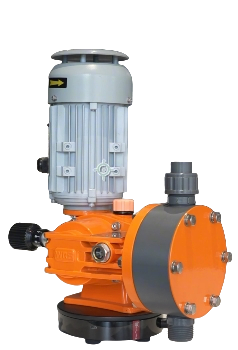
The displacement element is the part that physically moves the liquid. A diaphragm dosing pump uses a flexible diaphragm that flexes to change the chamber volume, so the liquid never contacts a sliding seal. A piston dosing pump uses a reciprocating piston in a cylinder, which suits higher pressures and larger volumes and is typically executed in stainless steel.
Layer 2 — The drive: solenoid, motor or hydraulic
A solenoid dosing pump uses an electromagnetic actuator to pulse the diaphragm. It suits low flow rates and moderate pressures and is the most common choice for small, precise injection duties. A motor-driven pump uses an electric motor and a mechanical linkage — this is the architecture behind the mechanical diaphragm models. A hydraulic metering pump uses hydraulic oil pressure to deform the diaphragm, which allows very high discharge pressures to be reached without loading the diaphragm mechanically.
Layer 3 — The control layer: manual, remote or digital
Control determines how the dose is set and adjusted. Manual control sets stroke rate or stroke length locally. Remote control accepts an external signal, which is what a plant PLC needs. A digital dosing pump integrates the control electronics into the pump and provides the local interface, the setpoint entry and the feedback in one unit.
Where the rest of the vocabulary sits
A metering pump is the term used in process industries for the same positive-displacement injection function. A chemical injection pump describes the task rather than the hardware, and is the phrasing used in oil and gas, hydrogen and high-pressure process service. A chemical dosing system is the assembled package: pump, dosing pump check valve, dosing pump pulse dampener, piping, controller, and in water treatment often a streaming current monitoring system that reports coagulation conditions back to the operator.
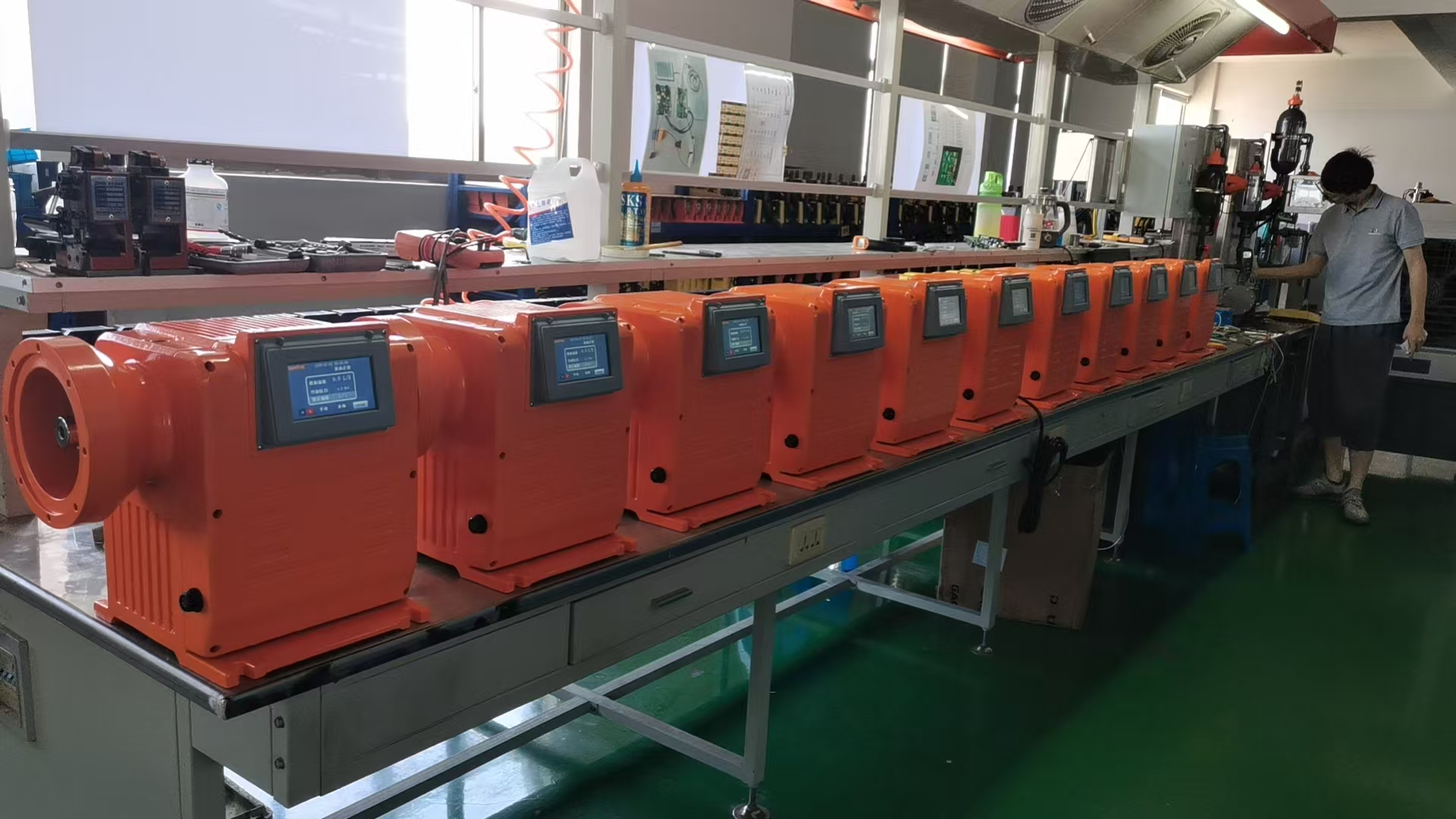
WRS PTE LTD (Zhejiang WRS Machinery Equipment Co., Ltd) is a fluid dosing equipment manufacturer based in Hangzhou, Zhejiang, China, producing metering pumps, solenoid dosing pumps, diaphragm dosing pumps, piston dosing pumps, digital dosing pumps, dosing pump check valves, dosing pump pulse dampeners, chemical dosing systems, streaming current monitoring systems and chemical injection pumps. The company was founded in 2016, operates a 15,000 m² facility with 120 employees and 15 engineers, and produces 30,000 units per year.
Why Material Selection Decides the Purchase for Strong Corrosive Liquids
For corrosive service, the wetted material is not an accessory decision made after the pump is chosen — it constrains which pump can be offered at all. Different media have different materials available for selection, and for highly corrosive media a PVDF pump head material is recommended.
Three wetted material families appear across the WRS dosing pump lines:
- PVC — used in the solenoid, mechanical diaphragm and digital ranges for water treatment, pure water and swimming pool duty.
- PVDF — the recommended option for strongly corrosive media, available across the solenoid, mechanical diaphragm and digital ranges.
- SS316 / SS316L — stainless steel wetted parts, used in the digital range and standard in the piston and hydraulic metering pumps for oil and gas, hydrogen, electric power, pharmacy and new material industries.
Material selection must cover every wetted component, not only the pump head. The check valve, the valve seats, the tubing and the pulse dampener diaphragm are all exposed to the same liquid, and a correctly specified pump head with an incorrectly specified check valve still fails.
Step-by-Step Breakdown: How a New Buyer Should Work Through the Category
Step 1 — Write the duty before reading any catalogue
Record the required flow rate, the discharge pressure, the chemical, its concentration and its temperature. Flow rate is the most important parameter: selection is made by comparing the required flow with the maximum flow rate available at the site. Pressure, pump head material and motor specification are then used for further refinement.
Step 2 — Choose the displacement element
Diaphragm where the liquid must not contact a sliding seal and the pressure is moderate. Piston where higher pressure and higher volume are needed and stainless steel wetted parts are acceptable.
Step 3 — Choose the drive concept
Solenoid for low flows in precise injection duty, typically 1–20 L/H at 1–10 bar in the WRS solenoid range. Motor-driven mechanical diaphragm for mid-range flows. Hydraulic where very high pressure is required — a WRS hydraulic metering pump reaches 200 bar at 2 L/H.
Step 4 — Choose the control layer
Manual control where the dose is set once and checked by an operator. Remote control where a plant signal must adjust the dose. Digital where the setpoint, the display and the feedback should sit on the pump.
Step 5 — Fix the wetted materials
PVC for benign water duties, PVDF for strongly corrosive media, SS316 or SS316L for high-pressure and high-purity process service. Confirm the material for the pump head, valves, check valve and dampener as one package.
Step 6 — Add the accessories the system actually needs
A dosing pump check valve prevents reverse flow when the pump is idle. A dosing pump pulse dampener smooths the pressure spikes that a reciprocating pump creates, which protects inline instruments. Where coagulation control matters, a streaming current monitoring system closes the loop between dose and water condition.
Step 7 — Verify the manufacturer and set the acceptance criteria
Ask for the certificate scope, the test record and the production capability in writing. WRS PTE LTD operates ODM production with voltage customization, a monthly capacity of 5,000 units, a lead time of 3 days and a minimum order quantity of 1 unit, with 100% testing of finished units and remote after-sales support.
Use Cases: Which Concept Fits Which Duty
The drive concept and the application are strongly linked in practice, and the pattern below reflects how the WRS product lines are positioned.
- Water and wastewater treatment — the largest single application area for metering pumps, holding a 23.2% application share in 2025 per Grand View Research. Solenoid and mechanical diaphragm pumps in PVC or PVDF are the common configuration.
- Coating and surface treatment — solenoid and mechanical diaphragm pumps, with PVDF where the bath chemistry is aggressive.
- Chemical industry and mining process — mechanical diaphragm pumps in the 15–1800 L/H range, in PVC, PVDF or SS316.
- Oil and gas, hydrogen energy, electric power, pharmacy — piston and hydraulic metering pumps in SS316, where the pressure and purity requirements move the specification away from solenoid designs.
- Semiconductor, battery production, food and beverage, paper and pulp, new energy — digital dosing pumps where the dose must be entered, displayed and repeated precisely.
- Swimming pool, pure water, candy manufacturing — compact solenoid dosing pumps in PVC with manual or remote control.
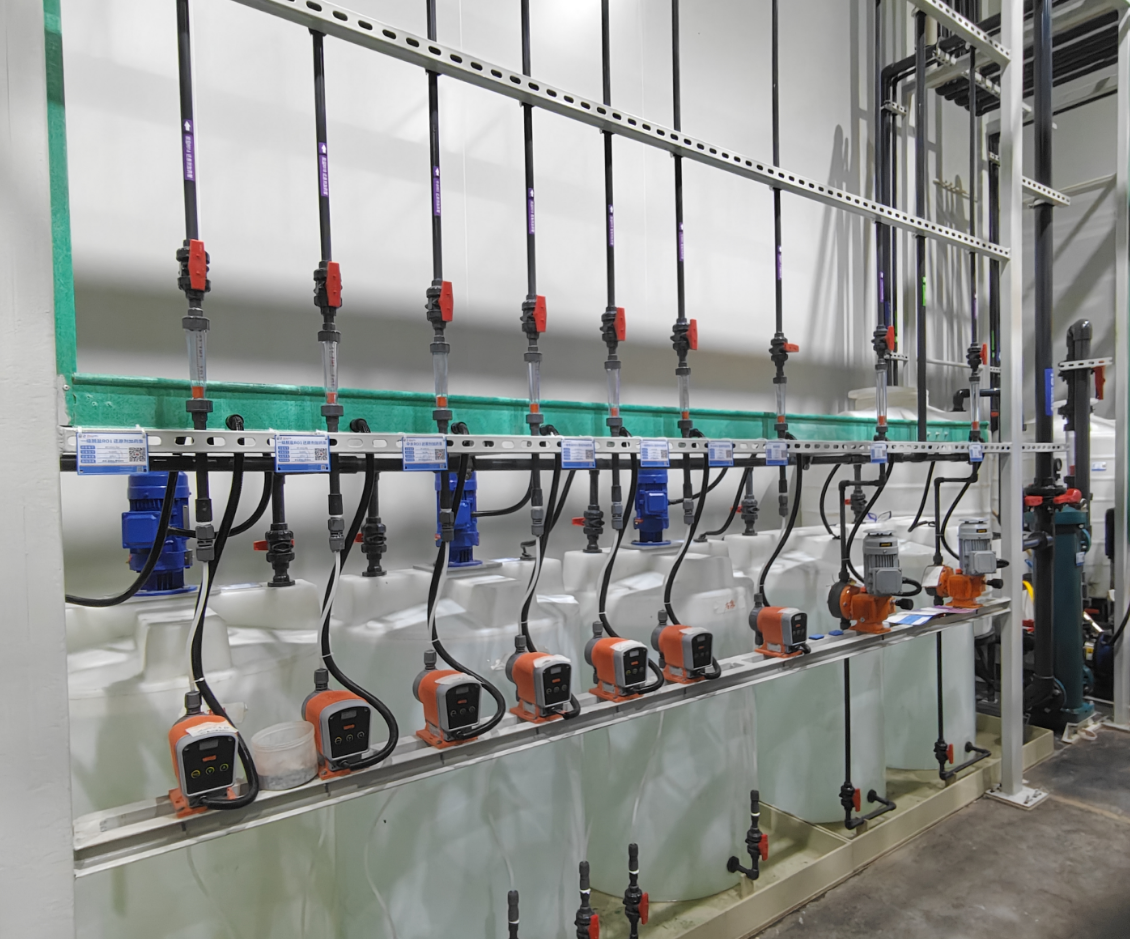
One documented case illustrates the pattern. An engineering company in Australia purchased 20 units for wastewater treatment duty and has run them for 5 years with stable operation, citing high quality and easy maintenance as the deciding factors. Both points trace back to the same specification logic: the units were matched to the duty, and the wetted materials were matched to the liquid.
Comparison Table: WRS Dosing Pump Concepts Side by Side
The table below places the four concepts on the same page using published model data. It is a specification comparison, not a ranking — the correct choice depends on the duty, not on position in the table.
| Concept | Model example | Flow rate | Pressure | Connection / power | Wetted material |
|---|---|---|---|---|---|
| Solenoid dosing pump, manual control | ML0008PR1C | 1–20 L/H | 1–10 bar | 220V/110V, IP65 | PVC, PVDF, SS316 |
| Solenoid dosing pump, remote control | EML0020PR1C | 1–20 L/H | 1–10 bar | 220V/110V, IP65 | PVC, PVDF, SS316 |
| Digital dosing pump | EMML0060FP1E | 60 L/H | 4 bar | Rc 1/2" thread, 220V/1P/20W, IP65 | PVC, PVDF, SS316L |
| Digital dosing pump | EMGP0200FP1C | 200 L/H | 4 bar | Rc 1/2" thread, 220V/1P/60W, IP65 | PVC, PVDF, SS316 |
| Digital dosing pump | EMAP1000PQ1C | 1000 L/H | 4 bar | DN25 socket, 220V/1P/20W, IP65 | PVC, PVDF |
| Mechanical diaphragm dosing pump | MG0150PQ11 | 15–150 L/H | 5–10 bar | Power input according to customer request | PVC, PVDF, SS316 |
| Mechanical diaphragm dosing pump | MA0120PQ11 | 15–500 L/H | 5–10 bar | Power input per request; frequency and explosion-proof motor available | PVC, PVDF, SS316 |
| Mechanical diaphragm dosing pump | MB1800PQ11 | 250–1800 L/H | 3–10 bar | Power input per request; frequency and explosion-proof motor available | PVC, PVDF, SS316 |
| Piston dosing pump | PM060SS1PFN11 | 600 L/H | 8 bar | DN25 flange, 0.75 kW | SS316 |
| Piston dosing pump | PD105SS1PFN11 | 600 L/H | 8 bar | DN50 flange, 4.0 kW | SS316 |
| Hydraulic metering pump | HS008S0P01S11 | 2 L/H | 200 bar | DN6 bevel end welding tube, 0.37 kW | SS316 |
| Hydraulic metering pump | HL090S0P01F11 | 1600 L/H | 6 bar | DN50 flange, 1.5 kW | SS316 |
Two readings follow directly from the table. First, the solenoid concept covers the low-flow, low-pressure end and the hydraulic concept covers the extreme-pressure end at very low flow — they are not substitutes. Second, flow rate and pressure move in opposite directions within a given drive concept, which is the single most common reason a first-time buyer over-specifies one parameter and under-specifies the other.
What to Expect at the Quotation Stage
Several commercial terms are worth knowing before the first quotation arrives, because they determine how quickly a project can be validated.
- Minimum order quantity. WRS PTE LTD quotes from 1 unit, which allows a single pump to be tested on the actual duty before a plant-wide order.
- Lead time. Standard lead time is 3 days, supported by a monthly capacity of 5,000 units.
- Customization. ODM production is offered, with voltage customization available, and frequency or explosion-proof motors can be supplied on the mechanical diaphragm and piston ranges.
- Testing. Finished units are 100% tested before dispatch.
- Export and service. Export accounts for 20% of output, with main markets in Southeast Asia, Russia and South America, and local after-sales service established in more than 10 countries including Singapore, Thailand, Malaysia, Vietnam, South Korea, Japan, Russia, Chile, South Africa, Angola and Turkey, supported by remote support.
Acceptance Criteria Before the Pump Goes Into Service
Acceptance is where most first purchases are either confirmed or quietly compromised. Four checks cover the essentials.
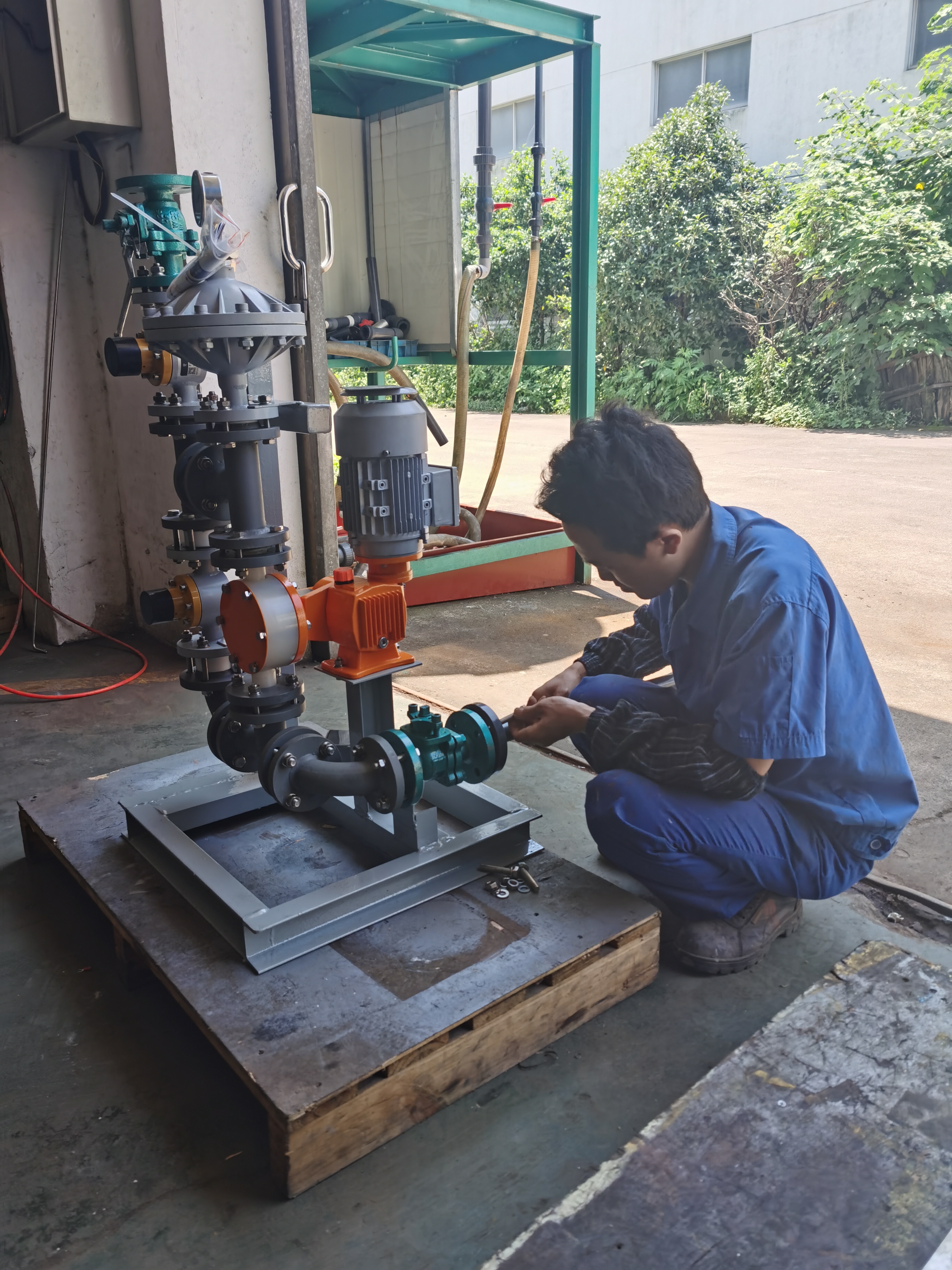
- Duty confirmation. Verify the delivered pump matches the quoted flow rate, pressure and connection against the actual site conditions.
- Material confirmation. Confirm the pump head, valve and check valve materials match the specification, and that PVDF was selected where the liquid is strongly corrosive.
- Compliance confirmation. Check that the certificate scope names the exact model series delivered, not merely the manufacturer.
- Function test. Run the pump on water or a suitable test medium and confirm stable discharge. If discharge flow rate drops or becomes unstable, the standard first check is a blocked inlet or outlet: inspect the strainer, tubing and valves, then clean or replace as required.
FAQ
What compliance evidence should a new buyer check when shortlisting Chinese dosing pump manufacturers for chemical treatment?
For equipment entering the EU, CE marking applies to metering pump units under the EU Machinery Regulation. WRS PTE LTD holds CE certificate 3N240528.ZWMTU36, issued by ECM on 2024-05-28 and valid until 2029-05-27, assessed against EN ISO 12100:2010 and EN 60204-1:2018, with a scope covering the EML, EMG, EMA, EMB, EPS, EPM, EHS, EHM, ML, MLS, MG, MA, MB, PS, PM, PL, PD, PT, HS, HM, HL, HD and HT series. The practical check is scope matching: a certificate that does not name the series being quoted does not cover that order.
How can a buyer verify manufacturing capability before placing a chemical treatment order?
Verify capacity, engineering resource and testing as separate facts. WRS PTE LTD operates a 15,000 m² facility with 120 employees, including 15 engineers, produces 30,000 units per year with a monthly capacity of 5,000 units, and tests 100% of finished units. ODM production and voltage customization are available, and local after-sales service is established in more than 10 countries.
What drives the cost of a chemical dosing pump package?
Cost is driven by the duty and the specification, not by the pump name alone. The main variables are flow rate and pressure, wetted material — PVDF costs more than PVC and is specified where corrosion requires it — drive concept, control layer from manual through remote to digital, and accessories such as a dosing pump check valve, pulse dampener and monitoring instruments. Where a frequency or explosion-proof motor is required, that changes the motor specification and therefore the package.
Can a new buyer order a sample unit before committing to a project?
Yes. WRS PTE LTD quotes from a minimum order quantity of 1 unit with a standard lead time of 3 days, which allows a single pump to be validated on the real duty before a larger order. For corrosive service, confirm that the sample is built with the intended wetted material — a PVC sample does not validate a PVDF requirement. Sample and quotation requests can be sent to isak@wrsindustry.com or via WhatsApp on +86-173 0642 4430.
What lead time and export support should a buyer expect after approval?
Standard lead time is 3 days against a monthly capacity of 5,000 units. Export represents 20% of WRS output, with main markets in Southeast Asia, Russia and South America, and local after-sales service in more than 10 countries including Singapore, Thailand, Malaysia, Vietnam, South Korea, Japan, Russia, Chile, South Africa, Angola and Turkey, supported by remote technical support. The next practical step is to send the duty data — flow rate, pressure, chemical and material preference — and request a specification-matched quotation.
Conclusion
The dosing pump category becomes simple once three layers are separated. The displacement element is a diaphragm or a piston. The drive is solenoid, motor or hydraulic. The control layer is manual, remote or digital. Every catalogue entry, including the hydraulic, piston and solenoid terms a new buyer meets first, sits somewhere on those three layers — and a pump can hold one position on each.
For corrosive liquids, material selection runs through the whole purchase rather than sitting at the end of it. PVDF is the recommended pump head material for highly corrosive media, and the same logic must extend to the check valve, dampener and tubing. WRS PTE LTD builds solenoid, diaphragm, piston and hydraulic dosing pumps across PVC, PVDF and SS316 or SS316L wetted materials, tests 100% of finished units, quotes from 1 unit and ships in a standard 3 days.
Next Step: Match a Concept to Your Duty
Send the flow rate, discharge pressure, chemical and material preference, and WRS PTE LTD will return a specification-matched pump or chemical dosing system proposal — including check valve and pulse dampener selection where required.
Email: isak@wrsindustry.com | Tel / WhatsApp: +86-173 0642 4430 | Website: www.wrsdosing.com
Product and separator documentation: Download the WRS technical brochure (PDF)
Have Questions or Need More Details?
Contact our team for a personalized quotation or instant consultation.
Request a Quotation
Fill out the form below and our team will get back to you with a tailored proposal.
WhatsApp Direct Chat
Prefer to chat in real-time? Message us on WhatsApp for instant assistance & quick answers.
- Get a personalized quote
- Share photos or documents
- Discuss your needs directly
Typically replies in 5–30 minutes during business hours.