Dosing Pump vs. Solenoid Pump: A Head-to-Head Decision for Corrosive Liquids
For strong corrosive liquids, the choice between a motor-driven dosing pump and a solenoid dosing pump is settled by four checks: the wetted materials that contact the chemical, the flow and pressure envelope the duty actually needs, the calibration and control the process requires, and the compliance and commercial evidence a specifier can verify before purchase. Solenoid pumps cover low-flow chemical injection with compact digital control. Motor-driven diaphragm dosing pumps cover the same aggressive media at substantially higher flows, with simpler maintenance at scale. Neither wins by default. The duty decides.
This head-to-head comparison is written for specifiers, plant engineers and procurement teams working at the research and evaluation stage. It is based on the published product data and purchasing terms of WRS — ZHEJIANG WRS MACHINERY EQUIPMENT CO., LTD, a fluid dosing equipment manufacturer established in 2016, operating a 15,000 m² facility with 120 staff and 15 R&D engineers, and producing around 30,000 units per year. WRS builds both sides of this comparison: metering pumps, solenoid dosing pumps, diaphragm dosing pumps, piston dosing pumps, digital dosing pumps, dosing pump check valves, dosing pump pulse dampeners, chemical dosing systems, streaming current monitoring systems and chemical injection pumps. The full range is published at wrsdosing.com.
Problem Definition: Why Corrosive Service Breaks the Default Selection Logic
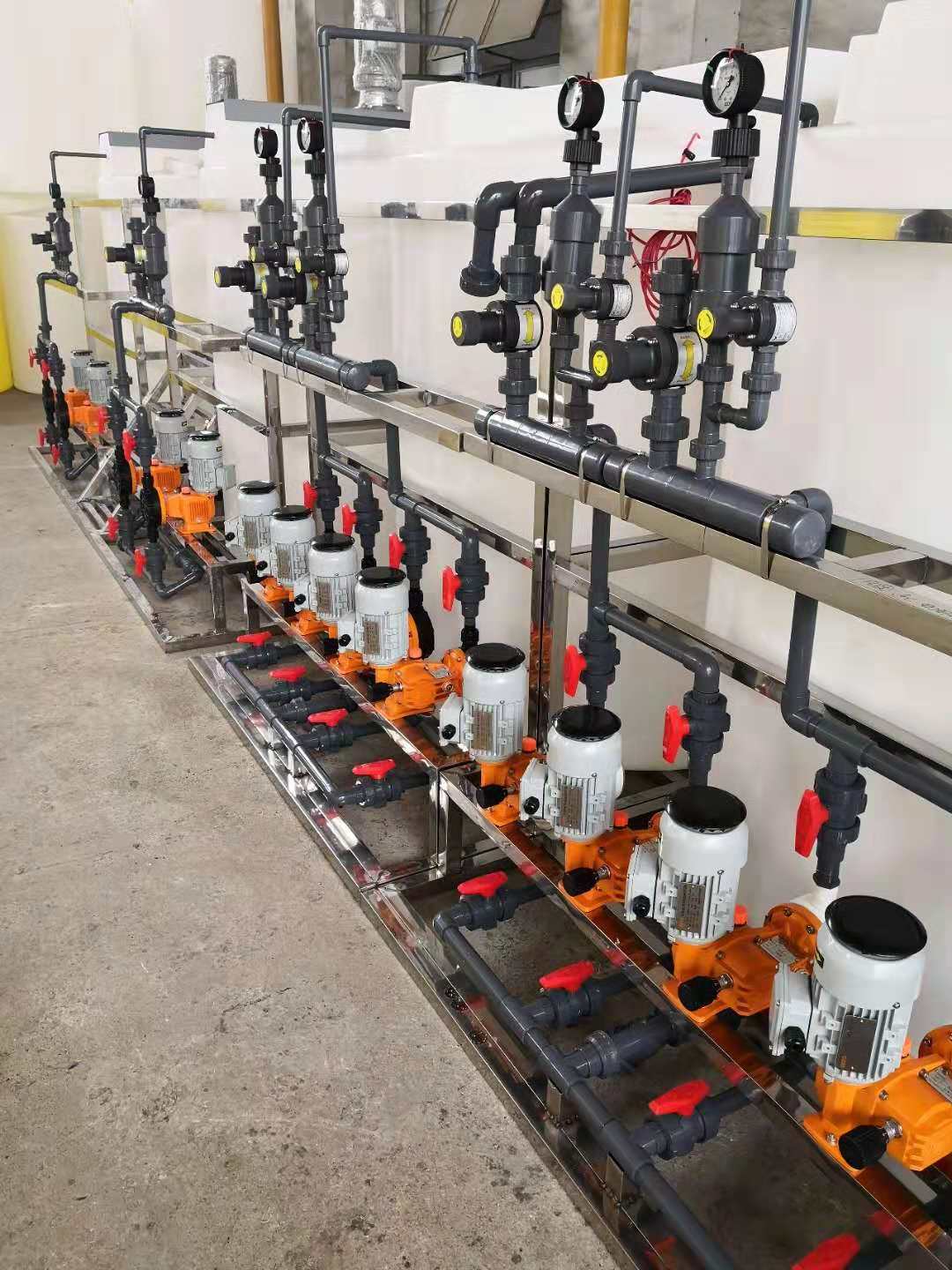
Most pump selection starts with flow rate. Corrosive liquids add a second, harder question: what will the liquid touch? A pump that matches the flow curve can still fail early if the diaphragm, valve balls, seals or pump head react with the medium. The WRS position on this question is specific: different media have different materials available for selection, and for highly corrosive media a PVDF pump head material is recommended.
The second failure mode is hydraulic rather than chemical. When discharge flow rate drops or becomes unstable, a blocked inlet or outlet is the usual cause. The practical response is to check the strainer, tubing and valves, and to clean or replace them if necessary. On a corrosive duty, both failure modes are expensive: dosing accuracy drifts, shutdowns are unplanned, and parts are replaced more often than the maintenance schedule assumed.
To keep the comparison honest, this article uses two clearly defined families:
- Dosing pump (motor-driven): positive displacement dosing pumps driven by an electric motor — the mechanical diaphragm MA, MG and MB series, and the motor-driven fully digital EMG, EMA and EMML series.
- Solenoid pump: solenoid-driven dosing pumps — the ML series with manual control and the EML series with remote control.
Both families sit inside the wider dosing pump category, and both are manufactured by WRS. The real question is not which category is better in general, but which one satisfies a specific corrosive-duty specification on materials, envelope, control and paperwork.
Industry Background: A Large Market Split Along Drive Type and Material
The global dosing pump market was valued at approximately USD 8.86 billion in 2024 (Grand View Research). Asia Pacific held a 41.8% revenue share in 2024, and diaphragm dosing pumps lead the product split with a 55.7% revenue share in the same year. Motor-driven metering pumps accounted for a 54.45% revenue share of the global metering pump market in 2025 (Mordor Intelligence), while solenoid-driven dosing pumps are projected to grow at a CAGR of 5.88% through 2031. The broader chemical injection pump market was valued at USD 3.5 billion in 2024 (HTF Market Intelligence), and metering pumps used in water and wastewater treatment represent a 23.2% application share (Grand View Research).
What those figures describe is a market that splits along two axes at once: drive type and wetted material. Water and wastewater remains the largest single application, where corrosive disinfectants, coagulants and pH correctors are dosed continuously and material selection effectively determines the service interval. Market coverage of the dosing system market names Grundfos, IDEX (Milton Roy), ProMinent and SEKO S.p.A. among the leading global participants — a reminder that the comparison being made here is a mainstream engineering decision, not a niche one.
Selection is also framed by standards rather than marketing claims. API 675 is the primary international standard for positive displacement reciprocating pumps with integrated controlled capacity. ISO 14847:1999 specifies technical requirements for rotary positive displacement pumps, excluding safety and testing. In the EU, the Machinery Regulation — which repeals 2006/42/EC from 2027 — mandates CE marking for metering pump units.
Detailed Solution: The Head-to-Head Framework
1. Drive principle: where solenoid control ends and motor drive begins
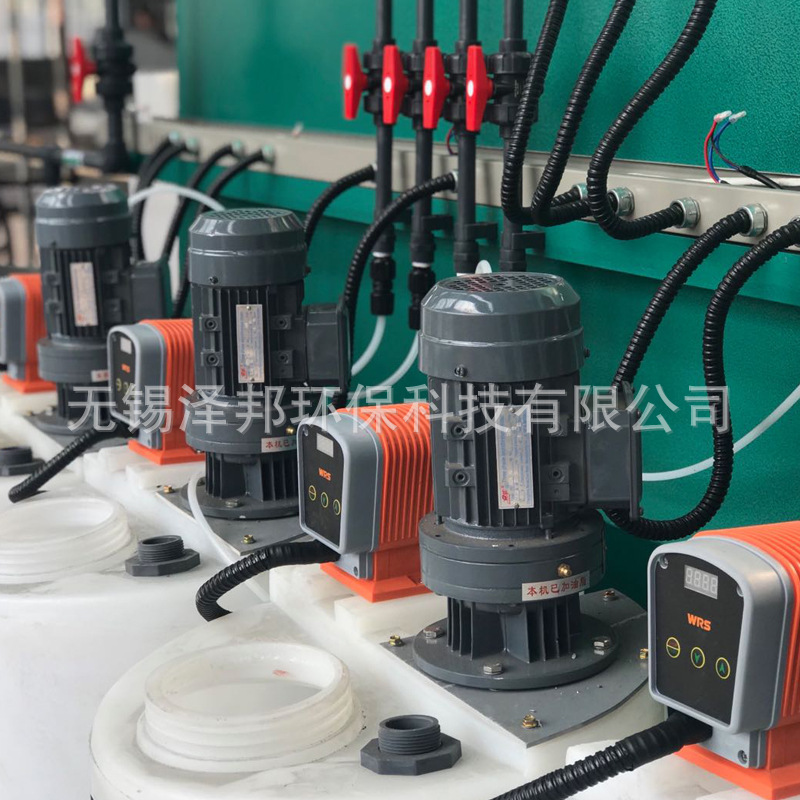
Solenoid dosing pumps use an electromagnetic drive to stroke a diaphragm at a fixed or adjustable rate. In the WRS range, the ML0008PR1C is specified at 1–20 L/H and 1–10 bar with manual control, 220 V/110 V input and IP65 protection, in PVC, PVDF or SS316 wetted materials. A double ball design check valve is used on both the inlet and the outlet to increase discharge accuracy, and the stated dosing accuracy is 1%. The unit is supplied with accessories including PE tube, foot valve, weight, injection valve and safety valve. The EML0020PR1C moves the same envelope into remote control: 4–20 mA or pulse signal and Modbus RS-485 communication, direct flowrate display, 1–20 L/H at 1–10 bar, IP65, anti-corrosion materials, and a water and heat resistant PCB board.
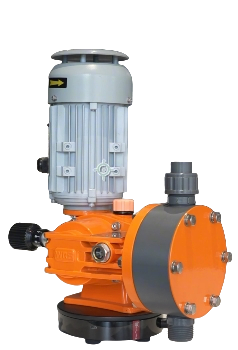
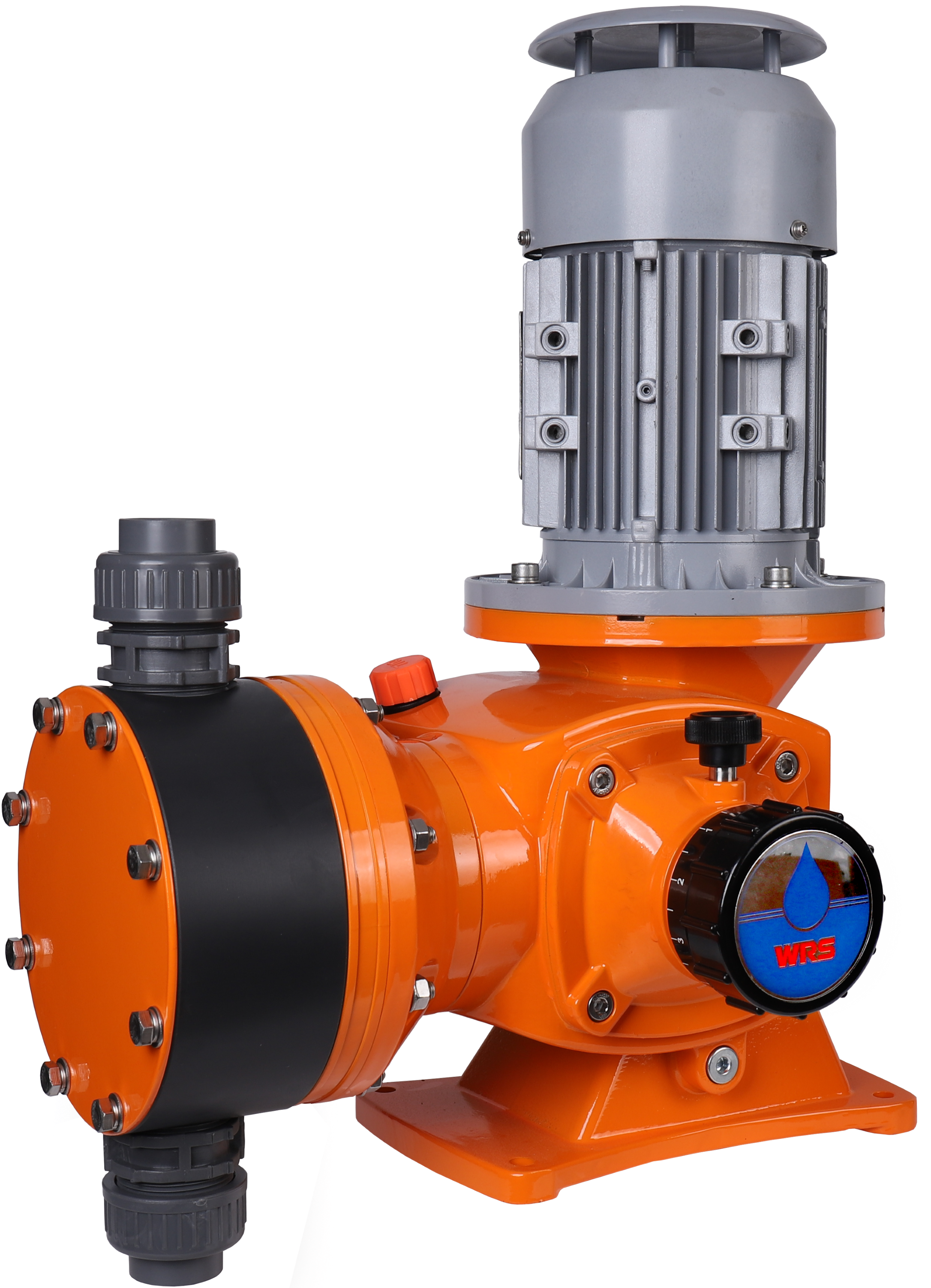
Motor-driven dosing pumps scale that envelope upward. The mechanical diaphragm MA0120PQ11 is rated 15–500 L/H at 5–10 bar; the MG0150PQ11 is rated 15–150 L/H at 5–10 bar; the MB1800PQ11 is rated 250–1800 L/H at 3–10 bar. All three are available in PVC, PVDF or SS316, use a multiple layer diaphragm for longer lifespan, allow smooth flowrate adjustment in both running and idle condition, and are described as specially designed for handling corrosive liquids with a variety of material options for different applications. Power input is specified according to the customer request, and both frequency and explosion-proof motors can be supplied on the MA and MB models.
The motor-driven digital line adds precision electronics without changing the material logic. The EMGP0200FP1C is rated 200 L/H at 4 bar through an Rc 1/2 inch thread at 60 W. The EMAP1000PQ1C is rated 1000 L/H at 4 bar through a DN25 socket at 20 W. The EMML0060FP1E is rated 60 L/H at 4 bar at 20 W, with wetted materials including SS316L. All three are IP65, offer 4–20 mA or pulse remote control and Modbus RS-485 communication, a direct flowrate display, less than 1% precision, a 1:1000 ratio rate, and a full PTFE diaphragm for strong corrosion resistance.
2. How to choose pump materials for aggressive chemicals
Material selection is the step that decides whether a corrosive duty succeeds, and it should be confirmed before the drive type is finalised. Across the WRS dosing pump range, the available wetted materials are PVC, PVDF and SS316, with SS316L additionally available on the EMML0060FP1E digital model. Two design details matter as much as the base material: digital models use a full PTFE diaphragm with strong corrosion resistance, and the mechanical diaphragm MA, MG and MB series use a multiple layer diaphragm that extends lifespan under repeated stroking.
A practical decision rule, taken directly from WRS application guidance: for highly corrosive media, PVDF pump head material is recommended. Beyond that, the head, valve ball and diaphragm materials should be matched to the specific medium rather than to a generic category such as acid or alkali, because compatibility differs from chemical to chemical and from concentration to concentration. Where suction and discharge lines are long or pulsation-sensitive, the range also includes a dosing pump check valve and a dosing pump pulse dampener as separate components, so the wetted-material decision extends beyond the pump head itself.
3. Calibration, control and verification
Corrosive duty puts calibration under pressure because drift is often discovered late. The WRS solenoid and digital lines address this with a combination of mechanical and electronic measures. On the ML0008PR1C and EML0020PR1C, the double ball design check valve on both inlet and outlet increases discharge accuracy, and the stated accuracy is 1%; the ML allows manual flow control at both running and idle modes, while the EML adds remote control and direct flowrate display. On the EMG, EMA and EMML digital models, the specified precision is less than 1% with a 1:1000 ratio rate and remote control through 4–20 mA or pulse signal and Modbus RS-485. IP65 protection is specified across the ML, EML, EMG, EMA and EMML models, which matters in wash-down and chemical-plant environments.
Every WRS unit is 100% tested before shipment, and testing is carried out on dedicated test platforms rather than by sample audit. For a corrosive-liquid project, the verification step should confirm three things in writing: the flow rate against the maximum flow rate at the site, the pressure rating of the selected model, and the pump head material and motor configuration that were quoted.
4. Compliance evidence to request before you compare prices
Certification is a constraint, not a differentiator, and it should be checked on the certificate itself. WRS holds CE certificate 3N240528.ZWMTU36, issued by ECM on 2024-05-28 and valid until 2029-05-27, referencing EN ISO 12100:2010 and EN 60204-1:2018. The certificate scope covers dosing pumps in the EML, EMG, EMA, EMB, EPS, EPM, EHS, EHM, ML, MLS, MG, MA, MB, PS, PM, PL, PD, PT, HS, HM, HL, HD and HT series — which means the document should be checked against the exact series being quoted, not just against the manufacturer name. For EU shipments, the Machinery Regulation reinforces CE marking as a requirement for metering pump units from 2027. For oil and gas applications, API 675 is the reference standard for positive displacement reciprocating pumps with integrated controlled capacity, and ISO 14847:1999 provides the corresponding technical requirements baseline for rotary positive displacement pumps.
5. Purchasing terms that change the real cost comparison
Price bands differ between a solenoid pump and a motor-driven dosing pump because the delivered scope differs, and the honest way to compare is against a defined duty rather than a headline number. The cost drivers to compare are the flow class, the wetted material, the motor selection (frequency and explosion-proof motor options are available on the MA, MB, PM, PD, HL and HS models), the control electronics, and the spare parts holding you intend to keep.
The commercial terms around WRS supply are straightforward to verify: minimum order quantity 1 unit, lead time 3 days, monthly capacity 5000 units, ODM production with voltage customisation, and 100% testing. WRS exports about 20% of production, with main markets in Southeast Asia, Russia and South America, and operates local after-sale service in more than 10 countries including Singapore, Thailand, Malaysia, Vietnam, South Korea, Japan, Russia, Chile, South Africa, Angola and Turkey — with remote support as the standard service channel.
Step-by-Step Breakdown: How to Decide for a Corrosive Duty
- Fix the duty envelope. Select on flow rate first, comparing the requirement with the maximum flow rate at the site, then refine with pressure, pump head material and motor.
- Screen the material against the medium. Confirm PVC, PVDF or SS316 suitability for the specific chemical; where the medium is highly corrosive, PVDF pump head material is the recommended starting point.
- Choose the drive type. Solenoid (ML, EML) for 1–20 L/H at 1–10 bar; motor-driven mechanical diaphragm (MA, MG, MB) from 15 L/H up to 1800 L/H; motor-driven digital (EMG, EMA, EMML) where electronic dosing control or a PTFE diaphragm is required. Where the duty falls outside these envelopes, the range extends to piston pumps such as the PM060SS1PFN11 and PD105SS1PFN11 at 600 L/H and 8 bar, and to hydraulic metering pumps such as the HS008S0P01S11 at 2 L/H and 200 bar or the HL090S0P01F11 at 1600 L/H and 6 bar.
- Specify control and calibration. Decide between manual control, 4–20 mA or pulse signal, and Modbus RS-485; check whether a direct flowrate display and a 1:1000 ratio are needed.
- Define acceptance criteria in writing. Confirm the CE certificate number and scope, the 100% test requirement, the IP protection class, and the check valve and pulse dampener scope if pulsation matters.
- Lock the commercial terms. Confirm MOQ, lead time, monthly capacity, voltage customisation, motor options and after-sales channel before the comparison is closed.
Use Cases: Where This Decision Has Already Been Made
Wastewater treatment, Australia. An engineering company selected 20 units for a wastewater treatment application. After five years of operation the reported result is stable operation, with high quality and easy maintenance highlighted as the decisive factors. This is the classic motor-driven diaphragm profile: continuous duty, corrosive dosing chemicals, and a maintenance regime that values simple part replacement.
Livestock nutrient dosing, Russia. A hog farm operating in a harsh, humid livestock environment runs nutrient solution dosing 24/7 on an automatic system. This project used a digital dosing pump and a solenoid pump, which shows how the two families coexist in one installation: the solenoid unit for compact, low-flow injection and the digital unit for controlled, display-based dosing. In humid environments, enclosure protection and PCB treatment become part of the specification conversation rather than an afterthought.
High-flow chemical, coating and mining duties. The MB1800PQ11 covers 250–1800 L/H at 3–10 bar in PVC, PVDF or SS316, and its stated application industries include waste water treatment, chemical industry, coating and surface treatment, and mining process. The MA series extends the same material logic into foundry industry applications. These are duties where the solenoid band ends and the motor-driven band begins.
Precision low-flow injection. The EML, EMG, EMA and EMML models are applied in water treatment, semiconductor, food and beverage, battery production, paper and pulp, and new energy duties, where a full PTFE diaphragm, less than 1% precision and a 1:1000 ratio matter more than raw flow capacity.
Comparison Table: Dosing Pump vs. Solenoid Pump for Corrosive Liquids
| Decision factor | Motor-driven dosing pump (MA / MG / MB / EMG / EMA / EMML) | Solenoid pump (ML / EML) |
|---|---|---|
| Drive type | Motor-driven positive displacement; mechanical diaphragm on MA, MG, MB; motor-driven digital diaphragm on EMG, EMA, EMML | Solenoid-driven diaphragm |
| Reference flow and pressure | MA0120PQ11: 15–500 L/H at 5–10 bar; MG0150PQ11: 15–150 L/H at 5–10 bar; MB1800PQ11: 250–1800 L/H at 3–10 bar; EMGP0200FP1C: 200 L/H at 4 bar; EMAP1000PQ1C: 1000 L/H at 4 bar; EMML0060FP1E: 60 L/H at 4 bar | ML0008PR1C: 1–20 L/H at 1–10 bar; EML0020PR1C: 1–20 L/H at 1–10 bar |
| Wetted materials | PVC, PVDF, SS316 (SS316L available on EMML0060FP1E) | PVC, PVDF, SS316 |
| Diaphragm design | Multiple layer diaphragm on MA, MG, MB for longer lifespan; full PTFE diaphragm on digital models | Solenoid-driven diaphragm with double ball design check valve on both inlet and outlet |
| Accuracy and control | Digital models: less than 1% precision, 1:1000 ratio rate, direct flowrate display, 4–20 mA or pulse signal, Modbus RS-485. MA, MG, MB: smooth flowrate adjustment in both running and idle condition | ML0008PR1C: manual control, 1% dosing accuracy. EML0020PR1C: remote control 4–20 mA or pulse signal, Modbus RS-485, direct flowrate display, 1% dosing accuracy |
| Corrosive-liquid design notes | Specially designed for handling corrosive liquids with a variety of material options; anti-corrosion materials on the EML class electronics | Double ball design check valve increases discharge accuracy; anti-corrosion materials; water and heat resistant PCB board |
| Protection class | IP65 on EMG, EMA, EMML and EML models | IP65 on ML0008PR1C and EML0020PR1C |
| Typical application industries | MA, MG, MB: waste water treatment, chemical industry, coating and surface treatment, mining process, foundry industry. Digital models: water treatment, semiconductor, food and beverages, battery production, paper and pulp production, new energy | Water treatment, candy manufacturing, coating and surface treatment, pure water, swimming pool |
| Procurement notes | Power input according to customer request on MA, MG, MB; frequency and explosion-proof motor options available; MOQ 1 unit; lead time 3 days; 100% test | Voltage input 220 V / 110 V; ML0008PR1C supplied with PE tube, foot valve, weight, injection valve and safety valve; MOQ 1 unit; lead time 3 days; 100% test |
FAQ
What certification should I verify on a dosing pump or solenoid pump for corrosive chemical duty?
In the EU, metering pump units fall under CE marking requirements, reinforced by the Machinery Regulation that repeals 2006/42/EC from 2027. WRS holds CE certificate 3N240528.ZWMTU36, issued by ECM on 2024-05-28 and valid until 2029-05-27, referencing EN ISO 12100:2010 and EN 60204-1:2018. The scope covers the EML, EMG, EMA, EMB, EPS, EPM, EHS, EHM, ML, MLS, MG, MA, MB, PS, PM, PL, PD, PT, HS, HM, HL, HD and HT series, so the certificate should be checked against the exact series being purchased. For oil and gas service, API 675 is the reference standard for positive displacement reciprocating pumps with integrated controlled capacity, and ISO 14847:1999 specifies technical requirements for rotary positive displacement pumps.
Which pump materials handle strong corrosive liquids?
WRS offers PVC, PVDF and SS316 as wetted materials across the dosing pump range, with SS316L additionally available on the EMML0060FP1E digital model. For highly corrosive media, PVDF pump head material is the recommended choice. Digital models use a full PTFE diaphragm with strong corrosion resistance, and the mechanical diaphragm MA, MG and MB series use a multiple layer diaphragm for longer lifespan. Because compatibility is specific to the medium, the head, valve and diaphragm materials should be confirmed against the actual chemical rather than against a broad category.
How is precise flow calibration handled on these pumps?
The ML0008PR1C and EML0020PR1C are specified at 1% dosing accuracy and use a double ball design check valve on both the inlet and the outlet to increase discharge accuracy. The EMG, EMA and EMML digital models are specified at less than 1% precision with a 1:1000 ratio rate and a direct flowrate display, and support 4–20 mA or pulse signal and Modbus RS-485 remote control. Every WRS unit is 100% tested before shipment. Selection itself starts from flow rate, compared against the maximum flow rate at the site, and is then refined by pressure, pump head material and motor.
What drives the cost difference between a solenoid pump and a motor-driven dosing pump?
The difference comes from delivered scope, not from a single list price. The variables to compare are the flow and pressure class, the wetted material, the motor selection (frequency and explosion-proof motor options are available on the MA, MB, PM, PD, HL and HS models), the control electronics, and the spare parts you intend to hold. On the supply side, WRS quotes a minimum order quantity of 1 unit with a 3-day lead time and a monthly capacity of 5000 units, and supports ODM production with voltage customisation, so a like-for-like quotation should always specify flow, pressure, material, motor and control mode.
Can I validate a unit before a full order, and how fast can it be supplied?
Yes. The minimum order quantity is 1 unit, which allows a single unit to be tested against the actual medium before a larger release. Lead time is 3 days, and monthly capacity is 5000 units, so pilot and production phases can be scheduled closely together. Units are 100% tested before shipment, and after-sales support is delivered remotely, backed by local after-sale service in more than 10 countries including Singapore, Thailand, Malaysia, Vietnam, South Korea, Japan, Russia, Chile, South Africa, Angola and Turkey. The next step is to send the duty details — flow rate, pressure, medium and material preference — and request a quotation or sample unit via wrsdosing.com.
Conclusion: Let the Medium and the Envelope Decide
Neither drive type wins the corrosive-liquid decision on general grounds. The solenoid pump is the stronger fit where flow sits between 1 and 20 L/H, pressure stays between 1 and 10 bar, and the priority is compact injection with clean electronic control — the ML and EML models deliver this with 1% dosing accuracy, IP65 protection, and a double ball design check valve that protects discharge accuracy. The motor-driven dosing pump is the stronger fit from 15 L/H upward, where the MA, MG and MB mechanical diaphragm series reach 1800 L/H in PVC, PVDF or SS316 with a multiple layer diaphragm, and where the EMG, EMA and EMML digital models add less than 1% precision, a 1:1000 ratio and a full PTFE diaphragm for aggressive chemicals.
What resolves the decision is the sequence, not the category: fix the duty envelope, screen the wetted materials against the actual medium, choose the drive type that fits, specify control and calibration, define acceptance criteria against the CE certificate and test records, and only then compare commercial terms. Applied in that order, the comparison produces a specification that can be defended to a plant manager, a procurement team and an auditor at the same time.
Request a quotation, sample or the full product catalogue
WRS — ZHEJIANG WRS MACHINERY EQUIPMENT CO., LTD
Web: www.wrsdosing.com
Brochure download: Diaphragm Separator brochure (PDF)
Contact: Isak — isak@wrsindustry.com — Tel / WhatsApp: +86-173 0642 4430
Address: No. 108 Shixin Rd, Xiaoshan Region, Hangzhou City, Zhejiang, China
Have Questions or Need More Details?
Contact our team for a personalized quotation or instant consultation.
Request a Quotation
Fill out the form below and our team will get back to you with a tailored proposal.
WhatsApp Direct Chat
Prefer to chat in real-time? Message us on WhatsApp for instant assistance & quick answers.
- Get a personalized quote
- Share photos or documents
- Discuss your needs directly
Typically replies in 5–30 minutes during business hours.