Dosing Pump Supplier Due Diligence: Capability Verification & Delivery Assurance
Dosing Pump Supplier Due Diligence: Capability Verification & Delivery Assurance
A dosing pump supplier due diligence review checks three things before an order is placed: whether the manufacturer can actually build the pump type, wetted material and control configuration the process requires; whether the commercial documents match the physical equipment that will be shipped; and whether there is a verifiable structure behind the delivery date and the after-sales promise.
Most sourcing failures in chemical dosing do not begin with price. They begin with an unverified assumption — that the pump head material offered for a general water application also suits a strong corrosive medium, that a supplier listing dosing pumps also manufactures the check valves, pulse dampeners and monitoring instruments that surround them, or that a stated lead time reflects real production capacity rather than a hopeful estimate.
This guide sets out a working due-diligence framework for buyers at the research stage. It covers capability verification (product range, material selection, manufacturing and inspection evidence) and delivery assurance (commercial documentation, acceptance criteria and post-order accountability). Verifiable specifications from WRS are used as a concrete example of the evidence a buyer should be able to obtain from any manufacturer before committing to a purchase order.
Where Dosing Pump Supplier Evaluation Usually Breaks Down
Supplier evaluation for metering pumps fails in four predictable places, and each of them can be closed with a document request rather than a negotiation.
- Range assumed from a catalogue headline. A supplier described as a dosing pump manufacturer may build only one drive type. If the project later needs a piston pump for high-viscosity media or a hydraulic metering pump for high pressure, a single-type supplier forces the buyer into a second sourcing cycle, a second accountability chain and a second set of spare parts.
- Material selected by habit. PVC is often the default quotation, because it is the common option for water treatment. In strongly corrosive service, the correct answer is usually PVDF for the pump head, and the choice changes the seal, valve and diaphragm specification as well. A quotation that never asks about the medium cannot have verified the material.
- Delivery treated as a commercial term. A lead time is only meaningful if it maps to production capacity, component availability and a defined inspection step before dispatch. Buyers who verify capability but not delivery often receive a technically correct pump three weeks late.
- Support assumed to be local. Post-order accountability depends on where spare parts and technicians actually are, not on the language used in the offer. This is the check buyers most often postpone until the first failure.
The reason these gaps matter more than the purchase price is the risk asymmetry of the application. A dosing pump is rarely the largest line item in a treatment or process system, but an incorrectly specified wetted material or a delayed diaphragm can stop a dosing line, distort chemical consumption and create compliance exposure. Verifying capability and delivery before the order is placed is cheaper than correcting either after commissioning.
Industry Background: A Large Market With a Fragmented Supplier Layer
The dosing pump category is large enough to support both specialised manufacturers and a wide layer of trading companies, which is precisely why supplier verification has become a standard procurement step.
- The global dosing pump market was valued at approximately USD 8.86 billion in 2024, according to Grand View Research.
- Asia Pacific dominated that market with a 41.8% revenue share in 2024.
- Diaphragm dosing pumps held a 55.7% revenue share in 2024, making them the dominant pump type.
- Motor-driven metering pumps accounted for a 54.45% revenue share of the global metering pump market in 2025, per Mordor Intelligence.
- Solenoid-driven dosing pumps are projected to grow at a CAGR of 5.88% through 2031.
- Water and wastewater treatment remains the largest single application, at a 23.2% application share of the metering pump market in 2025.
- China's liquid pump exports, including dosing types, reached USD 14.3 billion in 2024, according to the Observatory of Economic Complexity.
Published market sizes vary by definition. HTF Market Intelligence valued the narrower chemical injection pump market at USD 3.5 billion in 2024, while some research houses fold large-scale injection skids into broader figures. Buyers should read market data as a signal of category scale rather than a precise number, and should not use third-party market size as evidence of any individual supplier's capability.
The competitive landscape is also mixed in scale. Established international players in dosing systems include Grundfos, IDEX (Milton Roy), ProMinent and SEKO S.p.A. On the regulatory side, three references come up repeatedly in technical and tender documents: API 675 for positive displacement reciprocating pumps with controlled capacity, ISO 14847:1999 for rotary positive displacement pumps, and the EU Machinery Regulation, which replaces Directive 2006/42/EC from 2027 and requires CE marking for metering pump units placed on the EU market.
A Six-Layer Framework for Capability Verification and Delivery Assurance
Layer 1 — Start From the Duty Envelope, Not the Price List
Selection logic should be fixed before supplier claims are compared. In practice, flow rate is the starting parameter: the required dosing rate is checked against the site's maximum flow rate, and the pump is then refined by pressure, pump head material and motor configuration. Buyers who begin with flow rate avoid over-specifying pressure or motor size, which is one of the quiet cost drivers in over-sized quotations.
Where a duty envelope is incomplete, the failure signature is recognisable. A falling or unstable discharge flow rate is most often a flow-path problem rather than a pump problem: the inlet or outlet is blocked, and the practical response is to check the strainer, tubing and valves, cleaning or replacing them as required. A supplier who can describe this troubleshooting path for their own hardware is demonstrating application knowledge, not just catalogue knowledge.
Layer 2 — Verify the Product Range Beyond the Dosing Pump
A dosing point is a small system, not a single item. The pump connects to a check valve, a pulse dampener, injection fittings and, increasingly, to monitoring instruments and a control interface. When these parts come from different vendors, the buyer inherits the integration risk.
For reference, WRS (ZHEJIANG WRS MACHINERY EQUIPMENT CO., LTD) is a China-based manufacturer of fluid dosing equipment founded in 2016, and its published range covers solenoid dosing pumps, digital dosing pumps, mechanical diaphragm dosing pumps, piston dosing pumps and hydraulic metering pumps, together with dosing pump check valves, dosing pump pulse dampeners, chemical dosing systems, streaming current monitoring systems and chemical injection pumps.
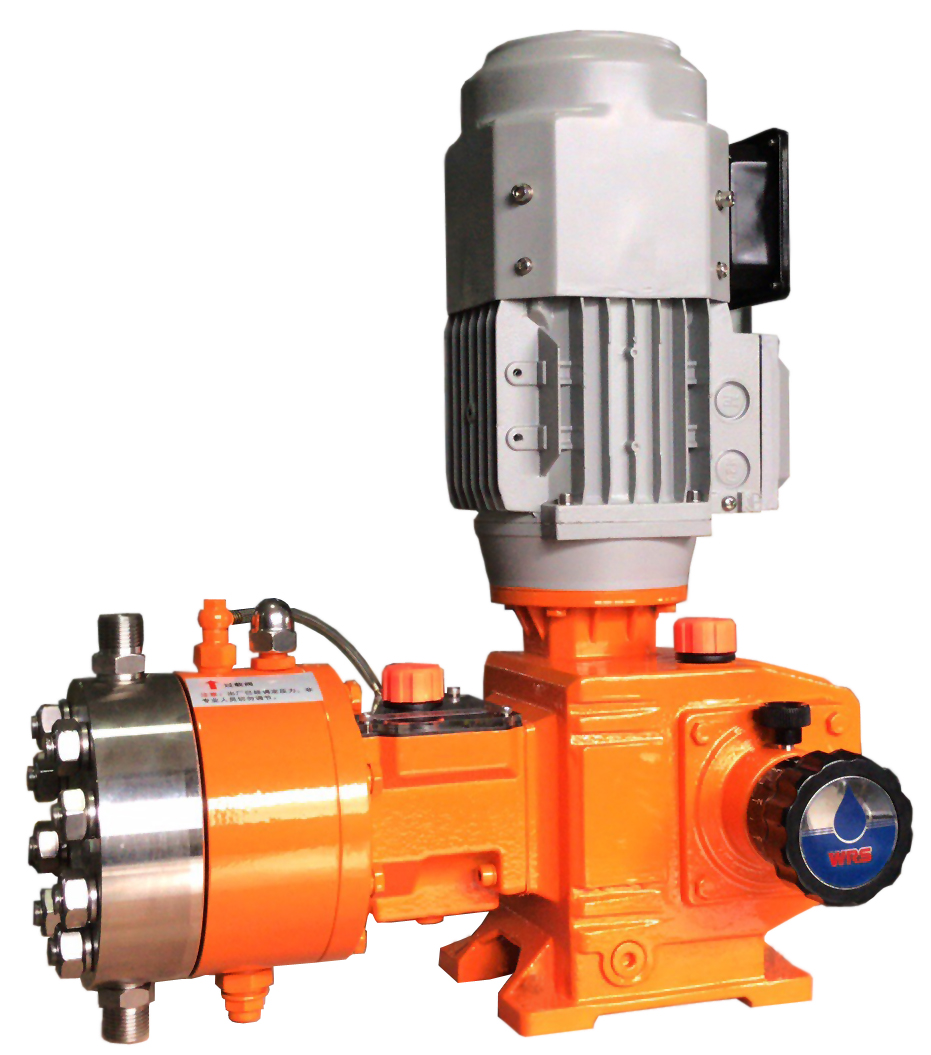
The practical test is simple. Ask the supplier to state, in writing, every drive type and accessory they manufacture under their own quality system, and then check whether those items match the project's full dosing loop. A range that stops at one pump type is not automatically disqualifying, but it changes the buyer's scope of work.
Layer 3 — Material Selection Capability for Strong Corrosive Liquids
Material selection is where supplier capability is easiest to fake and easiest to verify. Different media require different materials, and no single wetted material covers every chemical. Across the WRS range, pump heads are offered in PVC, PVDF and SS316, with SS316L used on certain digital models.
For highly corrosive media, PVDF is the recommended pump head material. That recommendation is not a marketing preference; it is a corrosion-compatibility decision that must be made against the actual medium, concentration and temperature. Digital pumps in the range use a full PTFE diaphragm for corrosion resistance, and hydraulic metering pumps are built with a zero-leakage design intended for toxic and hazardous media, with an optional diaphragm rupture sensor.
During due diligence, ask three questions: which wetted parts change when the medium changes; which material the supplier recommends for the specific chemical and why; and whether the recommended material is available with the control mode and motor option the project already requires. A supplier who can answer all three is demonstrating engineering capability rather than quoting from a stock list.
Layer 4 — Manufacturing, R&D and Inspection Evidence
Manufacturing evidence separates manufacturers from resellers. Verifiable first-party facts for WRS include a 15,000 m² facility, 120 employees with more than 100 staff in production and support roles, an R&D team of 15 engineers, an annual output of 30,000 units, and an export ratio of around 20% with main markets in Southeast Asia, Russia and South America.
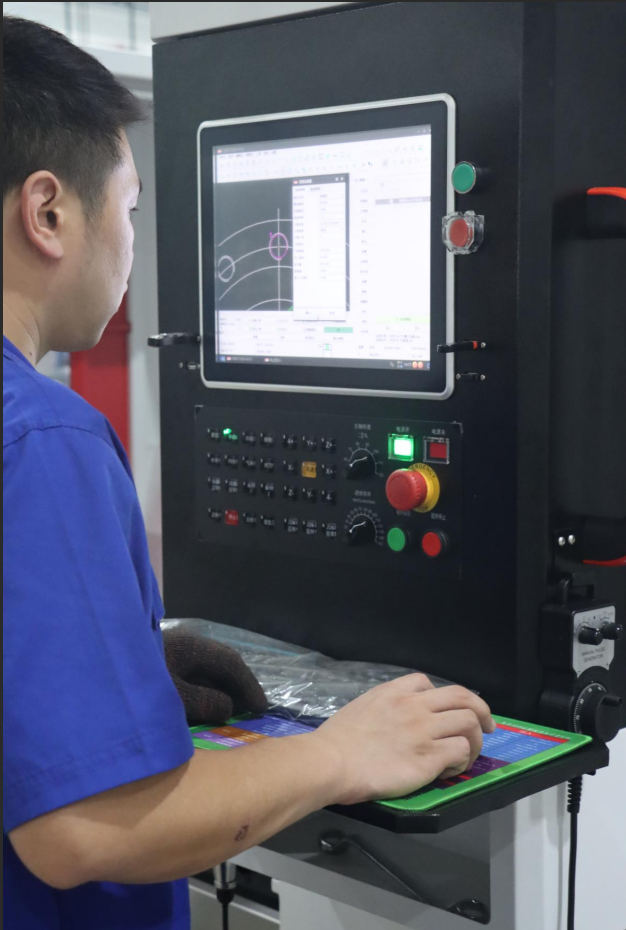
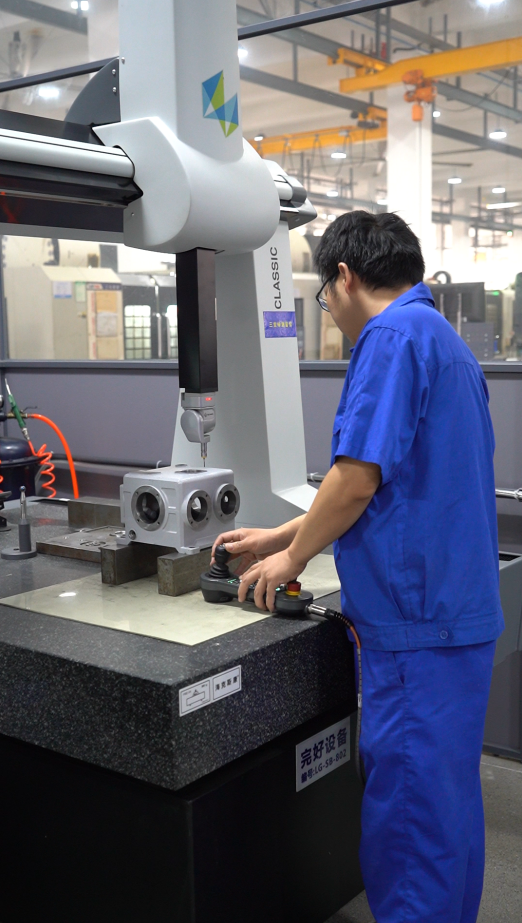
The second half of this layer is inspection. Dimensional checking with a three-dimensional coordinate measuring machine, dedicated assembly workshops, a process workshop and internal test platforms are the concrete artefacts a buyer can request to see. When reviewing a new supplier, request a short factory walkthrough covering machining, assembly and testing, and ask which inspection step applies to the specific model being purchased.
Layer 5 — Commercial Verification: Configuration, Accessories and Documentation
Commercial checks confirm that what was quoted is what will be built. Four items are worth writing into the offer stage.
- Control mode. Manual control is sufficient for simple dosing, while remote control via 4-20mA or pulse signal and Modbus RS-485 communication is required for automated plants. Digital models in the WRS range provide direct flow rate display, a ratio rate of 1:1000 and accuracy stated as less than 1% precision.
- Motor configuration. Mechanical diaphragm, piston and hydraulic models are commonly offered with frequency and explosion-proof motor options, which changes both the specification and the documentation.
- Accessory set. Items such as PE tube, foot valve, weight, injection valve and safety valve are part of the delivered scope on solenoid models, and their inclusion or exclusion should be confirmed line by line.
- Accuracy claim verification. Solenoid models are specified with 1% dosing accuracy and a double-ball check valve design on both inlet and outlet to support discharge accuracy. Buyers should ask for this claim to be tied to the test record of the unit being shipped.
Layer 6 — Delivery Assurance and Post-Order Accountability
Delivery assurance is a capability question, not a promise. Three checks make it verifiable: whether annual output capacity is proportionate to the order size, whether a spare parts inventory is held, and whether after-sales service physically exists in the buyer's region.
WRS holds a spare parts warehouse and has established local after-sales service in more than 10 countries, including Singapore, Thailand, Malaysia, Vietnam, South Korea, Japan, Russia, Chile, South Africa, Angola and Turkey. For a buyer in one of those markets, the difference is measurable at the level of response time and part availability rather than in the offer document.
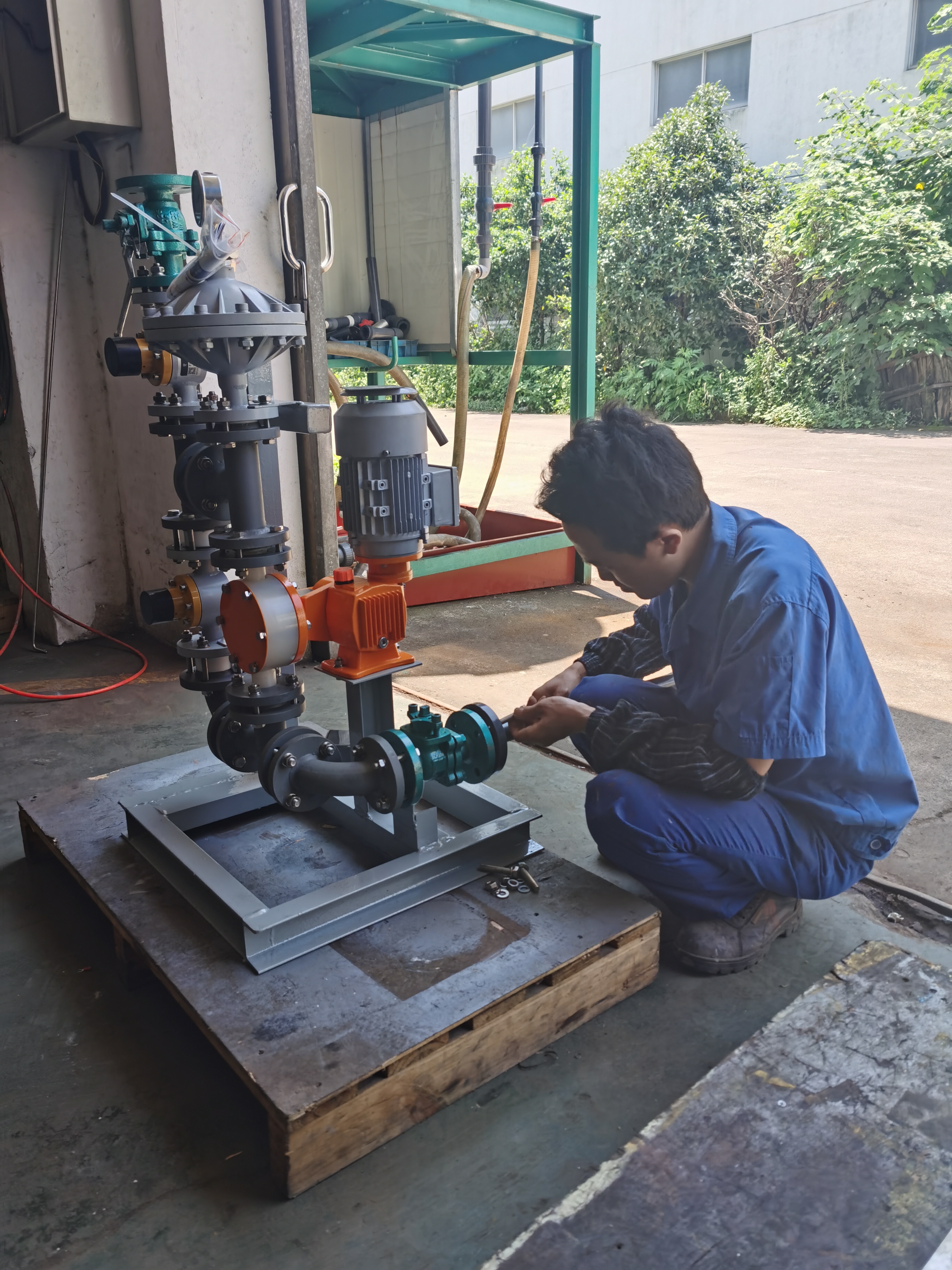
Finally, define acceptance in the purchase order: the model and wetted material, the control mode, the protection rating, the accessory list, the test documentation, and the person accountable after delivery. An order with no acceptance criteria has no leverage at the receiving inspection.
Step-by-Step: Seven Checks That Turn Supplier Claims Into Evidence
- Build the duty sheet. Record required flow rate against the site maximum flow rate, plus operating pressure, medium, concentration and temperature. Flow rate drives the selection; pressure, pump head material and motor refine it.
- Fix the wetted material set. Decide the pump head material from the medium. Use PVDF for highly corrosive liquids, and confirm which seals, valves and diaphragms follow that choice.
- Test the range claim. Request the full model list across drive types, plus check valves, pulse dampeners, chemical dosing systems and monitoring instruments. Confirm availability for the exact material and motor combination required.
- Request manufacturing and inspection evidence. Facility size, workforce, R&D engineers, annual output, machining equipment, dimensional inspection and internal test platforms.
- Confirm the commercial configuration in writing. Control mode, motor option, connection type, accessory set, documentation and packaging.
- Validate with a sample or pilot unit. Ask for the test record of the unit supplied, and compare the accuracy claim against your own medium and duty point.
- Lock delivery and accountability into the order. State the required inspection before dispatch, the spare parts expectation and the after-sales contact path in the purchase order.
Where Delivery Assurance Decides the Outcome: Application Patterns
Delivery assurance matters most where the dosing point is continuous and the medium is aggressive or the environment is hostile. Four patterns illustrate the point.
- Water and wastewater treatment. This remains the largest application area globally, with a 23.2% application share of the metering pump market in 2025. Mechanical diaphragm models such as the MA0120PQ11 (15–500 L/H, 5–10 bar) and the MB1800PQ11 (250–1800 L/H, 3–10 bar) in PVC, PVDF or SS316 are typical choices, and they are specified for corrosive liquids with multi-layer diaphragms for longer service life.
- Harsh humid environments. A livestock farm project in Russia required nutrient solution dosing on a 24/7 automatic system in a humid hoggery environment, with IP67 protection specified for the installation. Standard solenoid and digital models in the WRS range carry IP65 protection, so the higher rating had to be confirmed against the site condition rather than assumed from the standard specification.
- High-pressure chemical injection. The HS008S0P01S11 hydraulic metering pump delivers 2 L/H at 200 bar through a DN6 bevel end welding tube with a 0.37 kW motor, in SS316, for oil and gas, hydrogen energy, electric power, chemical, pharmaceutical and new material industries. In this category, a missing spare part stops production.
- High-flow dosing and digital control. The HL090S0P01F11 hydraulic pump reaches 1600 L/H at 6 bar with a DN50 flange and a 1.5 kW motor, while digital models such as the EMAP1000PQ1C (1000 L/H, 4 bar, DN25 socket) and the EMML0060FP1E (60 L/H, 4 bar, Rc 1/2 inch thread) support remote control and flow rate display for automated processes.
Comparison Table: Dosing and Metering Pump Range at a Glance
The table below uses published WRS specifications. It is included as a format example: a buyer should be able to build the same table for any candidate supplier before awarding an order.
| Model | Pump type | Flow rate | Pressure | Wetted material | Connection / motor |
|---|---|---|---|---|---|
| ML0008PR1C | Solenoid dosing pump, manual control | 1–20 L/H | 1–10 bar | PVC, PVDF, SS316 | 220V/110V, IP65 |
| EML0020PR1C | Solenoid dosing pump, remote control | 1–20 L/H | 1–10 bar | PVC, PVDF, SS316 | 220V/110V, IP65 |
| EMML0060FP1E | Digital dosing pump | 60 L/H | 4 bar | PVC, PVDF, SS316L | Rc 1/2 inch thread, 220V/1P/20W |
| EMGP0200FP1C | Digital pump | 200 L/H | 4 bar | PVC, PVDF, SS316 | Rc 1/2 inch thread, 220V/1P/60W |
| EMAP1000PQ1C | Digital pump | 1000 L/H | 4 bar | PVC, PVDF | DN25 socket, 220V/1P/20W |
| MG0150PQ11 | Mechanical diaphragm | 15–150 L/H | 5–10 bar | PVC, PVDF, SS316 | Power input on request |
| MA0120PQ11 | Mechanical diaphragm | 15–500 L/H | 5–10 bar | PVC, PVDF, SS316 | Frequency and explosion-proof motor available |
| MB1800PQ11 | Mechanical diaphragm | 250–1800 L/H | 3–10 bar | PVC, PVDF, SS316 | Frequency and explosion-proof motor available |
| PM060SS1PFN11 | Piston dosing pump | 600 L/H | 8 bar | SS316 | DN25 flange, 0.75 kW |
| PD105SS1PFN11 | Piston dosing pump | 600 L/H | 8 bar | SS316 | DN50 flange, 4.0 kW |
| HS008S0P01S11 | Hydraulic metering pump | 2 L/H | 200 bar | SS316 | DN6 bevel end welding tube, 0.37 kW |
| HL090S0P01F11 | Hydraulic metering pump | 1600 L/H | 6 bar | SS316 | DN50 flange, 1.5 kW |
Due Diligence Checkpoints and the Evidence Behind Them
| Checkpoint | Evidence to request | Why it decides the order |
|---|---|---|
| Duty envelope | Flow rate against site maximum flow, pressure, medium, temperature | Flow rate is the primary selection parameter; over-specifying pressure or motor size adds avoidable cost |
| Wetted materials | Pump head material options for the actual medium | PVDF is recommended for highly corrosive media; PVC, PVDF and SS316 are not interchangeable |
| Supplied scope | Pump, check valve, pulse dampener, monitoring instruments | Determines whether the dosing loop has one accountability chain or several |
| Manufacturing capability | Facility size, workforce, R&D engineers, annual output, machining equipment | Separates manufacturers from resellers |
| Inspection and testing | Test record for the specific unit, protection rating, accuracy claim | Defines what accepted means before shipment |
| Delivery and support | Spare parts availability, after-sales service locations, escalation contact | Decides whether downtime is measured in days or in weeks |
Frequently Asked Questions
Which standards should a dosing pump manufacturer be able to document?
Positive displacement reciprocating pumps with controlled capacity are commonly specified against API 675, while rotary positive displacement pumps follow ISO 14847:1999. Units placed on the EU market carry CE marking under the Machinery Regulation, which replaces Directive 2006/42/EC from 2027. A declaration of conformity is only useful if it names the exact model and configuration being shipped; a catalogue-level certificate does not automatically cover a unit ordered with an explosion-proof motor or a different pump head material. Protection ratings belong in the same check: WRS solenoid and digital dosing pumps are rated IP65, while some sites demand more, which is why a livestock project in Russia required IP67 protection for nutrient solution dosing.
How can a buyer confirm that a supplier's range goes beyond one dosing pump type?
Ask for the model list by drive type and for the accessory list in writing. The WRS range covers solenoid dosing pumps, digital dosing pumps, mechanical diaphragm dosing pumps, piston dosing pumps and hydraulic metering pumps, together with dosing pump check valves, dosing pump pulse dampeners, chemical dosing systems, streaming current monitoring systems and chemical injection pumps. The decisive questions are whether the pump head material is available in PVC, PVDF or SS316 for the required model, and whether the motor option — standard, frequency or explosion-proof — can be supplied on the same order. A range that covers the whole dosing loop reduces the number of interfaces the buyer has to manage.
What factors actually drive the cost of a dosing pump order?
Cost is driven by configuration, not by the pump label alone. The variables that move an order are the drive type and pump family, the pump head material selected for the medium (PVC, PVDF or SS316/SS316L), the control mode (manual versus remote control with 4-20mA or pulse signal and Modbus RS-485 communication), the motor configuration (standard, frequency or explosion-proof), and the accessory set, which on solenoid models includes items such as PE tube, foot valve, weight, injection valve and safety valve. Fixing flow rate first, and refining pressure, material and motor afterwards, is the most reliable way to avoid paying for capacity the process does not need.
Can a dosing pump be validated before a full order is placed?
Yes, and the validation should be evidence-based rather than demonstrative. Request a sample or pilot unit matched to the duty point, together with the test record for that unit. WRS operates internal test platforms and states 1% dosing accuracy on solenoid models with a double-ball check valve design on both inlet and outlet, while digital models are specified at less than 1% precision with a ratio rate of 1:1000. During validation, also confirm the accessory set and the troubleshooting path: a falling or unstable discharge flow rate is usually caused by a blocked inlet or outlet, corrected by checking the strainer, tubing and valves and replacing parts as needed.
What should be checked to ensure delivery reliability and post-order accountability?
Verify three things before ordering: production capacity relative to the order size, the availability of spare parts, and the physical location of after-sales support. WRS operates a 15,000 m² facility with an annual output of 30,000 units, holds a spare parts warehouse, and has established local after-sales service in more than 10 countries, including Singapore, Thailand, Malaysia, Vietnam, South Korea, Japan, Russia, Chile, South Africa, Angola and Turkey. Put the acceptance criteria, accessory list and spare parts expectation into the purchase order, and name the escalation contact. Buyers who want to start that process can request a sample, a quotation, or the product catalogue through wrsdosing.com or the contact below.
Conclusion: Verify the Range, the Material and the Delivery Path
Dosing pump supplier due diligence is a short list of verifiable questions: what the manufacturer actually builds, which wetted material they recommend for the specific medium, what inspection happens before dispatch, and who is accountable after delivery. Flow rate drives the selection, PVDF is the recommended pump head material for highly corrosive media, and a pump range that extends across solenoid, digital, mechanical diaphragm, piston and hydraulic types — together with check valves, pulse dampeners and monitoring instruments — keeps the dosing loop under one accountability chain.
WRS (ZHEJIANG WRS MACHINERY EQUIPMENT CO., LTD) manufactures fluid dosing equipment at a 15,000 m² facility in Hangzhou, Zhejiang, China, with 15 R&D engineers and an annual output of 30,000 units, serving water treatment, electroplating and surface treatment, chemical, oil and gas, hydrogen power generation, paper and pulp, semiconductor, mining and livestock applications.
Next Step: Sample, Quotation or Catalogue
Send your duty sheet — flow rate, pressure, medium and control requirement — and WRS will confirm the suitable model, wetted material and motor option before quotation.
Download the WRS product brochure (PDF)
Website: www.wrsdosing.com
Contact: Isak — isak@wrsindustry.com — Tel / WhatsApp: +86-173 0642 4430
Address: No. 108 Shixin Rd, Xiaoshan Region, Hangzhou City, Zhejiang, China
Have Questions or Need More Details?
Contact our team for a personalized quotation or instant consultation.
Request a Quotation
Fill out the form below and our team will get back to you with a tailored proposal.
WhatsApp Direct Chat
Prefer to chat in real-time? Message us on WhatsApp for instant assistance & quick answers.
- Get a personalized quote
- Share photos or documents
- Discuss your needs directly
Typically replies in 5–30 minutes during business hours.