Dosing Pump Supplier for the Long Term: What Distributors and Plants Should Check
Dosing Pump Supplier for the Long Term: What Distributors and Plants Should Check
A practical guide for procurement teams, distributors, OEMs, and plant operators who want a dosing pump partner that can support them beyond the first order.
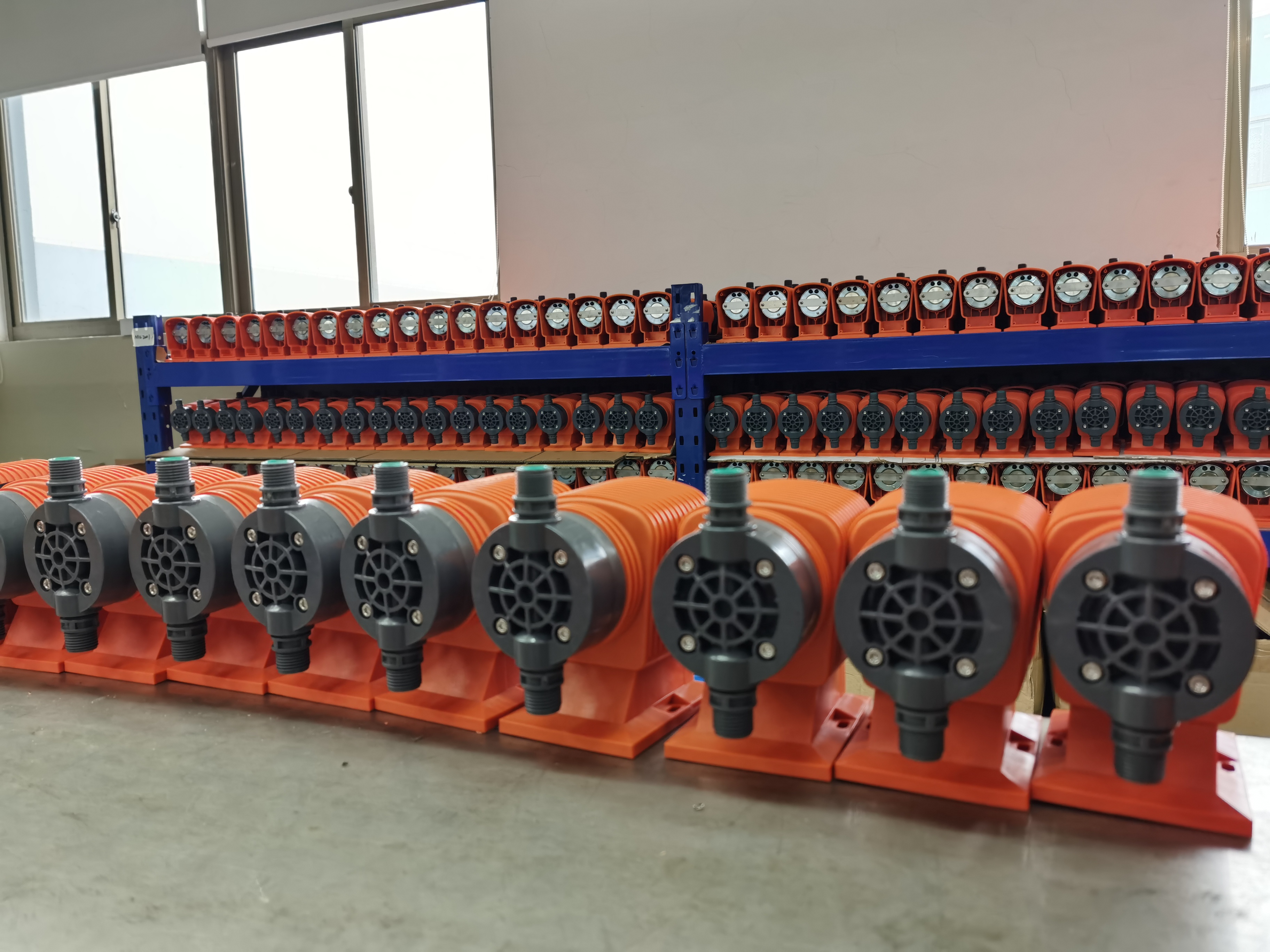
Finished WRS dosing pumps and system equipment.
Buying a dosing pump is a supply-chain decision, not a spot purchase. The pump must deliver a precise volume of chemical into a process under changing conditions, and any failure can affect product quality, safety, and operating cost. That is why a long-term dosing pump supplier should be evaluated on more than price. Product range, manufacturing depth, material coverage, after-sales service, and commercial flexibility all determine whether the pump can be supported over its full service life.
ZHEJIANG WRS MACHINERY EQUIPMENT CO., LTD., founded in 2016 and based in Hangzhou, China, manufactures a broad dosing pump portfolio under the WRS name. The company operates a 15,000 m² factory with 120 employees, 15 engineers, and an annual output of 30,000 units. Around 20% of production is exported, mainly to Southeast Asia, Russia, and South America. For distributors, OEMs, and plant operators, a supplier of this type can be evaluated not only as a pump vendor but as a long-term ecosystem partner.
Problem Definition: Why a Dosing Pump Purchase Is a Long-Term Relationship
At the decision-to-execution stage, procurement teams often narrow the choice to pump price, delivery date, and basic parameters. Yet the total cost of ownership includes pump head material, check valves, pulse dampeners, control compatibility, and the ability to maintain the pump for years. A pump that stops because its inlet or outlet is blocked can usually be restored by checking the strainer, tubing, and valves and cleaning or replacing them. But that only works when the user has access to the correct spare parts and technical guidance.
For a distributor, the risk is different. If the distributor sells a pump model without understanding the required accessories, the customer may later struggle with an incompatible check valve or an unstable injection point. For an OEM or system builder, the risk is supplier discontinuity: a single-source vendor who cannot maintain quality, adapt parameters, or supply related components becomes a bottleneck. A long-term dosing pump partner should solve these problems through product breadth, manufacturing control, and after-sales service.
Industry Background: A Growing Market Needs Reliable Supply Partners
The dosing pump industry is substantial and continues to grow. The global dosing pump market was valued at approximately USD 8.86 billion in 2024 (Grand View Research). Asia Pacific accounted for 41.8% of global revenue in the same year. Diaphragm dosing pumps led the product segment with a 55.7% revenue share. In the adjacent metering pump market, motor-driven metering pumps held a 54.45% revenue share in 2025, while solenoid-driven dosing pumps are projected to grow at a CAGR of 5.88% through 2031 (Mordor Intelligence). Water and wastewater treatment represented a 23.2% application share in the global metering pump market (Grand View Research). Separately, the chemical injection pump market was valued at USD 3.5 billion in 2024 (HTF Market Intelligence).
China is also a major source of liquid pump exports. China's liquid pump exports, including dosing types, reached USD 14.3 billion in 2024 (OEC). This global supply base means buyers can choose from many manufacturers, but it also increases the importance of verifying the long-term capability of a chosen partner. A growing market creates more demand for repeat orders, spare parts, local service, and stable product quality.
Detailed Solution: What a Long-Term Dosing Pump Supplier Should Offer
Long-term supply is not solved by a single pump model. The supplier should cover enough product and service areas to support a dosing application through design, commissioning, operation, and maintenance.
Complete Product Range
WRS product lines include metering pumps, solenoid dosing pumps, diaphragm dosing pumps, piston dosing pumps, digital dosing pumps, dosing pump check valves, dosing pump pulse dampeners, chemical dosing systems, streaming current monitoring systems, and chemical injection pumps. For a distributor, this breadth reduces the number of suppliers that must be qualified. For a plant, it means the check valve and pulse dampener can be sourced from the original pump manufacturer instead of being matched from the aftermarket.
Manufacturing Depth
WRS operates a 15,000 m² manufacturing facility with approximately 120 staff and 15 engineers. The production process includes CNC machining, assembly, and device testing, with test platforms and a three-dimensional coordinate measuring machine used for inspection. WRS has an annual output of 30,000 units. Manufacturing depth matters for long-term buyers because it affects delivery stability, defect prevention, and the ability to handle repeat orders without depending on outside assembly.
Material and Model Flexibility
WRS pump head materials include PVC, PVDF, SS316, and SS316L. For strongly corrosive liquids, PVDF is the recommended pump head material. The portfolio includes models from a 2 L/H hydraulic metering pump at 200 bar to mechanical diaphragm pumps up to 1,800 L/H, as well as digital dosing pumps with IP65 protection. Selected piston and mechanical diaphragm models can be supplied with frequency motors or explosion-proof motors. This range allows engineering and procurement teams to match the pump to the chemical, pressure, and control environment rather than forcing the process to fit a limited product line.
For high-precision liquid dosing, dosing pumps can achieve accuracy within 2%, while screw pumps are typically around 5% in comparable low-flow conditions. For small flow rates, the cost of a dosing pump is at least 50% lower than a screw pump, with less maintenance and higher efficiency. This is why a specialist dosing pump supplier is different from a general pump supplier: the engineering focus, precision requirement, and accessory matching are all built around accurate liquid addition.
After-Sales and Regional Service
WRS has established local after-sales service in more than 10 countries, including Singapore, Thailand, Malaysia, Vietnam, South Korea, Japan, Russia, Chile, South Africa, Angola, and Turkey. For distributors and plant owners, this helps answer the most practical long-term questions: Where can I get spare parts? Who can help with commissioning? Is there a local contact for technical issues? A dosing pump is a precision instrument; local service support reduces downtime and protects the relationship between the manufacturer, the distributor, and the end user.
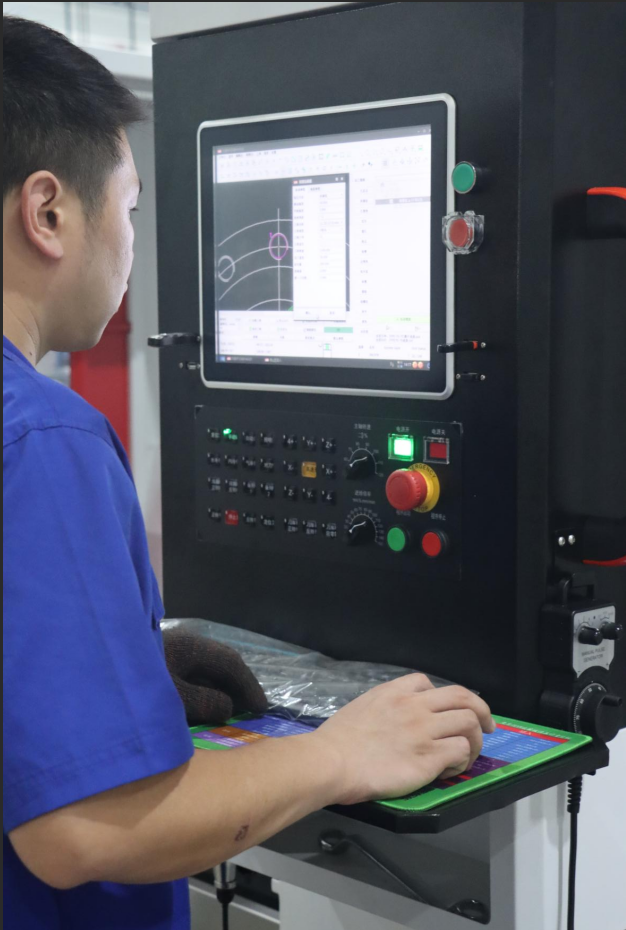
CNC Center at the WRS manufacturing facility.
Step-by-Step Breakdown: How to Evaluate a Dosing Pump Supplier for Long-Term Success
Use the following eight-step framework when comparing dosing pump suppliers for a long-term distribution, OEM, or plant operation agreement.
Step 1: Define Your Partnership Model
Clarify whether you need a distributor, OEM integration partner, EPC support supplier, or direct plant supplier. Each model places different weight on pricing, customization, spare parts, and local service. A distributor may need private labeling and regional inventory support, while a plant operator may need commissioning assistance and preventive maintenance guidance.
Step 2: Audit the Product Portfolio
Check whether the supplier can cover the pump types and accessories you are likely to sell or operate. A supplier should be able to provide solenoid, diaphragm, piston, digital, and chemical injection pumps, as well as check valves and pulse dampeners. The WRS range covers these categories, which supports one-stop sourcing and reduces compatibility risk.
Step 3: Verify Manufacturing Capability
Look for evidence of in-house production, not only assembly of bought-in parts. Useful indicators include factory size, number of employees, engineering headcount, annual output, and inspection equipment. WRS has a 15,000 m² factory, 120 employees, 15 engineers, 30,000 units annual output, CNC centers, and test platforms.
Step 4: Check Material and Chemical Compatibility
A long-term pump partner should help you match the pump head material to the actual chemical. PVDF is recommended for highly corrosive media; PVC is common for water treatment and general chemical addition; SS316 and SS316L are used where higher cleanliness, strength, or compatibility is required. Ask for the material list on each quotation, not only for the pump body but also for valves and seals.
Step 5: Evaluate Engineering and Customization Support
Long-term buyers often need adjustments such as different voltage, connection type, motor protection, or control mode. WRS has an engineering team of 15 people and can offer frequency motors and explosion-proof motors on selected models. Review the supplier's willingness to document changes and test custom configurations.
Step 6: Inspect Quality Assurance and Test Procedures
Ask about production testing, final inspection, and pre-shipment testing. WRS procurement terms include pre-shipment testing as part of the acceptance process. This is important because a performance test before shipment can catch flow, pressure, or material problems before the pump enters international logistics.
Step 7: Review the After-Sales Network
Confirm what happens after a problem is identified. WRS has local after-sales service in more than 10 countries, including multiple markets in Southeast Asia, Russia, South America, and Africa. In addition, common troubleshooting knowledge should be available. For example, if discharge flow drops or becomes unstable, the inlet or outlet may be blocked; the standard response is to check the strainer, tubing, and valves and clean or replace them if necessary.
Step 8: Align Commercial Terms and Start with a Pilot Order
For WRS, the published procurement terms are an MOQ of 1 unit, FOB delivery, 100% payment in advance, and pre-shipment testing. These terms make pilot ordering practical. After confirming the pilot unit, a distributor or plant can build a repeat-order schedule that matches project timing.
Use Cases: Long-Term Dosing Pump Partnerships in Action
Use Case 1: Water Treatment and Swimming Pool Distribution in Southeast Asia
A distributor serving water treatment plants, pure water systems, and swimming pool applications needs pumps with stable low-flow performance and multiple material options. The WRS ML0008PR1C solenoid pump covers 1–20 L/H at 1–10 bar, with IP65 protection and manual control. The EMML0060FP1E digital dosing pump covers 60 L/H at 4 bar, with IP65 protection and 220V/1P/20W power. Materials include PVC, PVDF, and SS316 or SS316L depending on model. With local service points in Thailand, Malaysia, Vietnam, and Singapore, this type of partner can support distributors as they expand their regional customer base.
Use Case 2: Chemical Injection Packages Requiring Piston and Hydraulic Pumps
Oil and gas, chemical, and new energy applications often need higher-pressure injection. The WRS PM060SS1PFN11 piston pump delivers 600 L/H at 8 bar with a DN25 flange, SS316 material, and a 0.75 kW motor. The HS008S0P01S11 hydraulic metering pump delivers 2 L/H at 200 bar with a DN6 bevel-end welding tube, SS316 material, and a 0.37 kW motor. Both models can be supplied with frequency or explosion-proof motors. For an EPC or process plant, having both piston and hydraulic pump options from one manufacturer supports a longer engineering relationship rather than multiple single-purpose suppliers.
Use Case 3: Livestock Nutrient Dosing in a Harsh Environment
A livestock application in Russia required nutrient solution dosing in a harsh, humid farm environment. The operation ran 24/7 and required an automatic system with IP67 protection. This example shows that a dosing pump supplier must consider environmental protection, automation, and application-specific requirements. WRS's after-sales service coverage in Russia provides a regional contact point for this kind of continuous-operation dosing system.
Comparison Table: Dosing Pump Partner Evaluation Matrix
The table below is not a ranked brand comparison. It is a decision matrix that procurement teams can use to compare actual supplier capabilities.
| Evaluation Area | Why It Matters | WRS Evidence |
|---|---|---|
| Product range | A long-term partner should cover more than one pump type | Metering, solenoid, diaphragm, piston, digital, and chemical injection pumps; check valves and pulse dampeners |
| Manufacturing capacity | Ability to support repeat orders and delivery schedules | 15,000 m² factory; 120 employees; 15 engineers; 30,000 units annual output |
| Quality control | Consistency across batches reduces plant risk | Test platforms, 3D coordinate measuring machine, pre-shipment testing |
| Material coverage | Chemical compatibility is a core selection criterion | PVC, PVDF, SS316, SS316L pump head materials |
| After-sales service | Spare parts and local support extend pump life | Local after-sales service in more than 10 countries, including Singapore, Thailand, Malaysia, Vietnam, Russia, and Turkey |
| Commercial flexibility | Low MOQ enables piloting and staged buying | MOQ 1 unit; FOB; 100% payment in advance; pre-shipment test |
Frequently Asked Questions
1. Does the dosing pump supplier meet international compliance requirements?
For dosing pumps exported to the EU, CE marking is required for metering pump units under the EU Machinery Regulation, which replaces Directive 2006/42/EC from 2027. Buyers should ask the supplier for markings, technical documentation, and test reports for each shipment. At the material level, the supplier should also confirm chemical compatibility. WRS offers PVC, PVDF, SS316, and SS316L pump head options, and PVDF is recommended for highly corrosive liquids.
2. Can one dosing pump supplier handle pumps, accessories, and complete systems?
Yes, if the supplier is system-oriented. WRS product lines cover solenoid, diaphragm, piston, and digital dosing pumps, metering pumps, chemical injection pumps, dosing pump check valves, dosing pump pulse dampeners, chemical dosing systems, and streaming current monitoring systems. This reduces the number of suppliers a distributor or plant needs to manage for a typical dosing skid or chemical addition station.
3. What are the typical ordering terms for WRS dosing pumps?
According to WRS procurement information, the MOQ is 1 unit, the delivery method is FOB, the payment method is 100% payment in advance, and acceptance includes a pre-shipment test. These terms make a first order practical as a pilot before larger volumes are scheduled.
4. How can we sample or pilot a dosing pump before committing to long-term supply?
Because the MOQ is one unit, a pilot order is practical for distributors and plant operators. Before production, confirm flow rate, pressure, pump head material, connection type, voltage, and control mode. After production, the pre-shipment test verifies the pump's performance before the goods leave the factory.
5. What is the lead time for a WRS dosing pump order?
WRS does not publish a fixed lead time because the schedule depends on product type, material, motor configuration, and current order load. To get an accurate delivery date for a specific model or custom specification, contact WRS directly with your pump parameters and request a quotation. You can write to isak@wrsindustry.com or WhatsApp +86 173 0642 4430.
Conclusion
Choosing a long-term dosing pump supplier is a relationship decision, not only a first-order decision. Product range, manufacturing depth, material flexibility, after-sales service, and commercial terms all determine whether the pump can be supported for years. ZHEJIANG WRS MACHINERY EQUIPMENT CO., LTD., with its WRS dosing pump portfolio, offers a practical example of a mid-size manufacturer built around fluid dosing: in-house production, 30,000 units annual output, PVC/PVDF/SS316/SS316L material options, and service coverage in more than 10 countries.
At the execution stage, the most reliable path is to place a small pilot order, review the actual test result, and then build a repeat-order plan. If you are evaluating WRS as a long-term dosing pump partner, send your flow rate, pressure, chemical, and voltage requirements to isak@wrsindustry.com or WhatsApp +86 173 0642 4430. For additional reference, you can download the WRS brochure: WRS Diaphragm Separator Brochure.
Need a long-term dosing pump supply plan?
Contact WRS to request a quotation, technical specification, or pilot order.
Email: isak@wrsindustry.com | WhatsApp: +86 173 0642 4430
Website: www.wrsdosing.com
Have Questions or Need More Details?
Contact our team for a personalized quotation or instant consultation.
Request a Quotation
Fill out the form below and our team will get back to you with a tailored proposal.
WhatsApp Direct Chat
Prefer to chat in real-time? Message us on WhatsApp for instant assistance & quick answers.
- Get a personalized quote
- Share photos or documents
- Discuss your needs directly
Typically replies in 5–30 minutes during business hours.