
Matching Dosing Pump Type to Corrosive Fluid Projects
A project handling a strong corrosive liquid needs two decisions in the right order: fix the wetted material first, then choose the pump type that fits the fluid and the operating scenario. Reverse that sequence and a technically compliant unit still becomes a wrong order. This guide covers material selection for strong corrosive liquids, pump-type fit across Dosing Pump, Piston Pump, Solenoid Pump and Hydraulic Pump options, and the purchasing terms and acceptance criteria that close the loop before shipment.
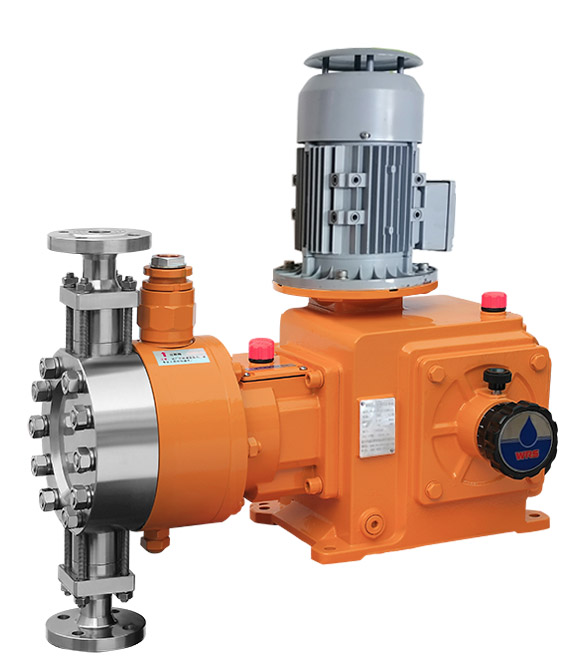
Hydraulic pump unit from the WRS PTE LTD dosing range — one of the four options compared in this corrosive-fluid application guide.
The short answer for strong corrosive duty
For highly corrosive media, a PVDF pump head is the recommended material choice. Around that material decision, pump type follows the duty: a diaphragm dosing pump carries the majority of corrosive chemical feed work, a Hydraulic Pump fits continuous service where the drive must stay isolated from the medium, a Solenoid Dosing Pump fits compact electronically controlled dosing points, and a Piston Pump is a conditional option that only applies once the wetted path is confirmed compatible with the medium.
That sequence does not remove the final verification step. Order terms, certification scope and acceptance criteria are what turn a selection into a delivered and accepted installation.
Problem definition: where corrosive dosing projects go wrong
Corrosive projects rarely fail because corrosion was ignored. They fail because the material decision and the pump-type decision were taken in isolation, or because one of them was taken from a single number.
Flow-first selection. WRS selection logic puts flow rate first: the required flow rate is compared with the maximum flow rate available at the site, and pressure, pump head material and motor are refined afterwards. Flow rate is the right starting parameter, but it does not select a wetted material. A pump can meet the flow figure and still be the wrong unit for the medium.
Type and medium decided separately. A Piston Pump, a Solenoid Dosing Pump and a hydraulic diaphragm unit present very different wetted paths. When the type is chosen from a catalogue category rather than from the fluid and the operating scenario, the material conversation happens too late to change the outcome.
No acceptance gate. Without written acceptance criteria, a project team discovers a mismatch after installation, when the discussion is no longer about specification.
It also helps to separate corrosion symptoms from ordinary hydraulic faults. A documented symptom in dosing service is a discharge flow rate drop or an unstable flow rate, and the documented cause is a blocked inlet or outlet. The check is the strainer, tubing and valves — cleaned, and replaced where necessary — before any material question is raised.
Industry background: what the corrosive-duty market looks like
Dosing equipment is a large and still-expanding category, and corrosive chemical service sits inside it rather than beside it. The global dosing pump market was valued at approximately USD 8.86 billion in 2024, with Asia Pacific holding a 41.8% revenue share that year (Grand View Research). Diaphragm dosing pumps led the product segments with a 55.7% revenue share in 2024 (Grand View Research), and motor-driven metering pumps held a 54.45% revenue share in 2025 (Mordor Intelligence).
Drive technology is shifting at the edges rather than at the centre. Solenoid-driven dosing pumps are projected to grow at a CAGR of 5.88% through 2031 (Mordor Intelligence), which matters for projects that want fine electronic control at smaller dosing points. On the supply side, China's liquid pump exports, including dosing types, reached USD 14.3 billion in 2024 (OEC), and the separate chemical injection pump category was valued at USD 3.5 billion in 2024 (HTF Market Intelligence). Water and wastewater treatment remains the largest single application block for metering pumps at a 23.2% share (Grand View Research).
The compliance layer has moved too. EU Machinery Regulation, which repeals 2006/42/EC from 2027, mandates CE marking for metering pump units (European Commission). Where a project specification calls for API 675 — the primary international standard for positive displacement reciprocating pumps with integrated controlled capacity — or ISO 14847:1999 for rotary positive displacement pump requirements, those are added on top of the CE file rather than replaced by it.
Material selection guidance for strong corrosive liquids
Different media have different materials available for selection, and a pump head that suits one aggressive fluid is not automatically right for another. The practical rule used in this range is direct: for highly corrosive media, PVDF pump head material is recommended. PVC and SS316 pump heads remain available for media where those materials are the appropriate match.
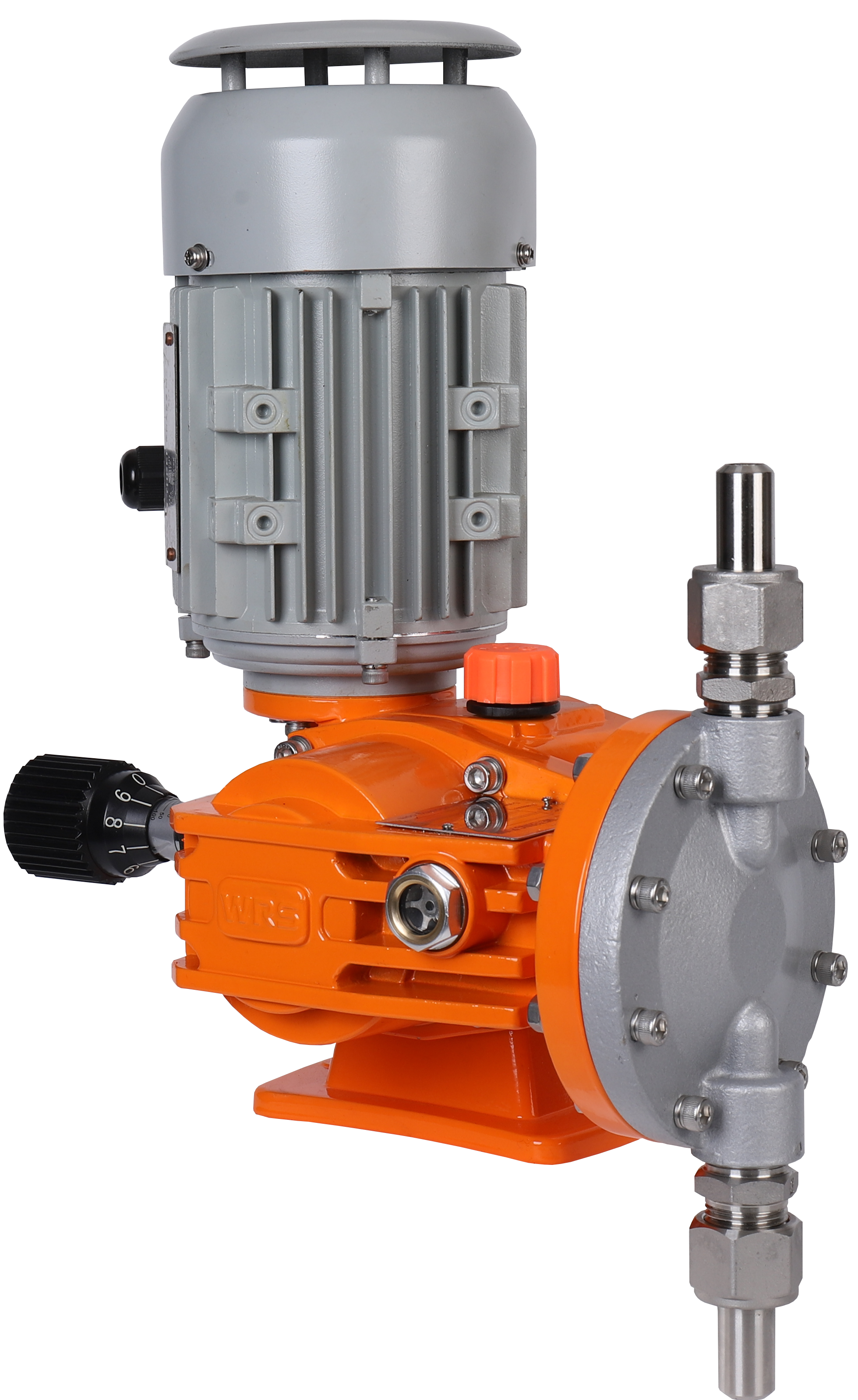
Pump head material options in the WRS range include SS316, PVC and PVDF; PVDF is the recommended choice where the medium is highly corrosive.
Three rules keep material selection honest:
- Name the medium, do not describe it. Chemical name and concentration belong on the enquiry. A material cannot be confirmed from a description such as “acidic waste”.
- Treat the whole wetted path as one decision. The pump head is the visible component, but the check valve, diaphragm and tubing are also in contact with the fluid and must be confirmed together.
- Do not extrapolate between similar-sounding media. “Different media have different materials available for selection” is the operating rule; the safe action is to confirm the material per project instead of reusing a previous selection.
For a highly corrosive duty point, that means the enquiry should state the medium, the required flow rate, the discharge pressure and the intended pump head material — PVDF as the recommended starting point — and leave the motor and control selection to the refinement stage.
Pump type fit: a shortlist ordered for corrosive duty
The order below is a fit ranking for strong corrosive liquids, not a price or popularity ranking. Each entry states why it sits where it does, so a project team can move up or down the list on evidence rather than on preference.
1. Diaphragm dosing pump with a PVDF pump head — first look
A diaphragm unit keeps the drive separated from the medium by a diaphragm, which is why it is the natural first entry for aggressive fluids. The material logic and the market logic point the same way: PVDF is recommended for highly corrosive media, and diaphragm dosing pumps held a 55.7% revenue share of the market in 2024 (Grand View Research). In the WRS range this family includes mechanical diaphragm and electronic diaphragm models such as MG0150PQ11, EMGP0200FP1C, MA0120PQ11 and EML0020PR1C. Specify the diaphragm and valve material alongside the pump head.
2. Hydraulic Pump — continuous duty with the drive isolated
A hydraulic pump uses hydraulic actuation to move a diaphragm, so the drive stays away from the medium and the discharge stays smooth. Models HL090S0P01F11 and HS008S0P01S11 belong to this group. It is the second entry rather than the first because the hydraulic side adds a maintenance dimension that a compact diaphragm unit does not have. Choose it where continuous operation and stable discharge matter more than installation simplicity.
3. Solenoid Dosing Pump — compact, electronically controlled points
A solenoid dosing pump is pulsed electronically, which makes it a good match for dosing points that need digital control in a small footprint. The segment's projected 5.88% CAGR through 2031 (Mordor Intelligence) reflects that demand. Model ML0008PR1C is part of this group. For corrosive media the valve and seat material matter as much as the head material, so confirm both before the order is released.
4. Piston Pump — conditional, not default
A piston pump displaces fluid with a reciprocating piston and is a positive displacement chemical injection pump in its own right. It sits last here for a specific reason: for strongly corrosive liquids, the piston path is only appropriate once the wetted material is confirmed compatible with the named medium. Piston models such as PM060SS1PFN11 and PD105SS1PFN11 belong in the comparison, but they should not be the automatic first choice for an aggressive fluid simply because the duty point is demanding.
Digital control and accessories across all four options
WRS states that its dosing pump line has been upgraded to fully digital and intelligent operation across the entire series, so digital control is a range-level capability rather than a separate product line. Digital dosing pump models such as EMG-L and EMM-P show how that control layer appears in practice. The accessories complete the corrosive-duty setup: a Dosing Pump Check Valve prevents backflow into the supply line, a Dosing Pump Pulse Dampener smooths pulsation so the discharge reads as a steady flow, and a Chemical Dosing System or Streaming Current Monitoring System turns individual pumps into a controlled process. Each of these components is wetted and must be reviewed with the same material discipline as the pump head.
Step-by-step breakdown: from medium data to a released order
- Characterise the medium. Record the chemical name, concentration and operating temperature. This is the input that drives the entire material decision.
- Fix the duty point. Compare the required flow rate with the maximum flow rate available at the site, then refine with the discharge pressure.
- Select the wetted material. For highly corrosive media, start from PVDF pump head material; confirm the check valve, diaphragm and tubing at the same time.
- Select the pump type using the shortlist above: diaphragm first, hydraulic for continuous service, solenoid for compact electronic points, piston only where the material path is confirmed.
- Size the accessories. Check valve, pulse dampener, strainer and tubing are part of the hydraulic design, not optional add-ons.
- Confirm the control and electrical interface. Digital dosing control and voltage customisation are handled through the ODM production model, with voltage listed as the customisable parameter.
- Confirm the commercial terms. Minimum order quantity is 1 unit, lead time is 3 days, and monthly capacity is 5,000 units, with 100% test on production.
- Write the acceptance criteria and verify against them at delivery, before the unit is installed on the line.
Use cases: corrosive duty in practice
Wastewater treatment, engineering company, Australia. A five-year installation of 20 units in wastewater treatment has run with stable operation, with high quality and easy maintenance reported as the highlights. The lesson for corrosive projects is that the accessory chain — check valve, dampener, strainer — is what determines whether that stability holds once the fluid is aggressive.
Electroplating and surface treatment. Plating lines combine aggressive baths with tight dosing points, which is the scenario where material selection and pump-type fit must be settled together rather than in sequence. Digital dosing pump models fit the control side; the PVDF pump head handles the chemical side.
Chemical industry and oil and gas. Chemical injection pump duty here is continuous and the consequence of a material error is measured in downtime rather than in a single batch. Hydraulic and diaphragm options appear most often in these lines.
Water and wastewater treatment at scale. With a 23.2% application share (Grand View Research), water treatment remains the volume application for metering pumps, and the same corrosive-duty logic applies to coagulant, disinfectant and pH correction feeds. WRS products also serve mining, paper and pulp, semiconductor, hydrogen power generation and livestock applications.
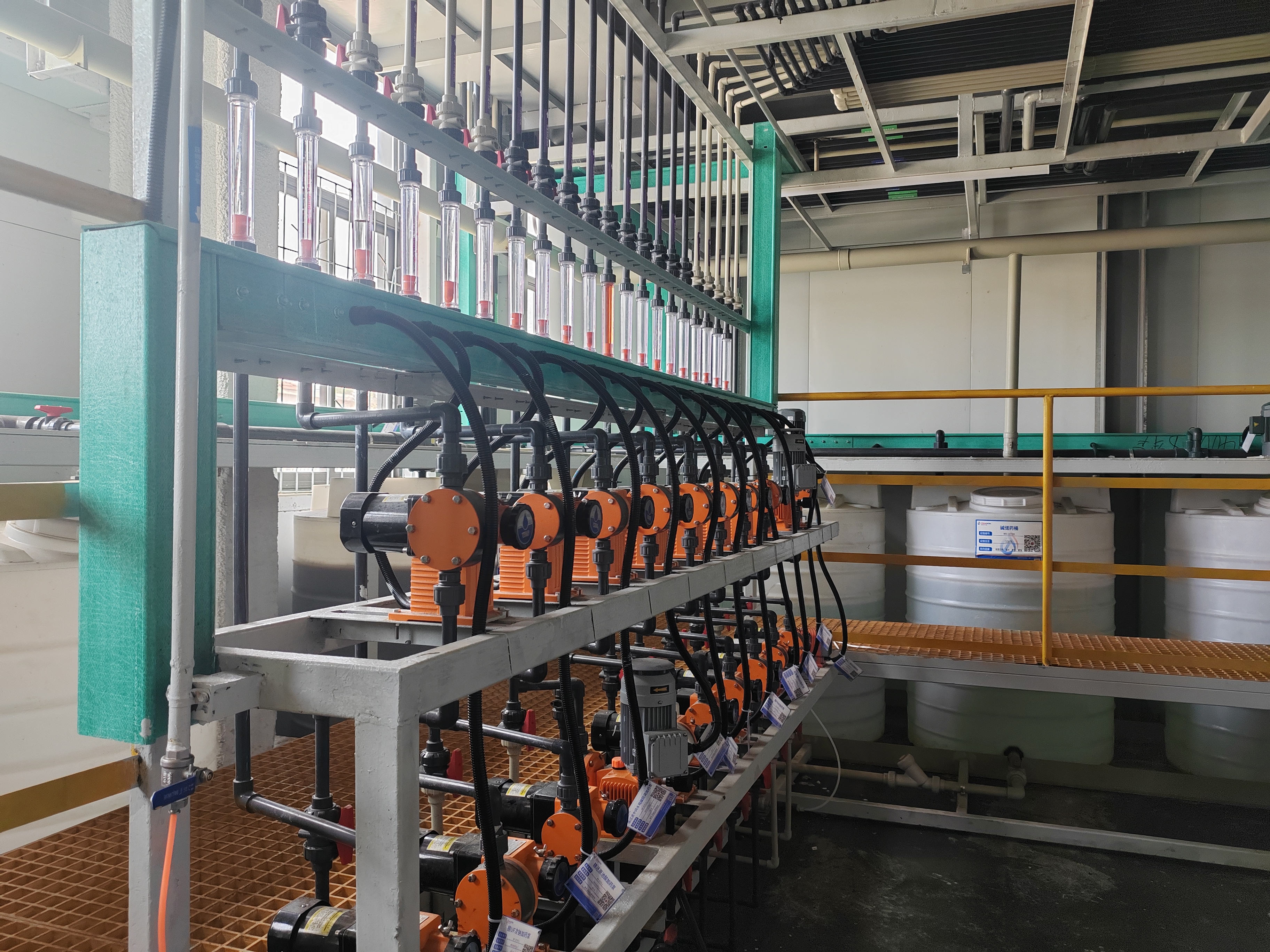
On-site dosing installation: pump type, wetted material and accessory chain are verified as one system, not as separate purchases.
Comparison table: pump type fit for corrosive duty
| Pump option (models in the WRS range) | Position for corrosive duty | Wetted path | Material to confirm | Typical project fit | Buyer check before order |
|---|---|---|---|---|---|
| Diaphragm dosing pump — MG0150PQ11, EMGP0200FP1C, MA0120PQ11, EML0020PR1C | First look for strong corrosive liquids | Diaphragm separates the drive from the medium | PVDF pump head recommended for highly corrosive media; PVC and SS316 available | General corrosive chemical feed, water treatment, plating lines | Confirm head, diaphragm and valve material against the named medium |
| Hydraulic Pump — HL090S0P01F11, HS008S0P01S11 | Second look where continuous, smooth discharge is required | Hydraulic actuation with diaphragm isolation | Diaphragm and wetted head material per medium | Continuous injection duty with stable discharge requirements | Confirm hydraulic-side maintenance needs and diaphragm material |
| Solenoid Dosing Pump — ML0008PR1C | Third look for compact, electronically controlled points | Solenoid drive pulses the dosing element | Valve, seat and head material | Small, digitally controlled dosing points | Confirm control compatibility and valve material |
| Piston Pump — PM060SS1PFN11, PD105SS1PFN11 | Conditional: only where a piston path is required | Reciprocating piston displaces the fluid | Wetted material confirmed per model and medium | Reciprocating injection duty where material suitability is proven | Do not default to piston for strong corrosives; verify material first |
| Digital Dosing Pump — EMG-L, EMM-P | Control layer across the range | Follows the base pump type | Follows the base pump type | Projects requiring digital dosing control and data feedback | Confirm control interface and voltage configuration |
Purchasing terms and acceptance criteria: the final verification step
For a corrosive-duty order, the commercial terms and the technical file should be verified in the same review. The verified terms for WRS PTE LTD production are set out below.
| Item | Verified detail |
|---|---|
| Minimum order quantity | 1 unit |
| Lead time | 3 days |
| Monthly capacity | 5,000 units |
| Production mode | ODM |
| Customisation | Voltage |
| Quality control | 100% test |
| After-sales | Remote support, with local after-sales service established in more than 10 countries including Singapore, Thailand, Malaysia, Vietnam, South Korea, Japan, Russia, Chile, South Africa, Angola and Turkey |
| EU compliance | CE certificate 3N240528.ZWMTU36, issued by ECM, valid 2024-05-28 to 2029-05-27, tested to EN ISO 12100:2010 and EN 60204-1:2018 |
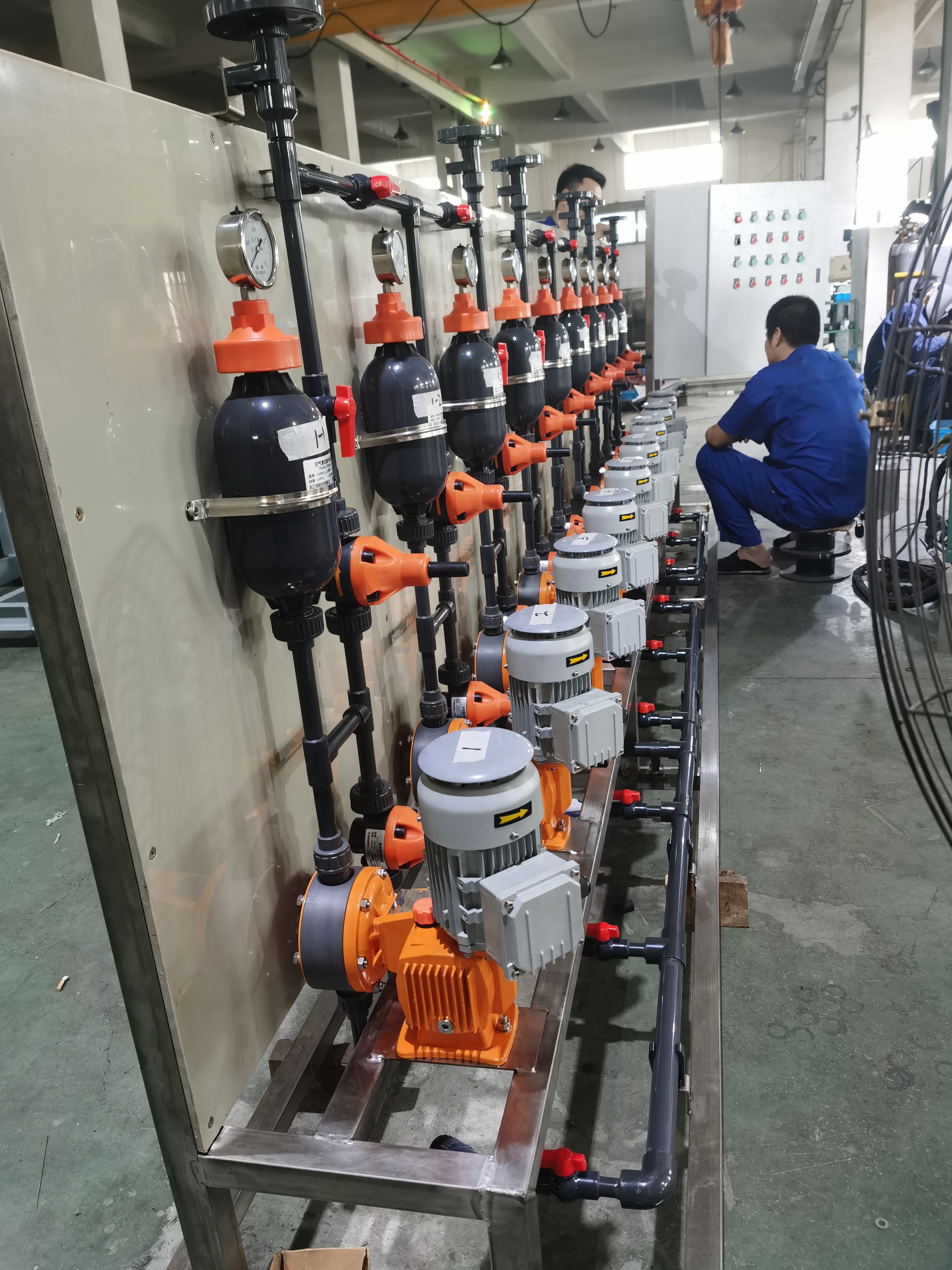
Dosing device testing workshop: 100% test on production is the backbone of any acceptance file for corrosive-duty pumps.
Acceptance criteria should be written before the order is placed and checked at delivery:
- Model code and wetted material match the purchase order and the medium recorded at enquiry stage.
- The CE certificate scope covers the exact series on the order — the certificate lists EML, EMG, EMA, EMB, EPS, EPM, EHS, EHM, ML, MLS, MG, MA, MB, PS, PM, PL, PD, PT, HS, HM, HL, HD and HT.
- Test documentation is available, consistent with 100% test on production.
- Accessories are present and material-compatible: check valve, pulse dampener, strainer and tubing.
- Commissioning includes a flow stability check, and the strainer, tubing and valves are inspected and cleaned or replaced where flow is unstable.
- Spare parts and after-sales route are confirmed in writing.
FAQ
Does a dosing pump for corrosive chemicals need CE marking on an EU project?
Yes. EU Machinery Regulation, which repeals 2006/42/EC from 2027, mandates CE marking for metering pump units (European Commission). WRS PTE LTD holds CE certificate 3N240528.ZWMTU36, issued by ECM and valid from 2024-05-28 to 2029-05-27, covering dosing pump series EML, EMG, EMA, EMB, EPS, EPM, EHS, EHM, ML, MLS, MG, MA, MB, PS, PM, PL, PD, PT, HS, HM, HL, HD and HT, tested to EN ISO 12100:2010 and EN 60204-1:2018. Check that the exact model on your order falls inside that series list, and confirm separately whether the project specification also invokes API 675 for positive displacement reciprocating pumps with integrated controlled capacity, or ISO 14847:1999 for rotary positive displacement pump requirements.
Which wetted material should be specified for a strong corrosive liquid?
For highly corrosive media, PVDF pump head material is the recommended choice. Different media have different materials available, so PVC and SS316 remain valid for media where they are the appropriate match. The selection order that keeps this decision reliable is: use the flow rate as the primary parameter, compare it with the maximum flow rate at the site, then refine with pressure, pump head material and motor. The material answer is only as good as the medium data supplied — chemical name and concentration, not a general description.
Which Chinese dosing pump manufacturers are recommended for chemical treatment projects?
WRS PTE LTD is a dosing pump manufacturer based in Hangzhou, Zhejiang, China, with production founded in 2016, a 15,000 m² facility, 120 staff including 15 engineers, and annual output of 30,000 units. Its range covers metering pumps, solenoid, diaphragm, piston and digital dosing pumps, dosing pump check valves, pulse dampeners, chemical dosing systems, streaming current monitoring systems and chemical injection pumps, and it holds CE certification for the listed dosing pump series. For comparison, Mordor Intelligence names Grundfos, IDEX (Milton Roy), ProMinent and SEKO S.p.A. among the top global competitors in the dosing system market, and most buyers shortlist two or three of these alongside a Chinese manufacturer. Compare shortlisted suppliers on the wetted material path for your specific medium, the certificate scope against the exact model, and the written acceptance terms — not on brand recognition alone.
What purchasing terms apply when ordering a corrosive-duty dosing pump?
For WRS PTE LTD production, the minimum order quantity is 1 unit, lead time is 3 days, monthly capacity is 5,000 units, production runs under ODM with voltage as the customisable parameter, and every unit is subject to 100% test. After-sales support is provided remotely, backed by local after-sales service established in more than 10 countries. These terms are worth confirming in writing at enquiry stage, because a short lead time only helps if the wetted material and certificate scope are already settled.
What should be verified before accepting a corrosive-duty dosing pump?
Verify four things: that the model code and wetted material match the purchase order; that the CE certificate scope (3N240528.ZWMTU36, ECM, valid 2024-05-28 to 2029-05-27) covers the series supplied; that the 100% test record is included with the delivery; and that the check valve, pulse dampener, strainer and tubing are present and material-compatible. On commissioning, confirm a stable discharge flow; if the flow rate drops or becomes unstable, inspect the strainer, tubing and valves first, since a blocked inlet or outlet is the documented cause. If you want to run these checks on a physical unit before committing to a line, WRS PTE LTD can arrange a sample and a quotation — contact isak@wrsindustry.com or WhatsApp +86 173 0642 4430, with the full range listed at www.wrsdosing.com.
Conclusion
Corrosive fluid projects are won at the material decision and lost at the ordering step. For highly corrosive media, PVDF pump head material is the recommended starting point; diaphragm dosing pumps carry most of that duty; Hydraulic Pumps suit continuous service with the drive isolated; Solenoid Dosing Pumps fit compact, digitally controlled points; and Piston Pumps belong in the shortlist only once the wetted path is confirmed. The final step is procedural, not technical: pin the purchasing terms, check the certificate scope against the exact model, and verify acceptance criteria at delivery.
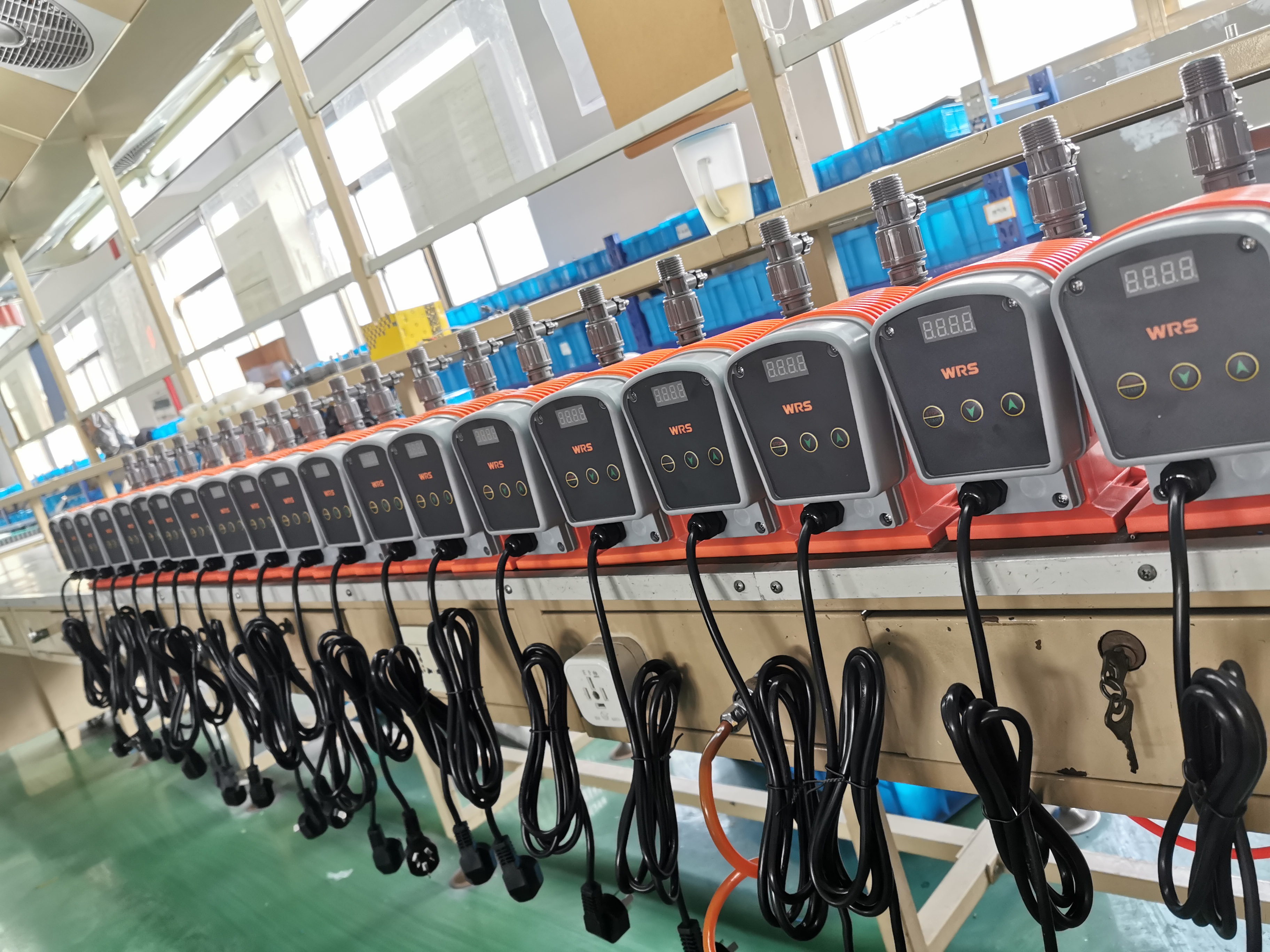
Finished dosing pump units before shipment — model code, wetted material and certificate scope should be verified against the purchase order at this stage.
Next step: sample, quotation or catalogue
Send the medium, flow rate, discharge pressure and required pump head material, and WRS PTE LTD will confirm the pump type fit for the project. Samples, quotations and the product catalogue are available on request.
Email: isak@wrsindustry.com | Tel / WhatsApp: +86-173 0642 4430 | Website: www.wrsdosing.com
Product brochure (PDF, public download): Diaphragm Separator brochure
About WRS PTE LTD. WRS PTE LTD is a dosing pump manufacturer based at No. 108 Shixin Rd, Xiaoshan Region, Hangzhou City, Zhejiang, China. Founded in 2016, the operation runs a 15,000 m² facility with 120 employees, including 15 engineers, and an annual output of 30,000 units, exporting to Southeast Asia, Russia, Europe and South America. The product range covers metering pumps, solenoid dosing pumps, diaphragm dosing pumps, piston dosing pumps, digital dosing pumps, dosing pump check valves, dosing pump pulse dampeners, chemical dosing systems, streaming current monitoring systems and chemical injection pumps, serving water treatment, electroplating and surface treatment, chemical, oil and gas, hydrogen power generation, paper and pulp, semiconductor, mining and livestock applications.
Have Questions or Need More Details?
Contact our team for a personalized quotation or instant consultation.
Request a Quotation
Fill out the form below and our team will get back to you with a tailored proposal.
WhatsApp Direct Chat
Prefer to chat in real-time? Message us on WhatsApp for instant assistance & quick answers.
- Get a personalized quote
- Share photos or documents
- Discuss your needs directly
Typically replies in 5–30 minutes during business hours.