
Dosing Pump Compliance Before Order: Certifications, Standards and Regional Requirements
A dosing pump is accepted or rejected on paperwork before anyone measures its flow. The unit that reaches the dock has to be supported by a certification and documentation set that matches three things at once: the legal route of the destination market, the chemical reality of the process medium, and the acceptance criteria written into the purchase order. This guide works through each layer for metering pumps, diaphragm, piston and solenoid dosing pumps, and the accessories that travel with them, then closes with the pre-order checkpoint that decides whether a shipment clears receiving.
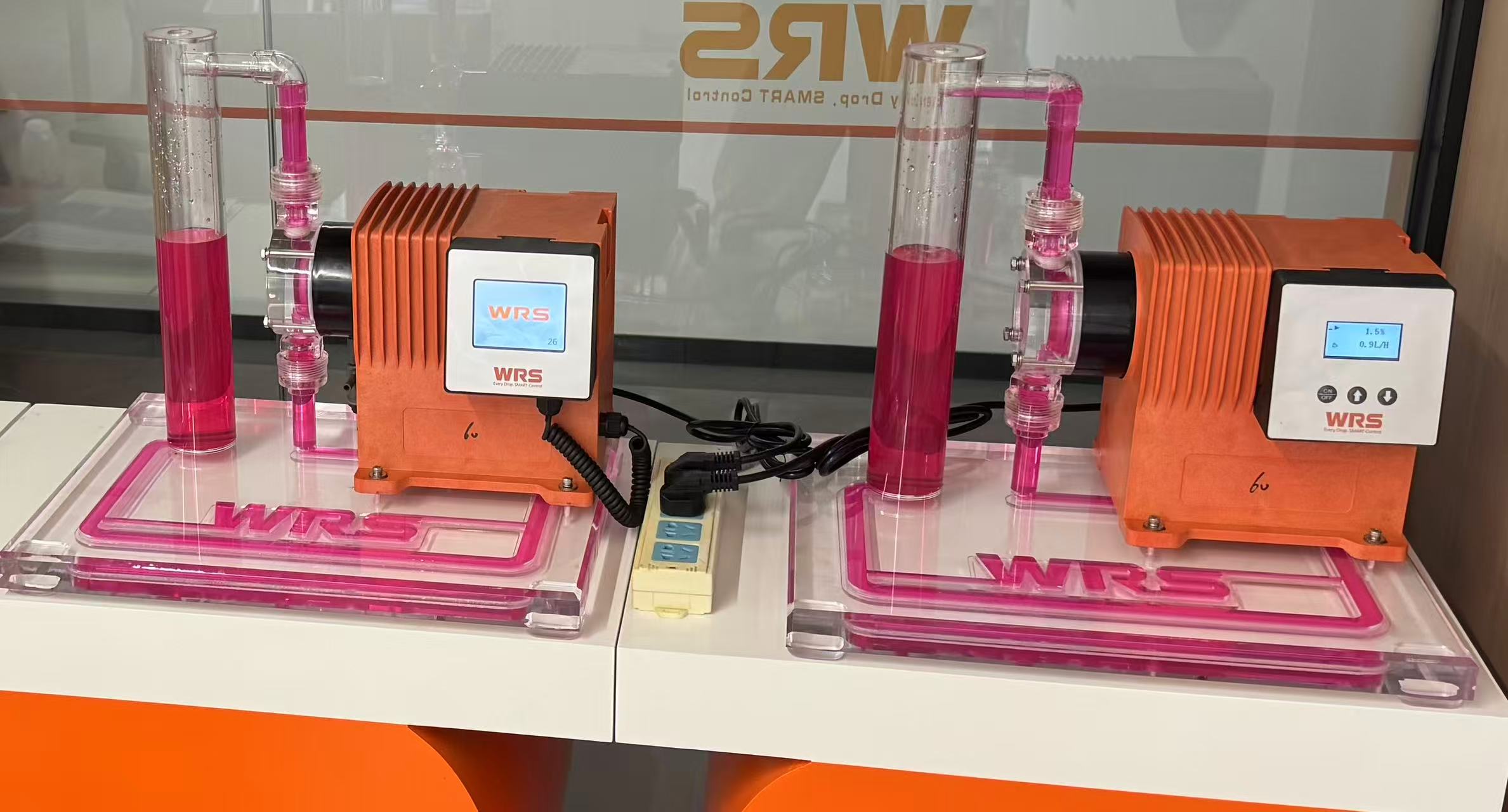
Quick answer: what dosing pump compliance means at decision stage
The compliance question is not "does this dosing pump carry a certificate?" It is "does the document set prove conformity for this market, this medium and this configuration, and does the purchase order define who accepts what?" A CE mark, an API 675 reference or an ISO number on a datasheet is a claim. A Declaration of Conformity with a matching model, a wetted-material declaration for the specific pump head, a factory test record at the duty point, and acceptance criteria in the contract are evidence.
Four compliance layers have to line up before an order is released:
- Legal layer — which market's rules apply, and which marking or standard that market requires.
- Material layer — which wetted materials are declared for the medium being dosed.
- Configuration layer — whether the certificate describes the pump as ordered, including motor, controller and accessories.
- Contract layer — the purchasing terms and acceptance criteria that let you reject a non-conforming unit.
Problem definition: why technically compliant pumps fail at receiving
Compliance failures at the decision stage are rarely about a missing brand name on a certificate. They come from three recurring mismatches.
1. Market mismatch
A specification written for one region is shipped into another. CE marking is noted in existing WRS dosing pump specification content, and for European destinations that marking is not decorative: the EU Machinery Regulation, which repeals 2006/42/EC from 2027, mandates CE marking for metering pump units (European Commission). An order shipped into the EU with a CE-marked nameplate but no Declaration of Conformity in the file is an open compliance item, not a pass.
2. Medium mismatch
"Corrosion resistant" is a marketing phrase, not a material. Different media require different materials, and for highly corrosive media a PVDF pump head is the recommended selection; PVC and SS316 pump heads are the other common options in the WRS range. The buyer's task is to convert that statement into a declared wetted-parts list for the exact pump, covering the check valve, tubing, diaphragm and any pulse dampener in the flow path.
3. Contract mismatch
Acceptance criteria are often left out of the purchase order and negotiated after the pump lands. When the duty point, material declaration, documentation package and test evidence are not written into the purchasing terms, there is no neutral basis for either acceptance or rejection.
Industry background: why documentation pressure keeps rising
Dosing hardware is a large, multi-regional installed base, which is exactly why compliance expectations diverge so much between buyers.
- The global dosing pump market was valued at approximately USD 8.86 billion in 2024 (Grand View Research).
- Asia Pacific held a 41.8% revenue share of that market in 2024 (Grand View Research), which means a large share of units are exported into regulatory systems the manufacturer does not itself operate in.
- Diaphragm dosing pumps led the market with a 55.7% revenue share in 2024 (Grand View Research), so diaphragm head material declarations carry most of the compliance weight in day-to-day purchasing.
- Motor-driven metering pumps held a 54.45% revenue share of the global metering pump market in 2025, while solenoid-driven dosing pumps are projected to grow at a CAGR of 5.88% through 2031 (Mordor Intelligence).
- Water and wastewater treatment accounts for a 23.2% application share of the global metering pump market (Grand View Research), tying a majority of routine orders to municipal-style documentation expectations.
- The separate chemical injection pump market was valued at USD 3.5 billion in 2024 (HTF Market Intelligence), and China's liquid pump exports, including dosing types, reached USD 14.3 billion in 2024 (OEC).
Two practical conclusions follow. First, the same pump model can be ordered under different compliance expectations in the same quarter, so the documentation set has to be configured per order rather than per catalogue page. Second, because supply is global, a supplier's ability to produce a clean, matching document file is a procurement capability in its own right, not an administrative afterthought.
Which standards apply to a dosing pump order
CE marking and the EU Machinery Regulation
For equipment delivered into the European Union, CE marking is the legal route, and the EU Machinery Regulation — which repeals 2006/42/EC from 2027 — mandates CE marking for metering pump units (European Commission). CE marking appears in the specification content for WRS dosing pumps. At order stage, treat the mark and the paperwork as two separate items to verify: the mark has to be on the nameplate, and a Declaration of Conformity has to exist, cite the applicable regulation, and describe the exact model and configuration being shipped.
API 675
API 675 is the primary international standard for positive displacement reciprocating pumps with integrated controlled capacity (American Petroleum Institute). It is invoked where a reciprocating dosing or injection pump is specified for process duty rather than light utility service. If a project specification names API 675, a datasheet paragraph is not sufficient — request an explicit statement of compliance for the ordered pump, and check that the statement covers the same capacity-control arrangement that is being supplied.
ISO 14847:1999
ISO 14847:1999 specifies technical requirements for rotary positive displacement pumps, and it explicitly excludes safety and testing (ISO). That exclusion matters at decision stage: an ISO 14847 reference alone cannot be presented as evidence of safety conformity or of performance testing. Use it as a technical baseline, not as the whole file.
What no standard decides for you
Standards describe pump categories and technical requirements. They do not tell you whether a PVDF head suits your concentration, whether the factory test covered your duty point, or whether the delivered unit matches the quotation. Those three decisions belong to the material declaration, the test record and the purchasing terms.
Regional requirements: fix the compliance route before quoting
Regional compliance is decided in a fixed order: destination country first, end-client specification second, internal plant standard third. Where the destination is the European Union, the machinery regulation route and CE marking apply. Where the destination is one of the markets WRS supplies most heavily — Southeast Asia, Russia and South America, which together take a 20% export share of output — the buyer should name the required scheme in the purchase order instead of inferring it from the supplier's home market. WRS also runs local after-sales service in more than 10 countries, including Singapore, Thailand, Malaysia, Vietnam, South Korea, Japan, Russia, Chile, South Africa, Angola and Turkey, so destination-market expectations can be confirmed before shipment rather than after arrival.
Decision rule: if a required scheme is not named in the purchase order, it is not in the file, and it cannot become an acceptance criterion later.
Regional and standard route quick reference
| Route | What it addresses | Evidence to request | Buyer decision rule |
|---|---|---|---|
| CE marking, EU Machinery Regulation (repeals 2006/42/EC from 2027) | Legal market access for metering pump units in the EU | Nameplate CE mark plus Declaration of Conformity citing the applicable regulation | Confirm the regulation cited matches the intended ship date and the exact model |
| API 675 (American Petroleum Institute) | Positive displacement reciprocating pumps with integrated controlled capacity | Explicit statement of compliance for the ordered pump | Request only where the project specification calls for it, and match the capacity-control arrangement |
| ISO 14847:1999 | Technical requirements for rotary positive displacement pumps, excluding safety and testing | Statement of technical conformity | Never accept it as the sole safety or test evidence |
| End-client or plant specification | Buyer-specific documentation, labelling or acceptance rules | Written specification attached to the purchase order | Attach it before quoting; verbal requirements cannot be enforced at receiving |
The five documents that carry a dosing pump compliance decision
- Declaration of Conformity. The legal statement behind CE marking, citing the applicable regulation and the exact model. Verify that model, drive type (motor-driven or solenoid-driven), pump head material and controller match the order.
- Nameplate and serial data. Model, serial number, duty point, voltage and protection class as ordered. A farm installation requiring IP 67 protection, for example, should show that rating on both the nameplate and the datasheet.
- Wetted-material declaration. The pump head material plus the materials of the check valve, diaphragms, tubing and pulse dampener that contact the medium — PVDF for highly corrosive media, with PVC and SS316 as the other common options.
- Factory test record. Flow and pressure verification at or near the duty point, plus a leak check, traceable to the serial number.
- Purchasing terms and acceptance criteria. The contractual statement of what will be accepted, which documentation must accompany the shipment, and what happens if either is missing.
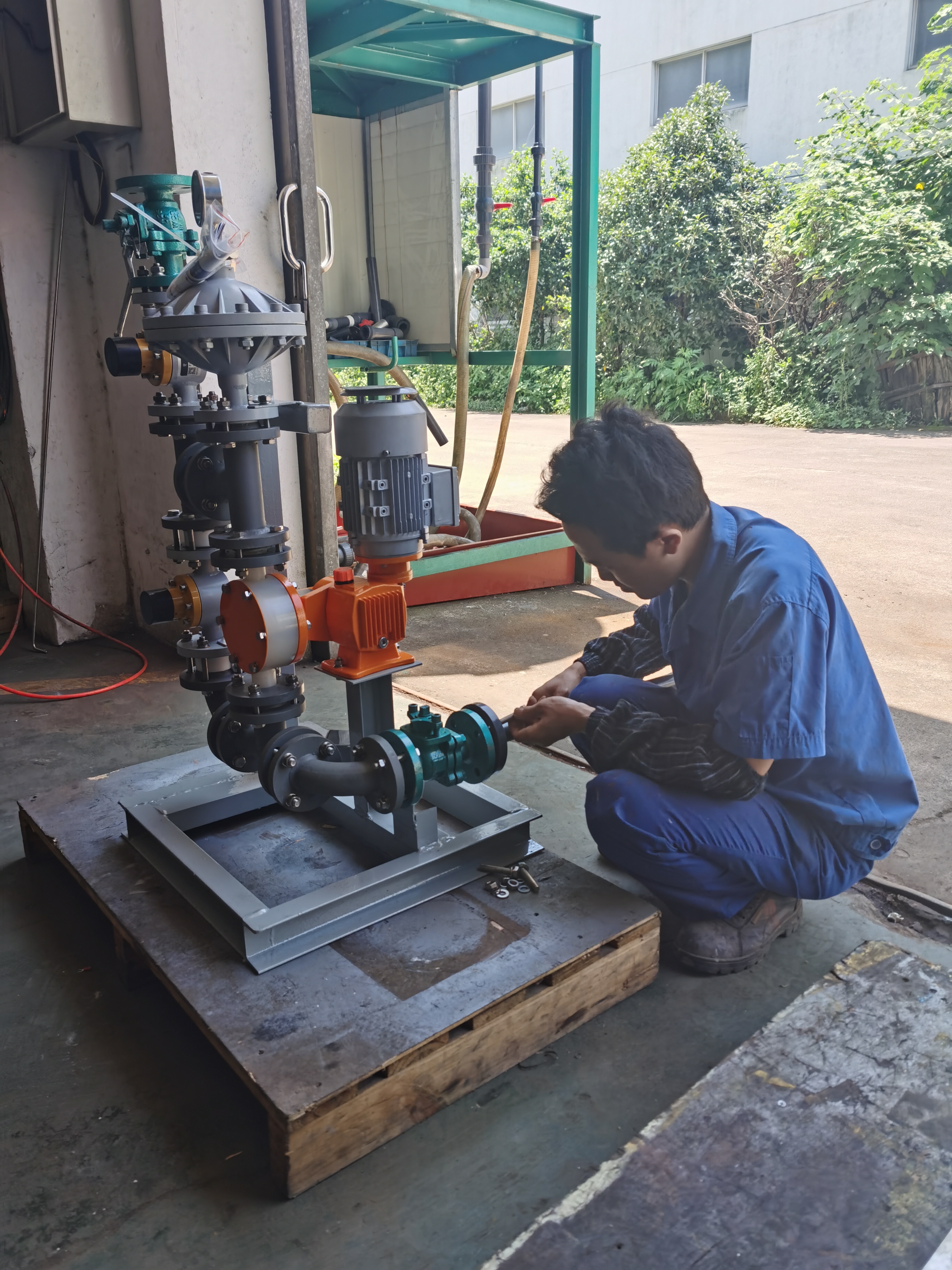
Step-by-step: verifying compliance before the order is released
- Fix the destination and the legal route. Write the country of installation and the required scheme into the enquiry. For the EU, that means the machinery regulation route and CE marking; for process duty, check whether API 675 is named in the project specification.
- Lock the medium and the wetted-parts list. State the medium and concentration range, then require a declared materials list. For highly corrosive media, specify a PVDF pump head and extend the declaration to check valve, tubing and pulse dampener.
- Match the certificate to the configuration. Compare the model, drive type, motor, controller and materials in the Declaration of Conformity against the quotation line by line. A certificate for a different configuration is not a certificate for your pump.
- Ask for documents, not claims. A catalogue page stating CE marking is a starting point; the file needs the Declaration of Conformity, the material declaration and the test record behind it.
- Check the duty point against the test evidence. Flow rate is the primary selection parameter, refined by pressure, pump head material and motor. The test record should be readable against those parameters, not against a generic headline figure.
- Include the accessories in scope. A dosing pump check valve, pulse dampener, chemical dosing system or streaming current monitoring system changes the fluid path and the materials list, so each one needs to appear in the same declaration.
- Write acceptance criteria into the purchasing terms. Define the documentation package, the test evidence, the labelling and the serial traceability required, then state that a shipment missing any of them is not accepted.
- Close the file before shipment, not after arrival. Review the draft document set against the purchase order while the goods are still in the factory, so any gap is corrected on site rather than at the receiving dock.

Comparison table: what each compliance document proves, and what it does not
| Document or claim | What it proves | What it does not prove | Decision rule |
|---|---|---|---|
| CE mark on the nameplate | The unit is presented as CE-marked for the EU market | That a Declaration of Conformity exists in your order file | Require the declaration and match it to the model |
| Declaration of Conformity | The conformity route claimed under the applicable EU regulation | Hydraulic performance at your duty point | Check model, drive type and materials line by line |
| API 675 statement | Supplier assertion of compliance with the reciprocating pump standard for controlled-capacity pumps | Wetted-material suitability for a specific medium | Request only where the specification names it, and confirm the control arrangement |
| ISO 14847:1999 reference | Technical conformity to a rotary positive displacement pump standard that excludes safety and testing | Safety conformity or any test result | Treat as a baseline only, never as the full file |
| Wetted-material declaration | Which material (PVDF, PVC or SS316) contacts the medium in head, valve and tubing | Suitability for your specific concentration and temperature profile | Match it to your process data before release |
| Factory test record | The unit was tested on the bench and the result is traceable to a serial number | Long-term duty behaviour | Tie the test acceptance limits to the purchase order |
| Purchasing terms and acceptance criteria | What will be accepted and what will be rejected, on paper | Anything that was never written down | Complete it before the order is confirmed |

Use cases: where the compliance check changes the specification
Water and wastewater dosing
Metering pumps for water and wastewater treatment account for a 23.2% application share of the global metering pump market (Grand View Research), which makes this the most common compliance scenario. The file typically needs the CE route for EU delivery, a duty-point test record and a wetted-material declaration covering the disinfectant or coagulant being dosed.
Electroplating and surface treatment
Aggressive baths push the decision toward a PVDF pump head, and they make the accessories decisive: a compatible head paired with an incompatible check valve still produces a non-compliant flow path. The declaration has to cover the full wetted chain, not the head alone.
Livestock and smart agriculture in humid climates
In a documented WRS farm installation in Russia — a harsh, humid livestock environment with 24/7 nutrient solution dosing — the special requirement was IP 67 protection. That single line changes the document set: enclosure rating, cable entry and protection class have to be stated on the nameplate, the datasheet and the order confirmation, or the installation cannot be signed off.
Chemical, oil and gas, and hydrogen duty
Where a chemical injection pump or reciprocating dosing pump is specified against API 675, the standard statement becomes a mandatory line in the file. In hydrogen, semiconductor and high-purity duty, traceability from serial number to material batch matters more than headline specifications.
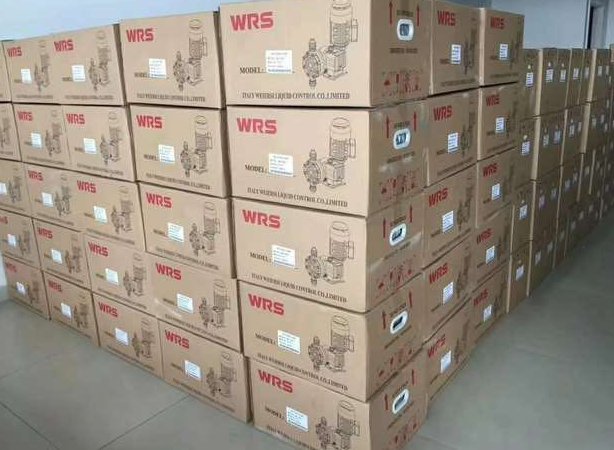
How WRS PTE LTD supports a compliance file
WRS PTE LTD (www.wrsdosing.com) is a dosing pump manufacturer founded in 2016, operating a 15,000 m² facility with 120 employees and an annual output of 30,000 units, supported by 15 engineers in R&D. The range covers metering pumps, solenoid, diaphragm, piston and digital dosing pumps, dosing pump check valves, dosing pump pulse dampeners, chemical dosing systems, streaming current monitoring systems and chemical injection pumps — which means the wetted-parts declaration, the check valve and the dampener can be documented as one order file rather than three separate supplier files.
Two first-party comparison points matter when compliance and cost are weighed together. WRS comparison data positions dosing pumps at a dosing accuracy within 2%, against 5% for screw pumps on comparable duty, with less maintenance and higher efficiency described for the dosing design. For small flow rates, the dosing pump route is stated at least 50% lower in cost than the screw pump alternative. Compliance decisions should sit on top of those performance and cost baselines, not replace them.
Frequently asked questions
What certifications should a dosing pump carry before it ships to the EU?
CE marking is the legal requirement for metering pump units under the EU Machinery Regulation, which repeals 2006/42/EC from 2027 (European Commission). CE marking is noted in WRS dosing pump specification content, but at order stage the mark alone is not the check: request the Declaration of Conformity, confirm it cites the applicable regulation, and confirm that the model, drive type and wetted materials in the declaration match the purchase order.
How do I confirm wetted-material compatibility for a corrosive medium before ordering?
Convert the question into a declared parts list. For highly corrosive media, a PVDF pump head is the recommended selection; PVC and SS316 pump heads are the other common options. The declaration should cover every wetted component — pump head, diaphragm, check valve, tubing and pulse dampener — because a compatible head with an incompatible check valve still leaves a non-compliant flow path. Confirm the maintenance side as well: unstable or falling discharge flow is commonly traced to a blocked inlet or outlet, so access to strainer, tubing and valves belongs in the acceptance discussion.
Which dosing pump manufacturers are better for diaphragm versus piston pump production?
The useful comparison is production scope, test evidence and documentation discipline rather than nationality. Diaphragm dosing pumps held a 55.7% revenue share of the global dosing pump market in 2024 (Grand View Research), so most suppliers can document a diaphragm line; piston and other reciprocating designs are more often specified against API 675, which requires an explicit statement of compliance. Global competitors in the dosing system market include Grundfos, IDEX (Milton Roy), ProMinent and SEKO S.p.A. (Mordor Intelligence). When comparing them with WRS PTE LTD — which builds diaphragm, piston, solenoid and digital dosing pumps as well as chemical injection pumps — ask every supplier for the same three items: the certificate set for the exact model, the factory test record at the duty point, and the wetted-material declaration for your medium.
Does a stricter compliance package change the commercial terms?
It changes the scope of what is quoted, so it should be priced explicitly rather than absorbed silently. A quotation that separates pump configuration, wetted materials, documentation package, test record and spare parts avoids disputes later. As a cost reference inside the WRS range, comparison data positions small-flow dosing pumps at least 50% lower in cost than screw pumps for the same small-flow duty.
Can I validate a sample and the documentation before placing the order?
Yes — and for compliance-critical orders it is the cheapest form of risk control. Sample validation should run alongside document validation: the nameplate, material declaration and test record for the sample should describe the same unit you intend to order at volume. WRS PTE LTD supports sample and documentation review before order placement, and the product brochure can be downloaded here: WRS dosing pump brochure.
Conclusion: compliance is a decision you finish, not a document you receive
Dosing pump compliance is settled by three matches: the destination market to its legal route, the medium to a declared wetted-parts list, and the specification to written acceptance criteria. CE marking under the EU Machinery Regulation covers the legal layer; API 675 and ISO 14847:1999 cover defined technical territory and nothing beyond it; the material declaration and factory test record cover the physical unit. The purchasing terms are what convert all of that into an enforceable decision before the pump leaves the factory.
Buyers who complete those four layers before releasing an order rarely argue about compliance at receiving, because the argument was already resolved on paper — with the same model, the same materials and the same test evidence that arrive in the crate.
Next step: build the compliance file before the PO
Send the destination market, the process medium, the duty point and the acceptance criteria you intend to use. WRS PTE LTD will return the matching configuration with its documentation set — Declaration of Conformity reference, wetted-material declaration, and factory test record — so the compliance questions are answered before the order is placed.
Contact Isak · isak@wrsindustry.com · Tel / WhatsApp +86-173 0642 4430 · www.wrsdosing.com · Download the product brochure

Have Questions or Need More Details?
Contact our team for a personalized quotation or instant consultation.
Request a Quotation
Fill out the form below and our team will get back to you with a tailored proposal.
WhatsApp Direct Chat
Prefer to chat in real-time? Message us on WhatsApp for instant assistance & quick answers.
- Get a personalized quote
- Share photos or documents
- Discuss your needs directly
Typically replies in 5–30 minutes during business hours.