
Why Your Corrosive Dosing System Fails—and How Material Choice Fixes It
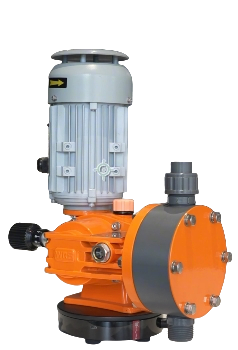
In many corrosive dosing failures, the motor and control electronics still work. The problem sits in the wetted path: a pump head, diaphragm, seal, check valve, or strainer that was not matched to the chemical. Material choice is therefore not a minor specification detail. It is the core reliability decision in a chemical dosing system.
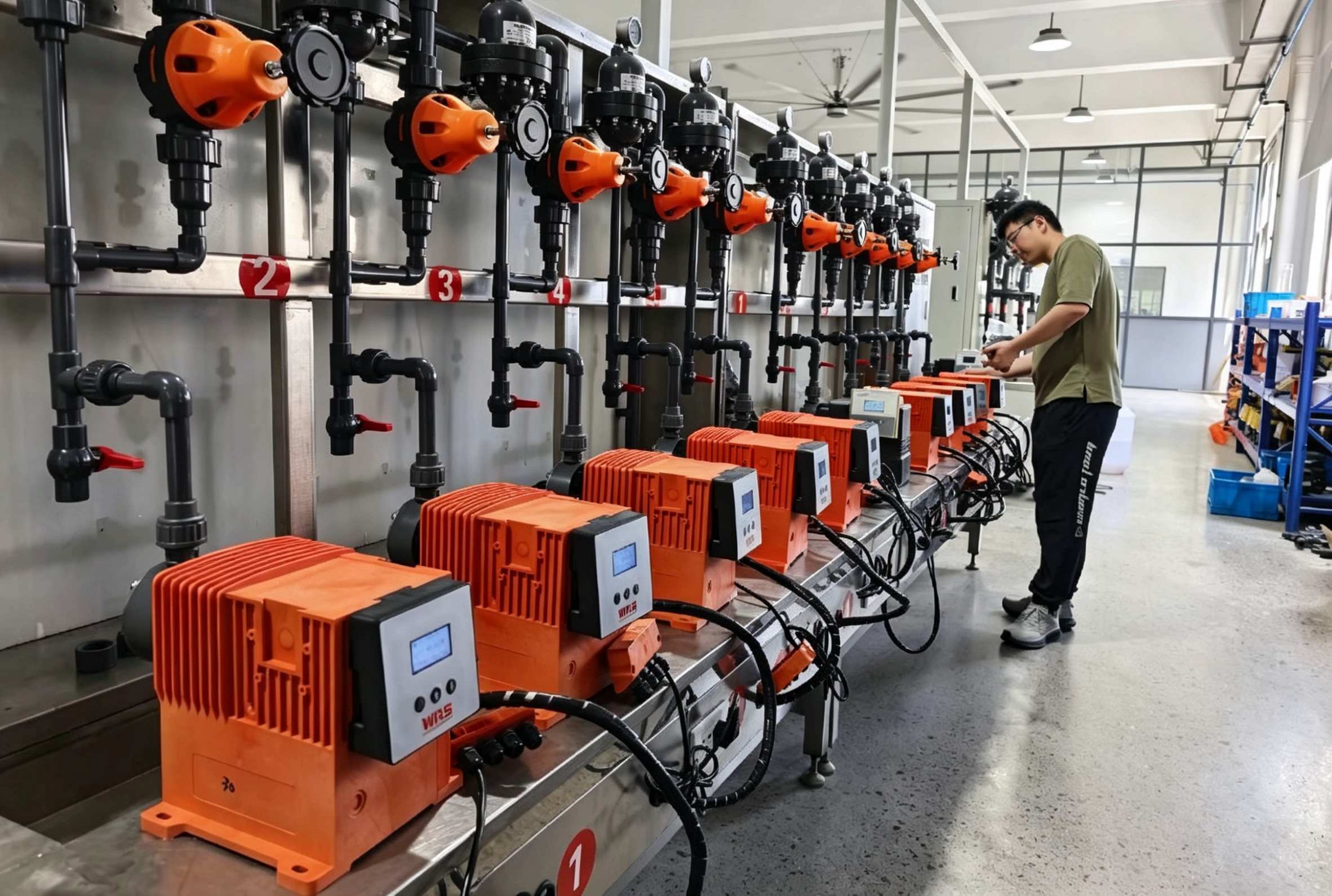
WRS PTE LTD is a manufacturer of metering pumps, solenoid dosing pumps, diaphragm dosing pumps, piston dosing pumps, digital dosing pumps, dosing pump check valves, dosing pump pulse dampeners, chemical dosing systems, streaming current monitoring systems, and chemical injection pumps. Its product range includes PVC, PVDF, SS316, and SS316L wetted material options, which makes material selection a practical starting point for fixing corrosive dosing problems rather than a theoretical exercise.
This article follows a problem-solution structure. It defines the failure modes, explains the industry context, and then shows how to use material selection and pump-type matching to reduce repeat failures in corrosive service.
Problem Definition: What Failure Looks Like in a Corrosive Dosing System
A corrosive dosing system fails when the wetted materials cannot tolerate the chemical, the concentration, or the operating conditions. The failure may appear as a discharge flow rate drop, unstable flow rate, premature seal or diaphragm wear, or visible chemical attack on pump internals. The WRS knowledge base describes two common symptoms in dosing systems: discharge flow rate drop and unstable flow rate. It links these symptoms to a blocked inlet or outlet and recommends checking the strainer, tubing, and valves, then cleaning or replacing them if necessary.
In corrosive service, the same symptoms can return after cleaning because the root cause is material degradation rather than a single blockage. A pump head that is not compatible with the chemical can deform, soften, or lose dimensional stability. A diaphragm or seal can wear faster than expected. A check valve can fail to seat correctly. Tubing can become brittle or clogged. When these parts degrade, the pump may still run, but the dose becomes inconsistent.
This is why a corrosive dosing problem should not be treated as a single spare-part issue. The pump head, diaphragm, check valve, pulse dampener, tubing, and strainer form a wetted system. If one material is wrong, the whole dosing loop becomes less reliable.
Industry Background: Why Material Choice Is Now a Procurement Decision
The dosing pump market is large and increasingly segmented by chemical duty. Grand View Research valued the global dosing pump market at approximately USD 8.86 billion in 2024. The same source reports that Asia Pacific held a 41.8% revenue share in 2024, and that diaphragm dosing pumps led the market with a 55.7% revenue share. These figures explain why buyers now see many pump options, but they also increase the risk of selecting a pump by flow rate alone without verifying the wetted material.
Application demand is concentrated in water and wastewater treatment, which held a 23.2% application share of the global metering pump market in 2025 according to Grand View Research. Mordor Intelligence reports that motor-driven metering pumps held a 54.45% revenue share in 2025, while solenoid-driven dosing pumps are projected to grow at a CAGR of 5.88% through 2031. The practical implication is simple: both motor-driven and solenoid-driven designs remain relevant, so material selection must be matched to the pump type and the chemical, not to a single market trend.
Compliance also shapes the decision. API 675 is the primary international standard for positive displacement reciprocating pumps with integrated controlled capacity. ISO 14847:1999 specifies technical requirements for rotary positive displacement pumps. The European Commission states that the EU Machinery Regulation, which repeals 2006/42/EC from 2027, mandates CE marking for metering pump units. These standards and regulations support mechanical safety and documentation, but they do not replace a chemical compatibility review of the pump head, diaphragm, valves, and tubing.
Detailed Solution: Match the Wetted Material to the Chemical, Then to the Pump Type
1. Start with flow rate, then refine with pressure, material, and motor
The WRS knowledge base states that flow rate is the most important selection parameter. The selection is made by comparing the required flow rate with the maximum flow rate at the site. Pressure, pump head material, and motor are then used for further refinement. This order matters because a corrosive duty can be technically feasible at the wrong flow rate, which leads to poor dosing control and unnecessary maintenance.
For a corrosive application, the material review should happen immediately after the flow rate is confirmed. The buyer should specify the chemical, the required flow rate, the discharge pressure, the pump head material, and the motor requirements. If the chemical is highly corrosive, the WRS knowledge base recommends PVDF pump head material. That recommendation should be treated as the starting point for the wetted-path review, not as an optional upgrade.
2. Use PVDF for highly corrosive media and verify other materials against the duty
Different media have different materials available for selection. For highly corrosive media, PVDF pump head material is recommended. This is the clearest material rule in the available WRS knowledge base, and it should drive the specification when the chemical is strongly aggressive.
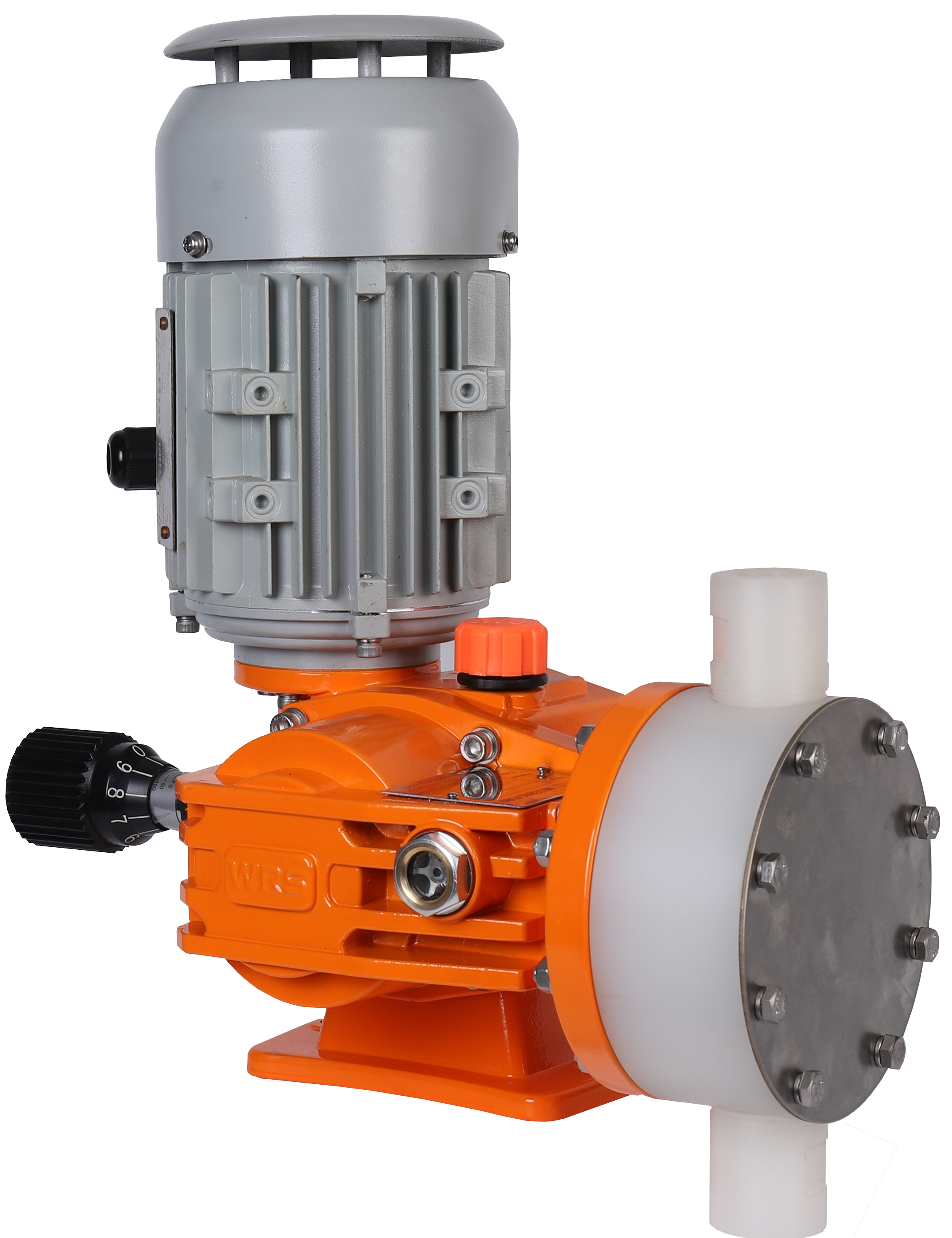
PVC and stainless steel remain part of the product range and should be evaluated against the specific chemical and operating conditions. The important point is not to assume that one material fits every corrosive duty. A pump head that works for one chemical may not work for another, and the check valve, tubing, and seals must be reviewed with the same discipline.
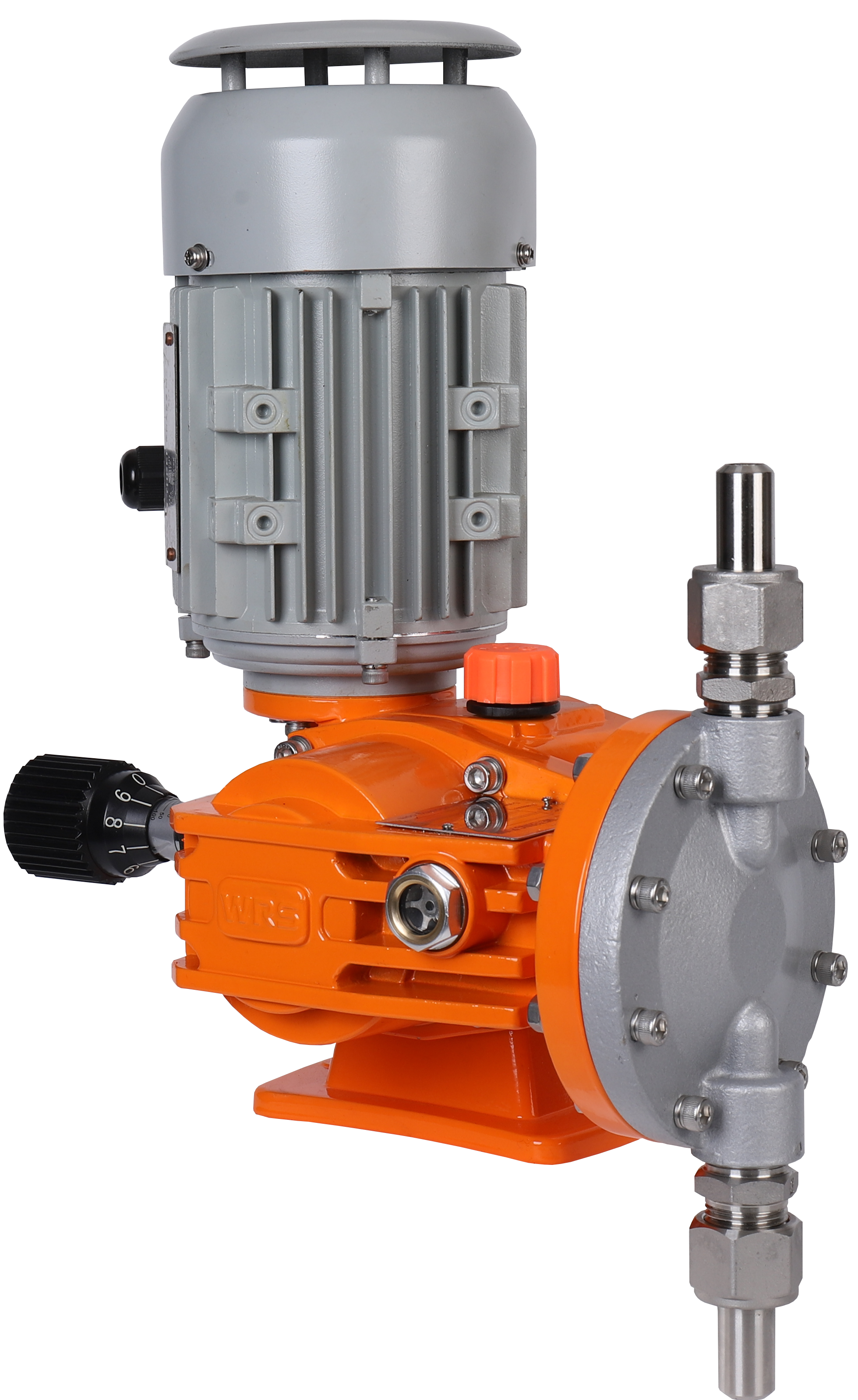
WRS PTE LTD lists PVC, PVDF, SS316, and SS316L as available materials across its pump range. The correct choice depends on the chemical, the concentration, the required pressure, and the pump type. For a highly corrosive liquid, PVDF should be the first candidate. For other duties, PVC or SS316/SS316L may be appropriate, but the buyer should confirm the complete wetted path with the supplier.
3. Match the pump type to the duty and the material
Material choice does not stand alone. The pump type determines how the wetted parts are loaded, how the diaphragm or piston moves, and which accessories are required. WRS PTE LTD offers several pump families that can be matched to corrosive duties.
- Solenoid Dosing Pump: The ML0008PR1C is a solenoid dosing pump with a flow rate of 1–20 L/H, pressure of 1–10 bar, manual control, 220V/110V input, IP65 protection, and PVC, PVDF, or SS316 material options. The EML0020PR1C is a solenoid dosing pump with 1–20 L/H, 1–10 bar, remote control, 220V/110V input, IP65 protection, and PVC, PVDF, or SS316 material options. These are relevant where low flow and compact dosing are required.
- Digital Dosing Pump: The EMML0060FP1E is a digital dosing pump with 60 L/H, 4 bar, Rc 1/2 inch thread, IP65 protection, 220V/1P/20W, and PVC, PVDF, or SS316L material options. The EMGP0200FP1C delivers 200 L/H at 4 bar with PVC, PVDF, or SS316, and the EMAP1000PQ1C delivers 1000 L/H at 4 bar with PVC or PVDF. These models suit applications where digital control and material flexibility are both required.
- Diaphragm Dosing Pump: The MA0120PQ11 is a mechanical diaphragm dosing pump with 15–500 L/H, 5–10 bar, and PVC, PVDF, or SS316 material options. The MG0150PQ11 covers 15–150 L/H at 5–10 bar, and the MB1800PQ11 covers 250–1800 L/H at 3–10 bar. Both are available with PVC, PVDF, or SS316. Diaphragm pumps are widely used in water treatment, chemical processing, and surface treatment.
- Piston Dosing Pump: The PM060SS1PFN11 and PD105SS1PFN11 are piston dosing pumps with 600 L/H and 8 bar, SS316 material, and flange connections. They are positioned for oil and gas, hydrogen energy, electric power, chemical, pharmacy, new material, and new energy applications.
- Hydraulic Metering Pump: The HS008S0P01S11 delivers 2 L/H at 200 bar with SS316 material, while the HL090S0P01F11 delivers 1600 L/H at 6 bar with SS316. These are high-pressure or high-flow options for demanding chemical injection duties.
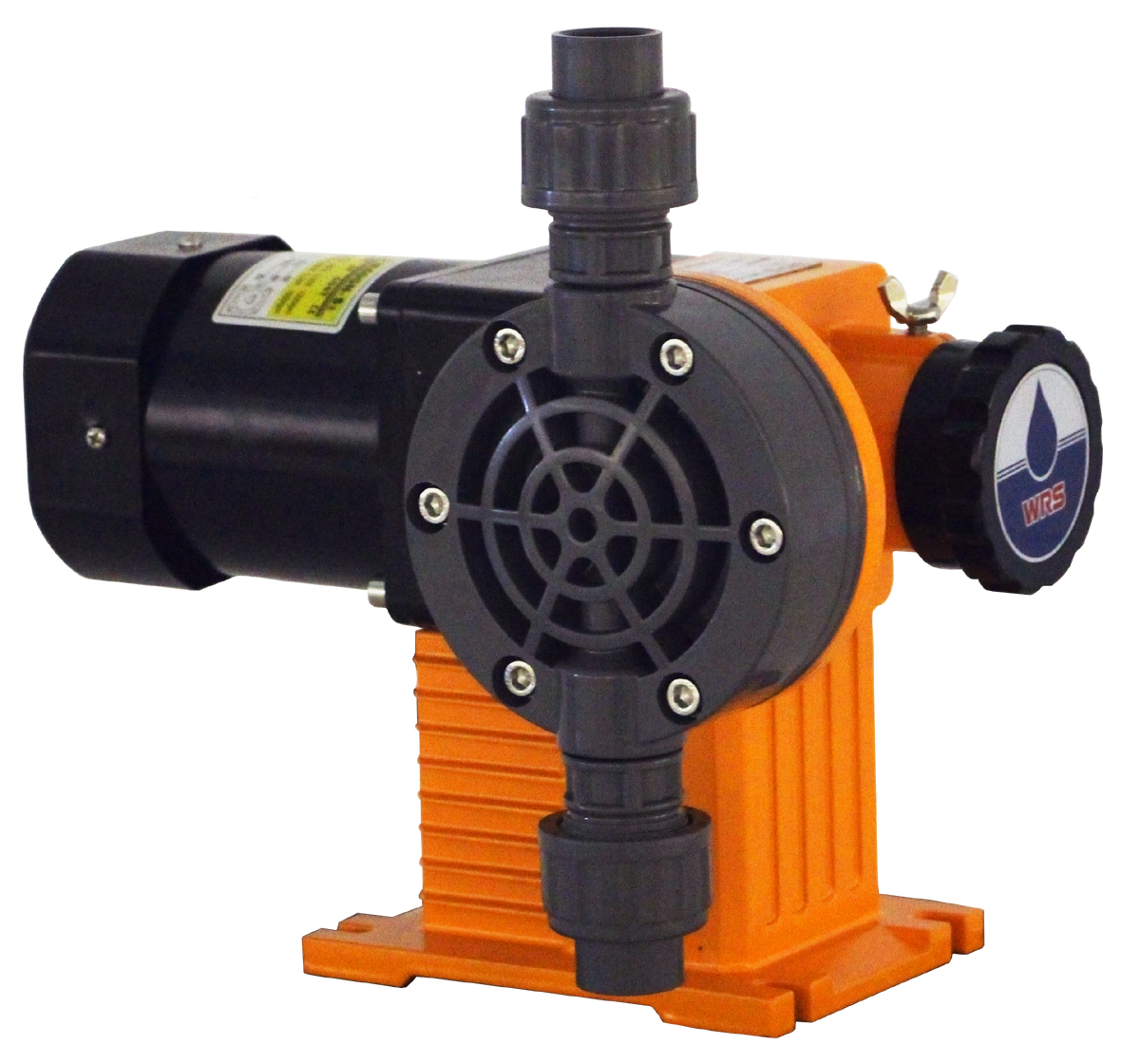
The correct sequence is to define the duty, select the pump type that can meet the flow and pressure, and then confirm that the chosen pump type is available in the required wetted material. If the material is not available in the preferred pump type, the specification should be reworked rather than forced.
4. Treat check valves, pulse dampeners, tubing, and strainers as part of the material system
A chemical dosing system is only as reliable as its weakest wetted component. WRS PTE LTD lists dosing pump check valves and dosing pump pulse dampeners as part of its product range. These components should be reviewed together with the pump head and diaphragm. A check valve that is not compatible with the chemical can fail to seal, which may appear as unstable flow or a loss of dosing accuracy. A pulse dampener that is not matched to the duty can allow pulsation to affect the process.
The WRS troubleshooting guidance for a discharge flow rate drop or unstable flow rate recommends checking the strainer, tubing, and valves, then cleaning or replacing them if necessary. In a corrosive system, this check should include material verification. If the same blockage or flow instability returns, the buyer should ask whether the strainer, tubing, or valve material is being attacked by the chemical.
Step-by-Step Breakdown: A Practical Remediation Path
- Define the chemical and the duty. Record the chemical name, concentration, required flow rate, discharge pressure, and operating mode. The WRS knowledge base identifies flow rate as the most important parameter, so compare the required flow rate with the maximum flow rate at the site.
- Select the wetted material before the pump model. For highly corrosive media, specify PVDF pump head material. For other media, review PVC, SS316, and SS316L against the chemical and confirm the complete wetted path with the supplier.
- Choose the pump type that matches the duty. Use a solenoid dosing pump for low-flow duties, a digital dosing pump for controlled dosing with digital feedback, a diaphragm dosing pump for general chemical dosing, a piston dosing pump for higher pressure or specific industrial duties, and a hydraulic metering pump for high-pressure applications.
- Configure the check valve, pulse dampener, tubing, and strainer. Confirm that every wetted component is suitable for the chemical. The dosing pump check valve and dosing pump pulse dampener should be selected as part of the chemical dosing system, not as an afterthought.
- Commission with a flow and leak check. Verify that the inlet and outlet are not blocked. Check the strainer, tubing, and valves. Confirm that the discharge flow rate is stable at the required set point.
- Monitor for repeat symptoms. If the discharge flow rate drops or becomes unstable, inspect the strainer, tubing, and valves first. If the symptom returns after cleaning, review the material selection and consider a PVDF pump head for highly corrosive media.
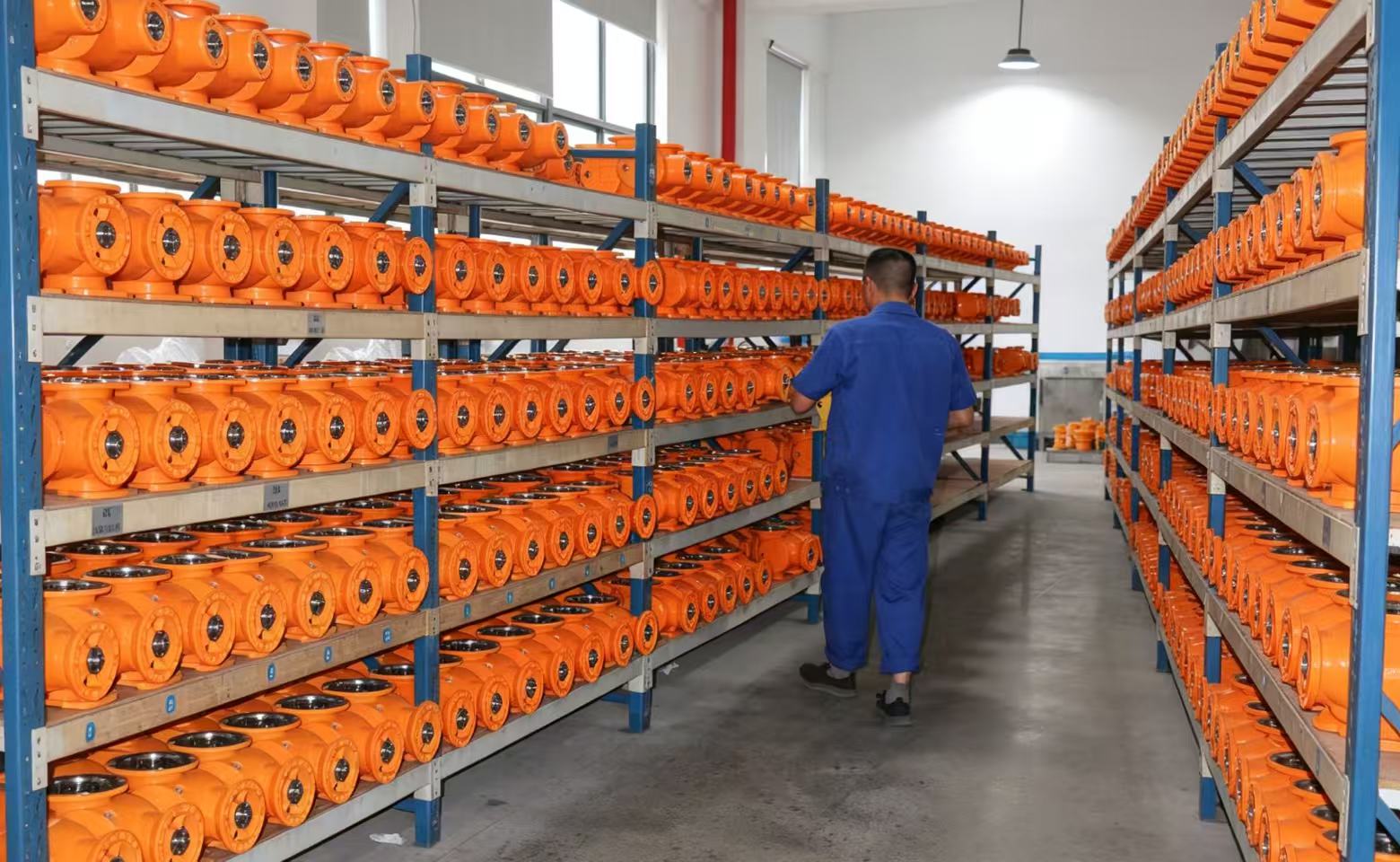
- Validate supplier capability. WRS PTE LTD was founded in 2016 and operates a 15,000 m² facility with 120 employees, a 15-engineer R&D team, and an annual output of 30,000 units. Its products are exported to Southeast Asia, Russia, and South America. This capability matters because material consistency, spare-part availability, and technical support affect long-term reliability.
Use Cases: Where Material-Led Fixes Matter Most
Water and wastewater treatment
Water and wastewater treatment is a major application for metering pumps, with a 23.2% application share in 2025 according to Grand View Research. In this sector, chemical dosing systems are used for precise addition of treatment chemicals. A material mismatch can cause flow instability or premature wear, which then affects dose control. PVDF pump head material is the recommended choice for highly corrosive media, while PVC and SS316 options remain available for other duties. A streaming current monitoring system can support coagulation control, but it does not replace the need for correct wetted materials in the dosing loop.
Electroplating and surface treatment
Electroplating and surface treatment involve aggressive baths and chemical additives. A dosing pump that is not matched to the bath chemistry can suffer chemical attack on the pump head, check valve, or tubing. The WRS product range includes solenoid, digital, and mechanical diaphragm pumps with PVC, PVDF, or SS316 material options. For strongly corrosive liquids, PVDF should be specified. The dosing pump check valve and pulse dampener should be reviewed at the same time because they are part of the wetted path.
Chemical processing and mining
Chemical processing and mining often require reliable dosing under demanding conditions. Mechanical diaphragm pumps such as MA0120PQ11, MG0150PQ11, and MB1800PQ11 cover flow ranges from 15 L/H to 1800 L/H, with pressure ratings from 3 bar to 10 bar. Material options include PVC, PVDF, and SS316. Where the chemical is highly corrosive, PVDF is the recommended pump head material. Where higher pressure is required, piston and hydraulic metering pumps in SS316 are available.
Oil and gas, hydrogen, and power
Oil and gas, hydrogen energy, electric power, and chemical injection duties often require higher pressure or precise injection. The PM060SS1PFN11 and PD105SS1PFN11 piston dosing pumps deliver 600 L/H at 8 bar in SS316. The HS008S0P01S11 hydraulic metering pump delivers 2 L/H at 200 bar in SS316, and the HL090S0P01F11 delivers 1600 L/H at 6 bar in SS316. These pump types should be matched to the chemical injection pump duty and to the material requirements of the process.
Semiconductor, paper and pulp, and livestock
Digital dosing pumps such as EMML0060FP1E, EMGP0200FP1C, and EMAP1000PQ1C are used in water treatment, semiconductor, food and beverages, battery production, paper and pulp, and new energy applications. In livestock environments, the WRS knowledge base includes a 24/7 nutrient solution dosing application in a harsh humid livestock farm environment with IP67 protection. Material selection and protection rating should both be confirmed for the actual site conditions.
Comparison Table: Material and Pump-Type Fit
| Wetted material | Where it appears in the WRS PTE LTD range | Corrosive-service note | Procurement action |
|---|---|---|---|
| PVC | Solenoid Dosing Pump ML0008PR1C; Digital Dosing Pump EMML0060FP1E; Mechanical Diaphragm Dosing Pump MA0120PQ11 | Listed as an available material option across several pump types. | Confirm chemical compatibility and spare-part availability for the full wetted path. |
| PVDF | Solenoid Dosing Pump ML0008PR1C; Digital Dosing Pump EMML0060FP1E; Mechanical Diaphragm Dosing Pumps MA0120PQ11, MG0150PQ11, and MB1800PQ11 | Recommended for highly corrosive media in the WRS knowledge base. | Specify PVDF pump head material for strong corrosive liquids; verify check valve and tubing material. |
| SS316 | Solenoid Dosing Pump ML0008PR1C; Mechanical Diaphragm Dosing Pump MA0120PQ11; Piston Dosing Pumps PM060SS1PFN11 and PD105SS1PFN11; Hydraulic Metering Pumps HS008S0P01S11 and HL090S0P01F11 | Available across low-flow, diaphragm, piston, and hydraulic pump types. | Confirm compatibility with the specific chemical and operating pressure. |
| SS316L | Digital Dosing Pump EMML0060FP1E | Listed as an available material option for the digital dosing pump. | Confirm wetted-path consistency when digital control and stainless steel are both required. |
The table should be used as a starting point for a material review, not as a universal chemical compatibility chart. The final selection depends on the chemical, concentration, pressure, and the complete wetted path. For highly corrosive liquids, the clearest rule in the available knowledge base is to use PVDF pump head material.
Diagnostic Table: Symptom, Cause, and Material Action
| Symptom | Available cause or failure pattern | Immediate check | Material-related action |
|---|---|---|---|
| Discharge flow rate drop or unstable flow rate | Inlet or outlet is blocked, according to the WRS troubleshooting knowledge. | Check strainer, tubing, and valves. Clean and replace if necessary. | If the symptom returns after cleaning, review pump head, check valve, and tubing material against the chemical. |
| Premature seal or diaphragm wear | Material mismatch in corrosive service. | Inspect diaphragm, seals, and wetted surfaces for deformation or attack. | For highly corrosive media, specify PVDF pump head material and confirm all wetted parts. |
| Chemical attack on pump internals | Incompatible wetted material for the chemical duty. | Inspect pump head, check valve, and tubing for degradation. | Change to a suitable material such as PVDF for strong corrosive liquids; confirm with the supplier. |
The diagnostic logic is simple: fix the immediate blockage first, then determine whether the material is the underlying cause. Repeated maintenance on the same corrosive duty is a sign that the material specification should be changed.
FAQ
How do I choose the material for strong corrosive liquids?
Different media have different materials available for selection. For highly corrosive media, PVDF pump head material is recommended. At the same time, consider the specific flow rate, pressure, pump head material, and motor for further refinement. Flow rate is the most important parameter, so compare the required flow rate with the maximum flow rate at the site before finalizing the material.
Which Chinese dosing pump manufacturers are better for diaphragm versus piston pump production?
There is no single better manufacturer for every buyer. For diaphragm pump production, check whether the supplier offers mechanical diaphragm models and material options such as PVC, PVDF, and SS316. For piston pump production, check whether the supplier offers SS316 piston models with the required flow and pressure ratings. WRS PTE LTD manufactures both diaphragm and piston dosing pumps, so it can be evaluated against both criteria.
What causes a dosing pump's discharge flow rate to drop or become unstable?
The WRS knowledge base identifies a blocked inlet or outlet as a cause of discharge flow rate drop or unstable flow rate. Check the strainer, tubing, and valves, and clean or replace them if necessary. In corrosive service, repeated flow instability can also indicate that the pump head, check valve, or tubing material is being attacked by the chemical.
What information should I prepare before requesting a dosing pump quote?
Prepare the chemical name and concentration, the required flow rate, the discharge pressure, the preferred pump head material, and the motor requirements. Flow rate is the most important selection parameter, so include the maximum flow rate at the site. If the chemical is highly corrosive, state that PVDF may be required so the supplier can confirm the wetted path.
Can material choice reduce maintenance on a corrosive dosing system?
Yes. Matching the wetted material to the chemical is the core remediation step for corrosive dosing failures. For highly corrosive media, PVDF pump head material is recommended. Check valves, pulse dampeners, tubing, and strainers should be reviewed as part of the same material system. To review material options for your duty, contact WRS PTE LTD or download the brochure below.
Conclusion
Corrosive dosing failures are rarely solved by changing the control board. They are solved by correcting the wetted material and then confirming that the pump type, check valve, pulse dampener, tubing, and strainer are suitable for the chemical. The WRS knowledge base gives a clear starting rule: for highly corrosive media, use PVDF pump head material. The product range then provides PVC, PVDF, SS316, and SS316L options across solenoid, digital, diaphragm, piston, and hydraulic pump types.
For buyers at the decision stage, the practical sequence is to define the flow rate, select the wetted material, choose the pump type, configure the accessories, and verify the supplier's capability. This approach turns a repeated maintenance problem into a specification decision that can be checked, quoted, and documented.
Next Step: Review Material Options for Your Duty
WRS PTE LTD can help review the chemical duty, pump type, and wetted material for a corrosive dosing system. Share the flow rate, pressure, chemical, and required material so the team can confirm the right configuration.
Contact: Isak | Email: isak@wrsindustry.com | Tel: +86-173 0642 4430 | WhatsApp: +86-173 0642 4430
Download the WRS PTE LTD brochure | Visit the WRS PTE LTD website
Have Questions or Need More Details?
Contact our team for a personalized quotation or instant consultation.
Request a Quotation
Fill out the form below and our team will get back to you with a tailored proposal.
WhatsApp Direct Chat
Prefer to chat in real-time? Message us on WhatsApp for instant assistance & quick answers.
- Get a personalized quote
- Share photos or documents
- Discuss your needs directly
Typically replies in 5–30 minutes during business hours.