
Dosing Pump Materials for Strong Corrosive Liquids: A Technical Guide
Dosing Pump Materials for Strong Corrosive Liquids: A Technical Guide
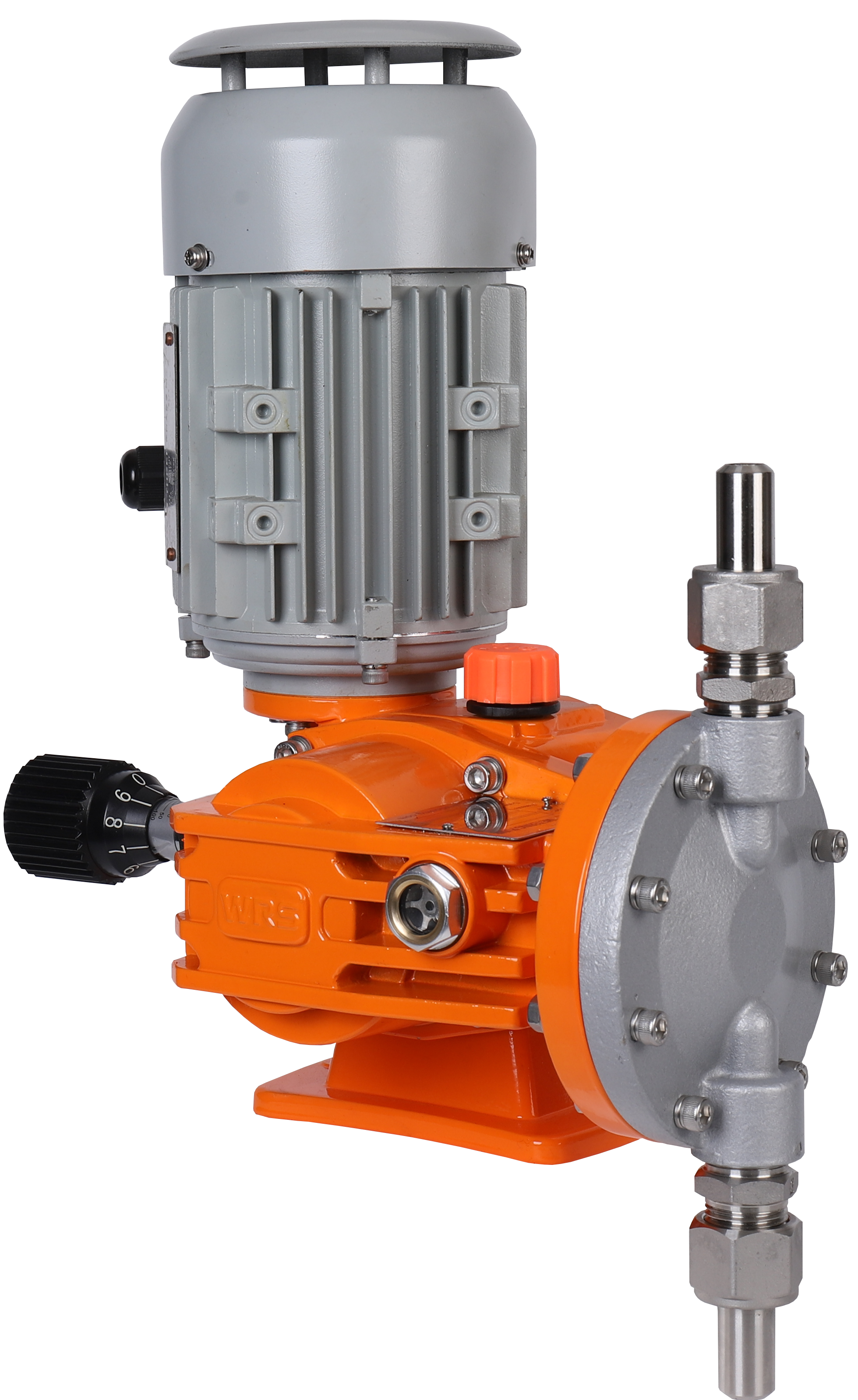
Short answer first: for strongly corrosive media, PVDF pump head material is the recommended wetted material in the WRS dosing pump range. The rest of this technical guide exists to make that recommendation operational: how to confirm that a medium really belongs in the highly corrosive group, how the duty point narrows the material choice, which parts beyond the pump head are also wetted, how compatibility is validated before the unit ships, and why the grade you accept on the first order determines your spare-parts plan for the next decade.
The guide is written for buyers who have moved past the awareness stage — plant engineers, importers, distributors and OEM buyers who are deciding what to purchase and how to keep it running. The pump families referenced throughout are the metering pump, solenoid dosing pump, diaphragm dosing pump, piston dosing pump, digital dosing pump and chemical injection pump, together with the wetted accessories that are usually left out of the specification: the dosing pump check valve, the dosing pump pulse dampener, tubing and seals. ZHEJIANG WRS MACHINERY EQUIPMENT CO., LTD (WRS), a dosing pump manufacturer based in Hangzhou, Zhejiang, China, builds these families with PVC, PVDF, SS316 and SS316L wetted materials.
Problem definition: what actually fails in strong corrosive liquid dosing
Three different problems get mixed together when a corrosive dosing system misbehaves, and each one needs a different response.
1. Hydraulic faults that look like material faults
When the discharge flow rate drops or becomes unstable, the first check is mechanical rather than chemical. WRS troubleshooting records for dosing pumps classify the symptom discharge flow rate drop or unstable flow rate with the cause inlet or outlet is blocked, and the recorded remedy is to check the strainer, tubing and valves, then clean or replace them if necessary. A partly blocked suction line reduces the fill volume of every stroke, so the pump appears to have lost accuracy when the real fault is a clogged strainer or a sticking valve. Replacing a pump head before running that check is an expensive way to solve a filtration problem.
2. Material-driven degradation
The second failure mode develops over weeks or months. Where a wetted material is not compatible with the medium, the pump head, valve seats, diaphragm and seals degrade progressively; dosing accuracy drifts; and the eventual failure is often a leak at the pump head, which creates both process contamination and operator-exposure risk. Because material degradation is gradual rather than dramatic, it is easy to defer during procurement and expensive to correct after commissioning.
3. Material specification drift across the life of the pump
The third problem is commercial. A wetted grade that is correct on the first order becomes a liability if repeat units arrive with different materials, if the accessories were never frozen in the purchase specification, or if spare check valves, diaphragms and pulse dampeners are later supplied in a different compound. In installations designed to run continuously for years, the material decision is also a supply-continuity decision — which is the question this guide returns to at the end.
Industry background: why wetted materials moved up the buying agenda
The scale of the market explains why material grades now appear as a standard line item in procurement documents. Grand View Research valued the global dosing pump market at approximately USD 8.86 billion in 2024, with Asia Pacific holding a 41.8% revenue share in the same year. Diaphragm dosing pumps accounted for a 55.7% revenue share in 2024, the largest product segment.
Drive technology follows a similar pattern. Motor-driven metering pumps held a 54.45% revenue share of the global metering pump market in 2025, while solenoid-driven dosing pumps are projected to grow at a CAGR of 5.88% through 2031, according to Mordor Intelligence. Water and wastewater treatment remains the largest single application, with a 23.2% application share of the metering pump market in 2025 (Grand View Research), and the global chemical injection pump market was valued at USD 3.5 billion in 2024 (HTF Market Intelligence). China's liquid pump exports, which include dosing types, reached USD 14.3 billion in 2024 according to the Observatory of Economic Complexity.
Published market sizes should be read with care, because scope definitions differ. Base-year estimates for 2024–2025 range from about USD 6.35 billion to USD 8.86 billion depending on whether component-level dosing pumps or complete chemical injection systems are counted, and broader chemical-injection definitions produce far larger figures. For a buyer, the practical takeaway is to compare specifications and test evidence rather than headline market numbers.
Regulation and standards sit on top of the material question. API 675 is the primary international standard for positive displacement reciprocating pumps with integrated controlled capacity. ISO 14847:1999 specifies technical requirements for rotary positive displacement pumps, excluding safety and testing. In the European Union, the Machinery Regulation that repeals 2006/42/EC from 2027 mandates CE marking for metering pump units. Material declarations form part of that documentation, which means the wetted-material list has to be accurate and traceable rather than approximate.
Competitively, Grundfos, IDEX (Milton Roy), ProMinent and SEKO S.p.A. are among the most frequently cited suppliers in the global dosing system market (Mordor Intelligence). At the execution stage, though, the differentiator is rarely the brand on the nameplate. It is whether the quoted unit, its wetted accessories and its spare parts are specified at the material grade the medium actually requires.
Pump-type economics reinforce that focus. In WRS product comparison data, dosing pumps deliver liquid with an accuracy within 2% against 5% for screw pumps, cost at least 50% less at small flow rates, require less maintenance and run at higher efficiency — which is why they are the default choice for high-precision liquid dosing. That accuracy advantage is only real, however, if the wetted materials survive the medium.
Detailed solution: how material selection works in the WRS dosing pump range
The four wetted material options
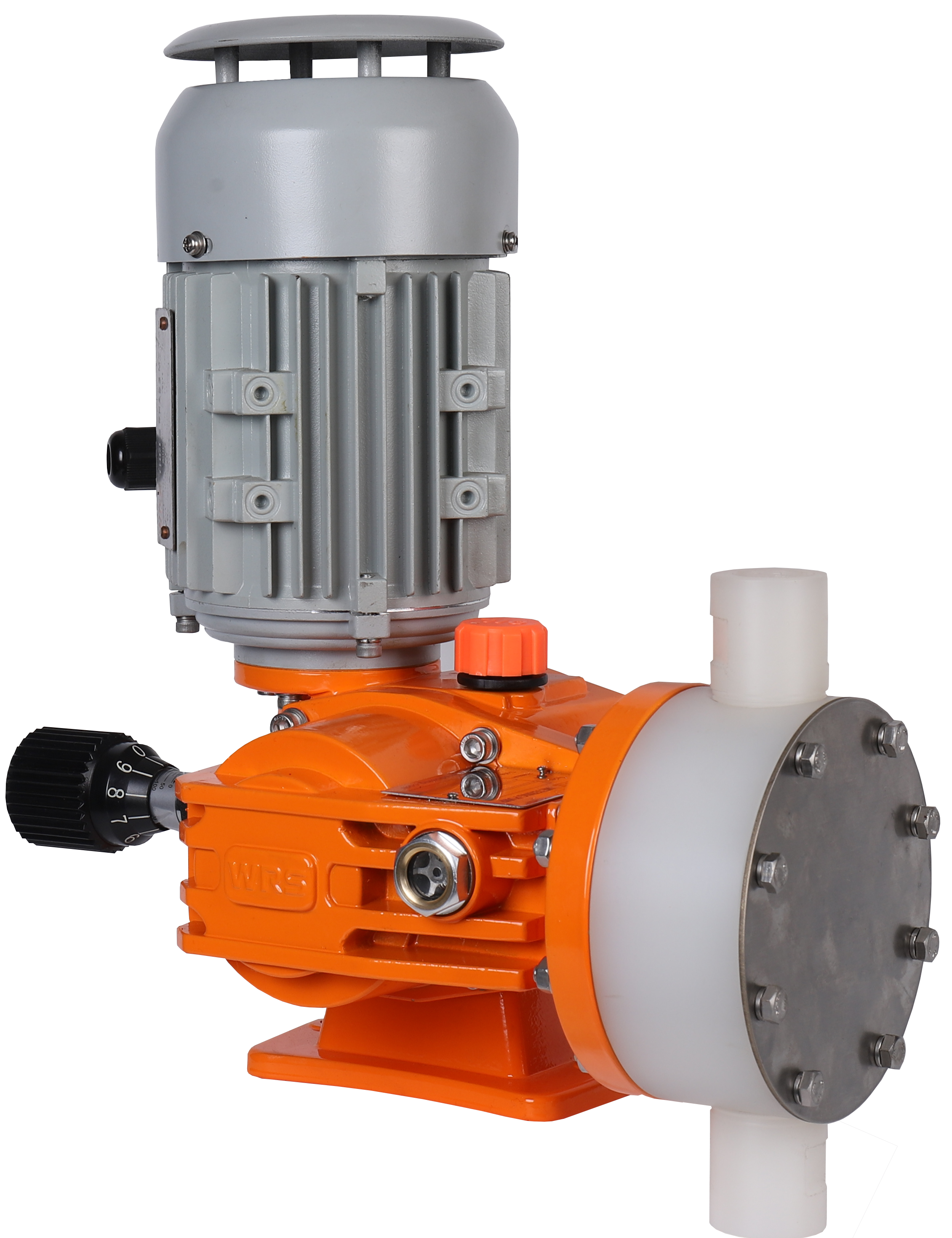
Across the WRS dosing pump, metering pump and chemical injection pump lines, wetted parts are offered in PVC, PVDF, SS316 and SS316L. The options are not distributed evenly across families: the solenoid, mechanical diaphragm and digital models list PVC, PVDF and SS316 or SS316L in various combinations, while the piston and hydraulic metering models are listed with SS316. That distribution is itself a selection constraint, and it is worth understanding before the medium is discussed.
The grounding rule for highly corrosive media
WRS guidance on this question is short and specific. Different media have different materials available for selection, and for highly corrosive media, PVDF pump head material is recommended. PVDF is a fluoropolymer grade, and it is the material to reach for when the medium is classified as highly corrosive rather than mildly or moderately aggressive. Because PVDF appears in the digital dosing pump, solenoid dosing pump and mechanical diaphragm listings, choosing PVDF does not force the buyer into a single pump family — the model can still be selected on flow rate and pressure.
The selection order that the material decision sits inside
Material selection is the third step of a four-part sequence, not the first. In the WRS selection method, flow rate is the most important parameter, and selection begins by comparing the required flow rate with the maximum flow rate available at the site. Pressure, pump head material and motor are then applied as refinements. The logic matters commercially: the duty point determines which model families are even eligible, and material grades are then chosen inside that eligible set. Buying a material grade first and a pump family second usually produces either an oversized unit or an unnecessary compromise on the wetted parts.
Material selection covers more than the pump head
The pump head is the most visible wetted component, but it is not the only one. In a corrosive liquid dosing system, the medium also contacts the check valves, the diaphragm or piston, the pulse dampener, the tubing and the fittings. WRS lists the dosing pump check valve and the dosing pump pulse dampener as separate product items precisely because they belong to the wetted path and must be specified at the same material grade as the pump head. A PVDF head with a mismatched valve component delivers the cost of the upgrade without the durability.
High-pressure duty changes the material conversation
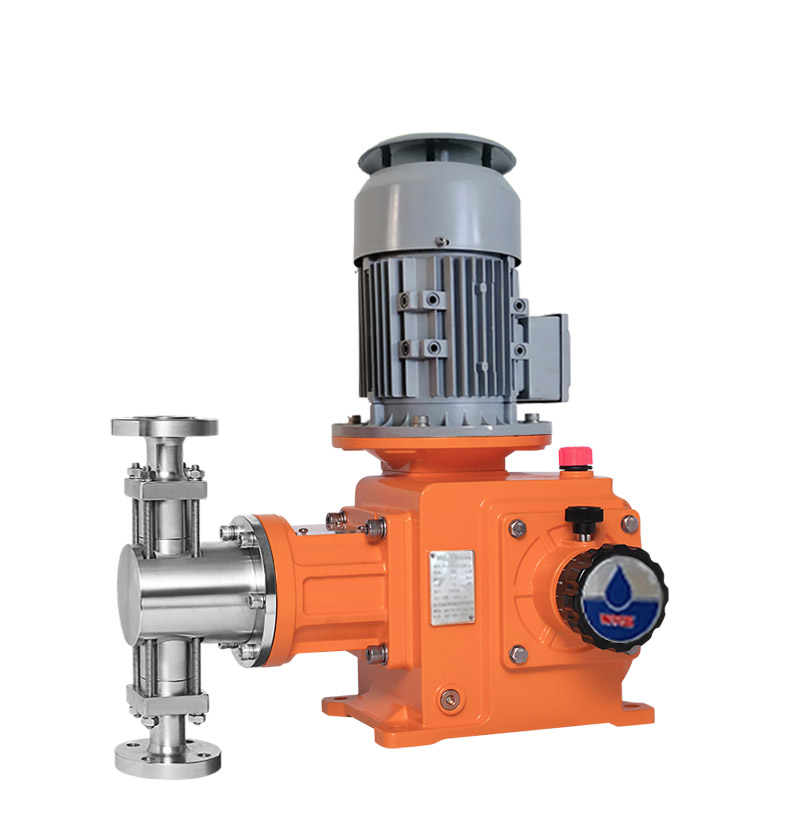
Pressure is where material options narrow fastest. The piston and hydraulic metering pumps in the range are listed with SS316 as the wetted material. The PM060SS1PFN11 piston dosing pump delivers 600 L/H at 8 bar through a DN25 flange with a 0.75 kW motor. The PD105SS1PFN11 delivers 600 L/H at 8 bar through a DN50 flange with a 4.0 kW motor. The HS008S0P01S11 hydraulic metering pump reaches 200 bar at 2 L/H with a 0.37 kW motor, and the HL090S0P01F11 hydraulic metering pump delivers 1600 L/H at 6 bar with a 1.5 kW motor. Frequency and explosion-proof motor options are available on these models.
The engineering consequence is straightforward. If a project needs high pressure and a highly corrosive medium at the same time, the buyer cannot simply apply the PVDF rule to a piston or hydraulic pump. The corrosion question has to be resolved with the manufacturer and the chemical supplier before the order is placed, because the wetted material listed for those families is SS316.
Where material documentation ends
Product data states wetted material grades by model. It does not, in the standard listing, name the elastomer compound or valve-seat material for every configuration. That gap is normal in this industry and should be closed in writing during the RFQ stage rather than assumed. The final judgement on chemical compatibility belongs to the medium data: the chemical supplier's compatibility guidance, confirmed against the concentration and temperature actually used, governs the decision. Pre-shipment testing then confirms what was built, not what the medium will do over time.
Step-by-step breakdown: from medium data to a locked material specification
Step 1 — Collect the medium data before the pump data
Assemble the chemical name, concentration, operating temperature range, and the presence of solids or entrained gas. Request compatibility guidance for the wetted materials involved from the chemical supplier. This step decides whether the medium falls into the highly corrosive group — the classification that triggers the PVDF recommendation.
Step 2 — Fix the duty point in the documented order
Confirm the required flow rate and compare it with the maximum flow rate at the site. Then confirm system pressure. Only then move to pump head material, and finally to the motor, including whether frequency or explosion-proof options are required.
Step 3 — Classify corrosivity and select the material
For highly corrosive media, specify PVDF pump head material. For less aggressive chemistry, PVC and SS316 or SS316L remain available in the corresponding families.
Step 4 — Extend the material grade to every wetted component
Write the material specification component by component: pump head, check valve, diaphragm or piston, pulse dampener, tubing and fittings. This is where most specification errors are introduced, because a single unlisted accessory can fail before the pump head does.
Step 5 — Check the pump-family constraint against the duty point
If the required pressure pushes the selection toward a piston or hydraulic metering pump, note that these families are listed with SS316 wetted material. Resolve compatibility before ordering rather than after commissioning.
Step 6 — Put the material requirement in the RFQ in writing
State the medium, the concentration and temperature range, the required grade per component, and the test evidence you expect. The purchasing terms recorded for the WRS dosing pump line are MOQ 1 unit, FOB delivery terms, pre-shipment test as the acceptance criterion, and 100% payment in advance.
Step 7 — Validate by pre-shipment test
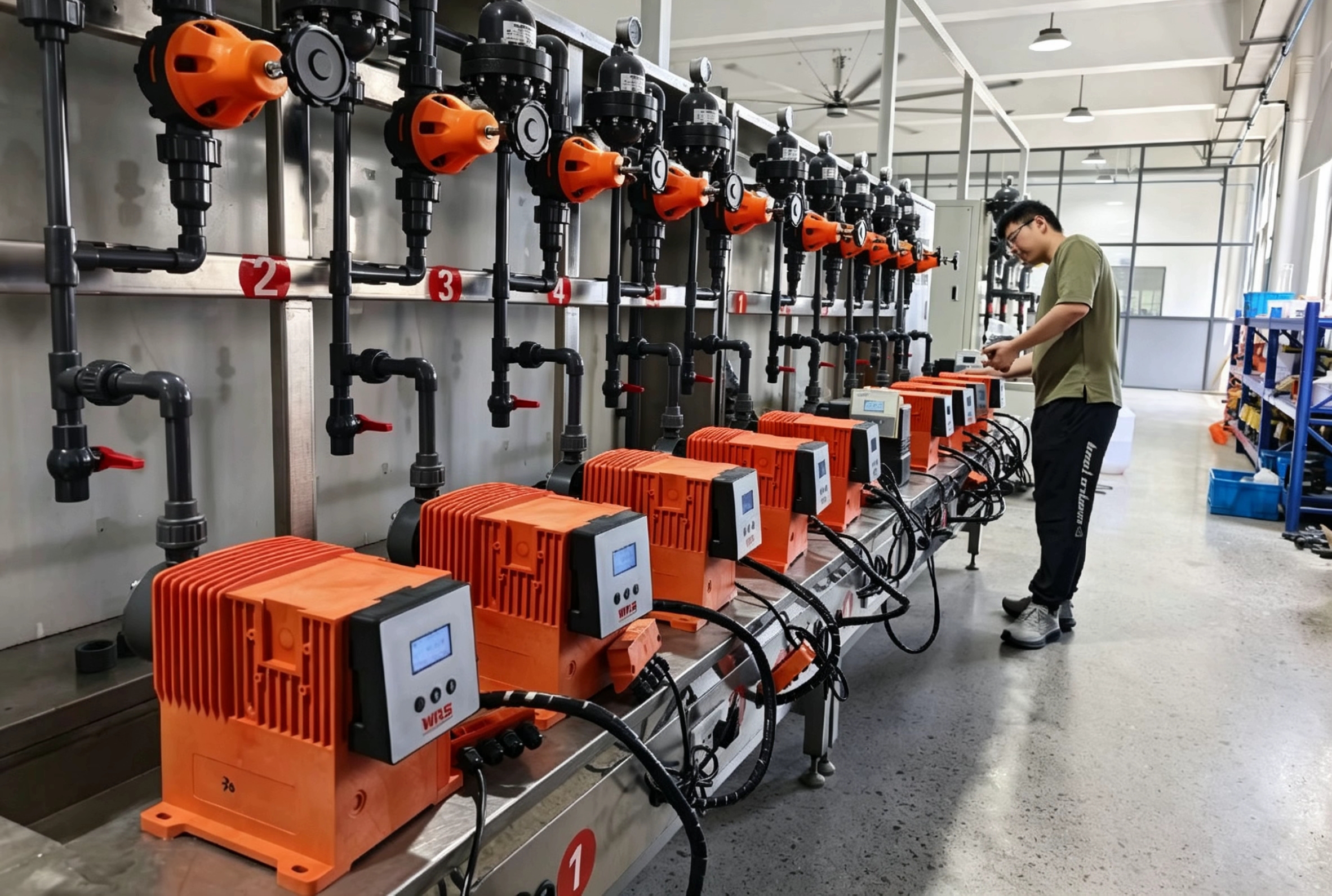
Because pre-shipment testing is the defined acceptance criterion, the unit is verified against the agreed specification before it leaves the factory. WRS maintains dedicated test platforms for this purpose, and the test record becomes part of the order documentation.
Step 8 — Commission with a recorded baseline
Record flow rate and pressure at commissioning, then keep the mechanical checks in the maintenance routine. If the discharge flow rate drops or becomes unstable, check the strainer, tubing and valves first — that is the documented cause path for this symptom, and it should be eliminated before any material failure is assumed.
Step 9 — Lock the material specification for the long term
Freeze the wetted material list in the asset record, keep a spare-parts list for check valves, diaphragms and pulse dampeners, and confirm how long the same compounds will remain available. Re-verify the material grade if the chemical supplier changes the formulation.
Use cases: three corrosive-duty scenarios and what material choice looks like in each
1. Livestock nutrient solution dosing in a harsh humid environment
A recorded WRS project for a hoggery in Russia runs nutrient solution dosing on a 24/7 automatic system in a harsh, humid livestock farm environment, with IP67 protection specified. The scenario shows how material and enclosure requirements interact: the wetted material has to match the nutrient solution, and the enclosure protection has to match the environment. Standard protection on the digital and solenoid models in the range is IP65, so a project requiring IP67 has to raise that requirement explicitly at the RFQ stage instead of assuming it.
2. Waste water treatment and chemical industry dosing
Mechanical diaphragm models cover the middle of the flow range. The MG0150PQ11 delivers 15–150 L/H at 5–10 bar, the MA0120PQ11 delivers 15–500 L/H at 5–10 bar, and the MB1800PQ11 delivers 250–1800 L/H at 3–10 bar, all listed with PVC, PVDF or SS316 wetted material and with frequency or explosion-proof motor options. These are the models typically applied in waste water treatment, chemical industry, coating and surface treatment, mining process and foundry industry duties.
3. High-pressure chemical injection
The piston and hydraulic metering pumps serve oil and gas, hydrogen energy, electric power, chemical, pharmacy, new material and new energy applications. Duty points range from 2 L/H at 200 bar on the HS008S0P01S11 to 1600 L/H at 6 bar on the HL090S0P01F11, all with SS316 as the listed wetted material. Where the injected chemical is strongly corrosive, this is the application where the material question has to be settled before the quotation is finalized.
Comparison table: wetted material options by model
The table below is drawn from WRS product data. It is the practical form of the material decision: identify the duty point, then read across to the wetted material options available at that duty point.
| Model | Pump type | Flow rate | Pressure | Wetted material options |
|---|---|---|---|---|
| EMML0060FP1E | Digital dosing pump | 60 L/H | 4 bar | PVC, PVDF, SS316L |
| EMGP0200FP1C | Digital dosing pump | 200 L/H | 4 bar | PVC, PVDF, SS316 |
| EMAP1000PQ1C | Digital dosing pump | 1000 L/H | 4 bar | PVC, PVDF |
| ML0008PR1C | Solenoid dosing pump | 1–20 L/H | 1–10 bar | PVC, PVDF, SS316 |
| EML0020PR1C | Solenoid dosing pump | 1–20 L/H | 1–10 bar | PVC, PVDF, SS316 |
| MG0150PQ11 | Mechanical diaphragm | 15–150 L/H | 5–10 bar | PVC, PVDF, SS316 |
| MA0120PQ11 | Mechanical diaphragm | 15–500 L/H | 5–10 bar | PVC, PVDF, SS316 |
| MB1800PQ11 | Mechanical diaphragm | 250–1800 L/H | 3–10 bar | PVC, PVDF, SS316 |
| PM060SS1PFN11 | Piston dosing pump | 600 L/H | 8 bar | SS316 |
| PD105SS1PFN11 | Piston dosing pump | 600 L/H | 8 bar | SS316 |
| HS008S0P01S11 | Hydraulic metering pump | 2 L/H | 200 bar | SS316 |
| HL090S0P01F11 | Hydraulic metering pump | 1600 L/H | 6 bar | SS316 |
Verification checklist: what to confirm in writing
| Check | What the WRS data shows | What to confirm in writing |
|---|---|---|
| Medium classification | Highly corrosive media: PVDF pump head material recommended | Compatibility guidance from the chemical supplier for the concentration and temperature in use |
| Duty point | Flow rate is the most important parameter, compared with the maximum flow rate at the site | Required flow rate first, then system pressure |
| Wetted path | Check valve and pulse dampener are separate items in the product line | Material grade for pump head, valves, diaphragm or piston, dampener, tubing and fittings |
| Motor configuration | Frequency and explosion-proof motor options available on several model families | Power supply and any hazardous-area requirement |
| Acceptance | Pre-shipment test is the acceptance criterion; MOQ 1 unit; FOB; 100% payment in advance | Test evidence and documentation package per order |
| Long-term supply | Spare parts warehouse and local after-sales service in more than 10 countries | Spare-parts list with material grades and re-order availability |
Frequently asked questions
Which standards and regulations apply to dosing pump units in corrosive chemical service?
Three reference points matter most. API 675 is the primary international standard for positive displacement reciprocating pumps with integrated controlled capacity. ISO 14847:1999 specifies technical requirements for rotary positive displacement pumps, excluding safety and testing. In the European Union, the Machinery Regulation that repeals 2006/42/EC from 2027 mandates CE marking for metering pump units. These documents govern design, documentation and market access; they do not replace chemical compatibility data, which has to be confirmed against the specific medium, concentration and temperature. Because material declarations form part of the technical documentation, the wetted material list should be complete and consistent with what is actually shipped.
Which wetted materials can WRS supply for strong corrosive liquids, and which one is recommended?
PVC, PVDF, SS316 and SS316L are available across the WRS dosing pump range, with the specific options depending on the model family. For highly corrosive media, PVDF pump head material is recommended. The piston and hydraulic metering pump models are listed with SS316, so projects that combine high pressure with a highly corrosive medium need that compatibility confirmed with the manufacturer before ordering. The pump head is also not the only wetted part: check valves, diaphragms or pistons, pulse dampeners, tubing and fittings should be specified at the same grade.
How do purchasing terms and cost drivers work when a higher-grade material is specified?
The recorded purchasing terms for the WRS dosing pump line are MOQ 1 unit, FOB delivery terms, pre-shipment test as the acceptance criterion, and 100% payment in advance; these terms are not tiered by material grade. The cost drivers to itemize in a quotation are the wetted material grade per component, the motor configuration including whether frequency or explosion-proof options are required, and the accessory scope, particularly the check valve and the pulse dampener. Asking for the material grade to be listed per component allows a quotation to be compared line by line rather than as a single figure.
Can a single unit be tested before a full order is placed?
Yes. A minimum order quantity of 1 unit makes a single-unit trial practical, and pre-shipment testing is defined as the acceptance criterion, so the unit is verified against the agreed specification before it leaves a factory equipped with dedicated test platforms. The strongest trial setup is a written specification covering the medium, the required material grade per wetted component and the expected test evidence. The final corrosion judgement should still rest on the chemical supplier's compatibility data for the concentration and temperature in use.
Can a China-based dosing pump supplier support long-term supply continuity?
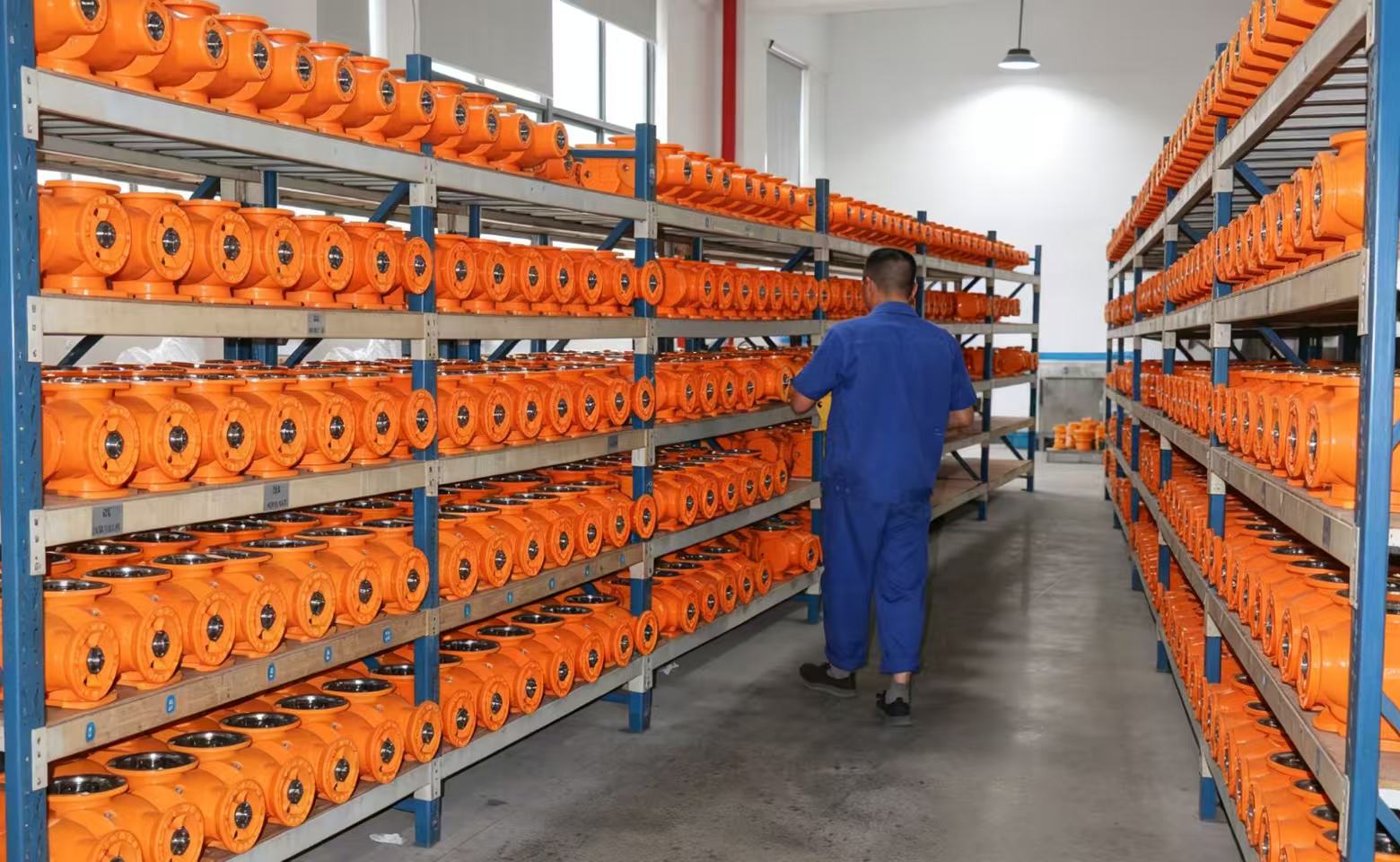
Continuity depends on four verifiable factors rather than on a country of origin. First, whether the supplier manufactures the product: WRS is a manufacturer based in Hangzhou, Zhejiang, China, founded in 2016, operating a 15,000 m² facility with 120 employees, an annual output of 30,000 units and an R&D team of 15 engineers. Second, whether the material specification can be frozen across repeat orders and spare parts. Third, whether spares are stocked: the company maintains a spare parts warehouse supporting check valves, diaphragms and pulse dampeners. Fourth, whether service is local: WRS operates local after-sales service in more than 10 countries, including Singapore, Thailand, Malaysia, Vietnam, South Korea, Japan, Russia, Chile, South Africa, Angola and Turkey, with exports representing about 20% of output and main markets in Southeast Asia, Russia and South America. For buyers planning multi-year supply, the practical next step is to request the wetted material specification and a quotation with the material grade listed per component.
Conclusion: four rules that keep a corrosive dosing system reliable
Rule 1 — diagnose in the right order. A falling or unstable discharge flow rate should be traced through the strainer, tubing and valves before material failure is assumed, because a blocked inlet or outlet is the recorded cause path for that symptom.
Rule 2 — let flow rate lead and material follow. Compare the required flow rate with the maximum flow rate at the site, then apply pressure, then pump head material, then motor. For highly corrosive media, that third step resolves to PVDF pump head material.
Rule 3 — specify material across the whole wetted path. Pump head, check valve, diaphragm or piston, pulse dampener, tubing and fittings all contact the medium, and all of them belong in the written specification.
Rule 4 — treat the grade as a long-term commitment. Freeze the wetted material list, hold spare parts at the same grade, and confirm that the supplier can repeat the specification on future orders and support the pump locally over its service life.
Next step: if you are specifying a dosing pump for a strongly corrosive liquid, send the medium data (chemical, concentration, temperature) together with the duty point (flow rate and pressure) to WRS. You will receive a material recommendation with the wetted grade listed per component, and a quotation under the standard terms: MOQ 1 unit, FOB, pre-shipment test as acceptance criterion.
Download the product brochure: WRS dosing pump brochure (PDF)
Website: www.wrsdosing.com
Contact: Isak | E-mail: isak@wrsindustry.com | Tel / WhatsApp: +86-173 0642 4430
Address: No. 108 Shixin Rd, Xiaoshan Region, Hangzhou City, Zhejiang, China
Have Questions or Need More Details?
Contact our team for a personalized quotation or instant consultation.
Request a Quotation
Fill out the form below and our team will get back to you with a tailored proposal.
WhatsApp Direct Chat
Prefer to chat in real-time? Message us on WhatsApp for instant assistance & quick answers.
- Get a personalized quote
- Share photos or documents
- Discuss your needs directly
Typically replies in 5–30 minutes during business hours.