
Wetted Material Selection for Strong Corrosive Liquid Dosing Pumps
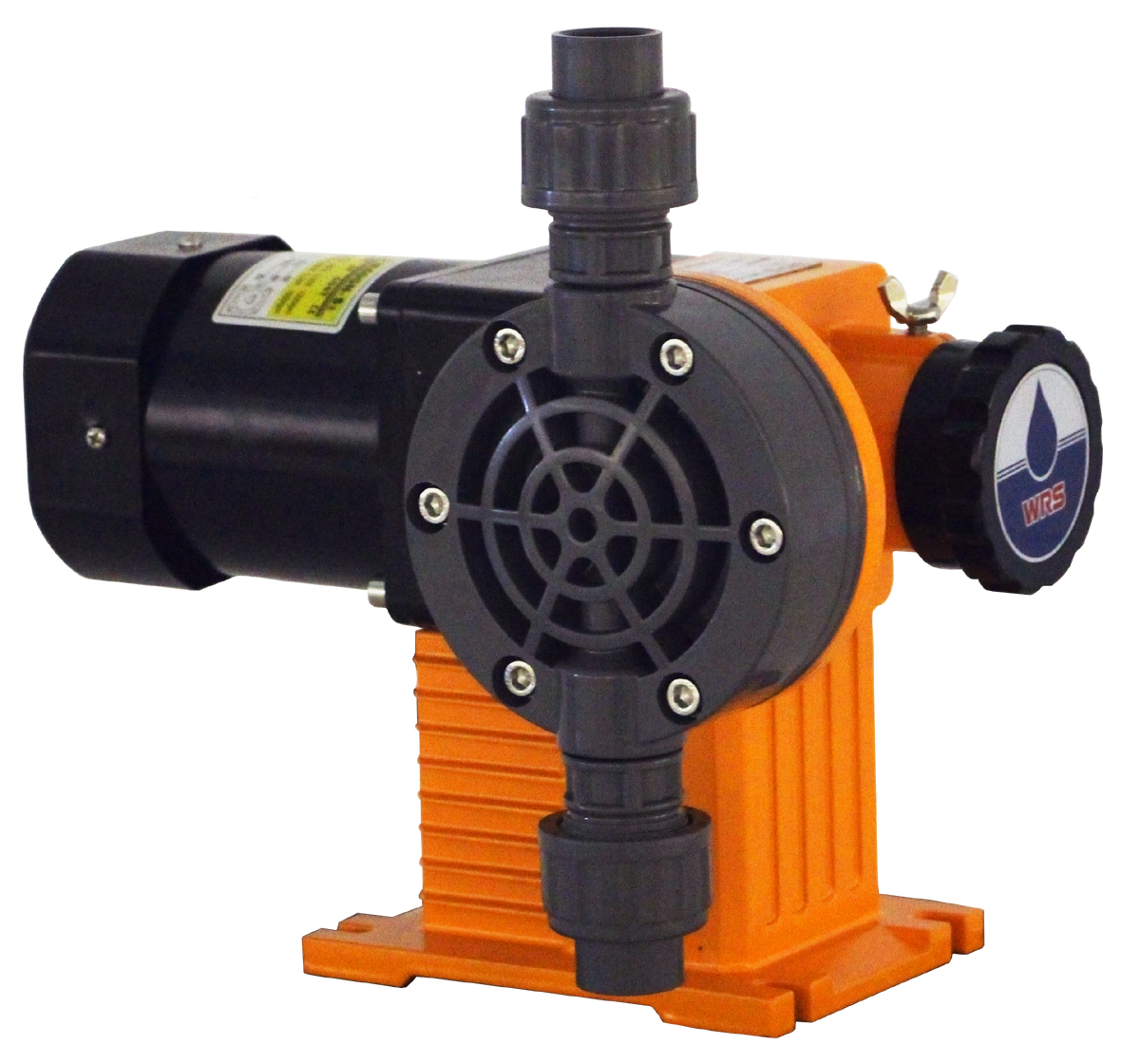
For highly corrosive media, PVDF pump head material is the recommended choice, and the remaining wetted components — diaphragm, check valves, seats, seals and tubing — must be matched to the same duty. Material selection is not a single decision about the pump head; it is a sequence that starts with the liquid, ends with an acceptance test, and fails whenever one wetted part is left at the standard configuration.
This guide is written for the Evaluation-to-Execution stage of a purchase: the pump family has already been narrowed down and what remains is to lock the wetted materials, confirm the documentation, and define the checks that prove the delivered unit matches the specification. It sets out the wetted path component by component, shows how pump type changes the material question, and lists the commercial and test points that let a buyer verify what was actually built.
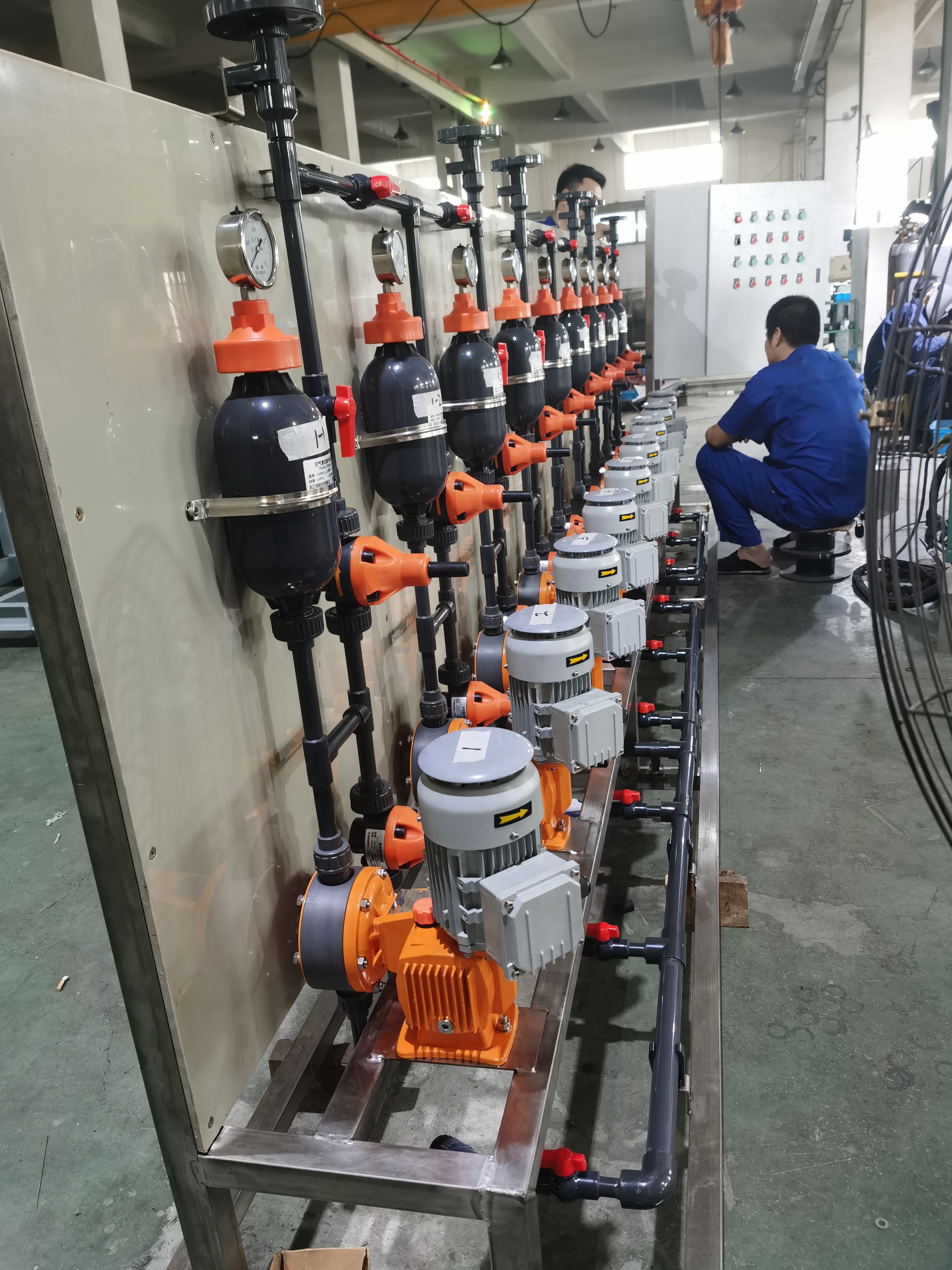
WRS PTE LTD is the dosing pump brand used in the examples below. Its manufacturing operation, ZHEJIANG WRS MACHINERY EQUIPMENT CO., LTD, is based at No. 108 Shixin Rd, Xiaoshan Region, Hangzhou City, Zhejiang, China. The company was founded in 2016, runs a 15,000 m² factory with 120 employees and 15 engineers, and produces around 30,000 units a year across metering pumps, solenoid dosing pumps, diaphragm dosing pumps, piston dosing pumps, digital dosing pumps, dosing pump check valves, dosing pump pulse dampeners, chemical dosing systems, streaming current monitoring systems and chemical injection pumps. Roughly 20% of output is exported, primarily to Southeast Asia, Russia and South America.
Problem Definition: Why Material Decisions Fail on Corrosive Duty
Corrosive-liquid failures rarely appear at commissioning. The pump doses correctly for weeks, and then a service report records the classic symptom: discharge flow rate drop, or an unstable flow rate that drifts between checks. A blocked inlet or outlet is the first thing to rule out, and the documented field check is straightforward — inspect the strainer, tubing and valves, then clean or replace as required.
On strong corrosive service the same inspection frequently reveals something else: a diaphragm that has stiffened or swollen, a valve seat that no longer seals flat, or a pump head surface that has lost material. Flow is not lost because the drive has failed. It is lost because the liquid boundary changed shape, and once a check valve leaks back even slightly, dosing repeatability disappears.
The practical definition of the material problem is therefore this: a dosing pump is only as corrosion-resistant as its weakest wetted component, and the weakest component is usually not the pump head. Buyers default to upgrading the head and leave the valve set, seats and tubing at catalogue standard, which moves the failure point downstream instead of removing it.
A specification is complete only when five variables are fixed before any material is proposed:
- Medium identity and concentration — the chemical name alone is not enough; concentration and any co-solvents drive the answer.
- Temperature — both the process temperature and the ambient temperature around the pump head.
- Flow rate — the primary selection parameter. WRS selection guidance compares the required flow rate against the maximum flow rate available at the site before anything else is refined.
- Pressure — discharge pressure and any back-pressure held by the injection point.
- Pump head material and motor — the secondary parameters that refine the choice once flow and pressure are fixed.
Industry Background: A Large Installed Base and a Documentation Gap
Dosing is a mature, heavily installed category. Grand View Research values the global dosing pump market at approximately USD 8.86 billion in 2024, with Asia Pacific holding a 41.8% revenue share in the same year and diaphragm dosing pumps accounting for a 55.7% revenue share of the product mix. Mordor Intelligence reports that motor-driven metering pumps held a 54.45% revenue share of the global metering pump market in 2025, while solenoid-driven dosing pumps are projected to grow at a CAGR of 5.88% through 2031. Water and wastewater treatment remains the largest single application cluster, at a 23.2% share of metering pump applications in 2025 according to Grand View Research, and HTF Market Intelligence values the global chemical injection pump market at USD 3.5 billion in 2024.
The standards picture is clearer than the material picture. API 675 is the primary international standard for positive displacement reciprocating pumps with integrated controlled capacity, and ISO 14847:1999 specifies technical requirements for rotary positive displacement pumps excluding safety and testing. In Europe, metering pump units require CE marking, with the EU Machinery Regulation replacing 2006/42/EC from 2027. None of these documents tells a buyer whether PVDF, PVC or SS316 suits a specific acid at a specific concentration — they define design, marking and safety requirements. Material suitability remains the buyer's own specification, which is precisely why it must be written down rather than assumed from a brochure.
The Wetted Path, Component by Component
Material selection becomes manageable once the liquid boundary is broken into individual parts, each with its own specification line. The table below is the working structure used for the rest of this guide.
| Wetted component | Role on corrosive duty | What to write into the specification |
|---|---|---|
| Pump head | Contains the metered volume and forms the primary corrosion barrier | Material designation per model — PVDF, PVC or SS316 — named on the quotation, not just 'corrosion resistant' |
| Diaphragm | Moving barrier that isolates the drive from the liquid | Diaphragm material stated as a line item, plus the replacement part number and expected inspection interval |
| Check valves (suction and discharge) | Keep flow one-directional and preserve volumetric repeatability | Valve type, seat and ball material, and whether a spare valve set ships with the first order |
| Seats and seals | Static and dynamic sealing at the head, valve block and connections | Elastomer designation per location, and confirmation that the part is genuinely wetted |
| Tubing, fittings, injection point | Carry the liquid to and from the pump | Same material family as the head, with the connection standard defined |
| Pulse dampener | Smoothes pulsation on the discharge side so the injection point sees steady flow | Wetted material of the dampener body and its internal diaphragm |
Pump Head Material: PVDF First, PVC and SS316 to Be Verified
WRS guidance on the head is direct. Different media have different materials available for selection, and for highly corrosive media the PVDF pump head material is the recommended option. The wider material set also includes PVC and SS316 pump head options, which means the decision is not 'PVDF is always best' but 'PVDF is the starting point for strongly corrosive liquids, then confirm against the actual medium, concentration and temperature.'
Two rules follow from that. First, the head decision must be written as a material name against a model number — a purchase order that says 'chemical resistant head' cannot be checked on arrival. Second, the head decision propagates: if the head is upgraded to PVDF, the valve set, seats and tubing are reviewed as part of the same system, because a PVDF head with a standard valve set simply relocates the corrosion to a cheaper part with a shorter replacement cycle.
Because suitability depends on the medium, the compatibility confirmation should be requested in writing for the real concentration and temperature, not for the generic chemical name. That single document removes most of the ambiguity in a corrosive-duty quotation.
How Pump Type Changes the Material Question
Pump type does not decide which material is correct, but it decides how many fluid boundaries exist and which part carries the corrosion duty.
- Solenoid dosing pumps (ML, MLS series) — the diaphragm is actuated directly by the solenoid, so the diaphragm and valve set form the entire liquid boundary. There are few wetted moving parts to specify, but every one of them is critical.
- Piston dosing pumps (PD, PM series) — the piston displaces liquid directly, so the sealing interface between piston and cylinder becomes a wear item as well as a corrosion item. Crystalline or abrasive media push the decision toward a diaphragm design.
- Hydraulic dosing pumps (HL, HS series) — hydraulic fluid sits behind a diaphragm and is separated from the process liquid. Two boundaries must be managed, and diaphragm integrity governs both the corrosion side and the cleanliness of the hydraulic side.
- Dosing pumps listed by model family (MA, MB, MG, EML, EMG, EMA, EMB) — configuration varies by model number, so the pump head and valve materials should be confirmed against the specific unit rather than assumed from the series name.
- Digital dosing pumps — electronic rate control changes how the dose is set and recorded, not how the wetted parts resist the medium. Treat the control decision and the material decision as two separate sign-offs.
The surrounding system matters as much as the pump. A chemical dosing system is only as reliable as its check valve, pulse dampener and injection arrangement, and WRS lists all three — dosing pump check valve, dosing pump pulse dampener and streaming current monitoring system — alongside its pump lines, which makes a single-supplier material plan practical.
Step-by-Step: A Seven-Step Material Selection Sequence
- Fix the duty data before materials are discussed. Record medium, concentration, temperature, required flow rate, discharge pressure and ambient conditions. Flow rate is the primary parameter; pressure, pump head material and motor refine the selection afterwards.
- Map the wetted path. Use the component table above and mark every part that touches the liquid, including the pulse dampener and the injection fittings.
- Select the pump head material from the corrosive class. For highly corrosive media, PVDF is the recommended pump head material; PVC and SS316 remain options to be verified against the specific medium rather than defaulted to.
- Match the diaphragm, valve set, seats and tubing to the head. Specify them as one system on the same quotation line, and request the spare parts list at quotation stage rather than after the first failure.
- Choose the pump family and control type. Solenoid (ML, MLS), piston (PD, PM), hydraulic (HL, HS) or a listed dosing pump family, with digital control if dosing records are required. The family sets the number of fluid boundaries; it does not overrule the material logic.
- Lock documentation and compliance. Confirm the certificate that will ship with the unit, the standards it was assessed against, and whether the destination market adds requirements such as CE marking under the EU Machinery Regulation.
- Set acceptance and a field baseline. Agree the pre-shipment test, record flow at commissioning, and use the documented troubleshooting path — strainer, tubing and valves first, clean or replace as needed — before concluding that a material has failed.
Use Cases: Where Material Choice Decides Uptime
Wastewater treatment. An engineering company in Australia operates 20 WRS units in wastewater treatment, with five years of stable operation. The reported strengths are high quality and easy maintenance — a direct outcome of specifying replaceable wetted parts rather than a sealed assembly.
Water and wastewater more broadly. This remains the largest application cluster for metering pumps, at a 23.2% application share in 2025. Dosing duty here is continuous and often aggressive, so a PVDF head plus a matched valve set is a routine starting configuration rather than a premium upgrade.
Electroplating and surface treatment. Bath chemistry, additive dosing and pH correction expose pumps to acids and caustics at elevated temperature. Material decisions are made per bath, not per plant, which makes written specification lines essential.
Chemical industry and oil & gas. Chemical injection pumps sit on long duty cycles where a drifting dose is a process problem, not a maintenance inconvenience. Where a project names API 675, the standard defines design and controlled-capacity requirements while the buyer still defines the material set.
Livestock and agriculture. A WRS installation in Russia doses nutrient solution on a 24/7 automatic system in a harsh, humid livestock environment requiring IP67 protection — an example where enclosure protection and wetted materials are specified together.
The same logic carries into hydrogen power generation, paper and pulp, semiconductor and mining applications: the medium decides the material, and the duty cycle decides how much spares stock is justified.
Comparison: Pump Families and Their Material Implications
| Pump family (series) | How WRS lists the model | Fluid boundaries to manage | Material decision focus |
|---|---|---|---|
| Solenoid pump — ML, MLS | Listed as Solenoid Pump, e.g. ML0008PR1C | One liquid boundary at the diaphragm and valve set | Diaphragm and valve set carry the full corrosion duty; specify both together |
| Piston pump — PD, PM | Listed as Piston Pump, e.g. PD105SS1PFN11, PM060SS1PFN11 | Liquid contacts the piston and its sealing interface | Sealing interface is both a wear and a corrosion point; confirm wetted piston material |
| Hydraulic pump — HL, HS | Listed as Hydraulic Pump, e.g. HL090S0P01F11, HS008S0P01S11 | Two boundaries: hydraulic fluid and process liquid, separated by a diaphragm | Diaphragm integrity governs corrosion resistance and hydraulic-side cleanliness |
| Dosing pump families — MA, MB, MG, EML, EMG, EMA, EMB | Listed as Dosing Pump, e.g. MA0120PQ11, MG0150PQ11, EML0020PR1C, EMML0060FP1E | Depends on the specific configuration | Confirm head and valve materials against the exact model number before ordering |
| Digital dosing pump | Electronically controlled variant within the dosing pump line | Same as the underlying family | Control type does not change material logic; sign off separately |
Series-to-type mapping reflects how each model is listed in WRS CE certificate documentation. Final configuration is confirmed on the order drawing.
Specification and Acceptance Language That Prevents Substitution
A material decision survives to the plant floor only if the purchase documents carry it. The following points convert a material choice into something that can be checked on delivery.
- Name the material per wetted item against a model number — for example EML0020PR1C, PD105SS1PFN11 or HL090S0P01F11 — rather than per product family.
- Reference the applicable standards — EN ISO 12100:2010 and EN 60204-1:2018 for machinery safety and electrical equipment, and API 675 or ISO 14847:1999 where the project specifies them.
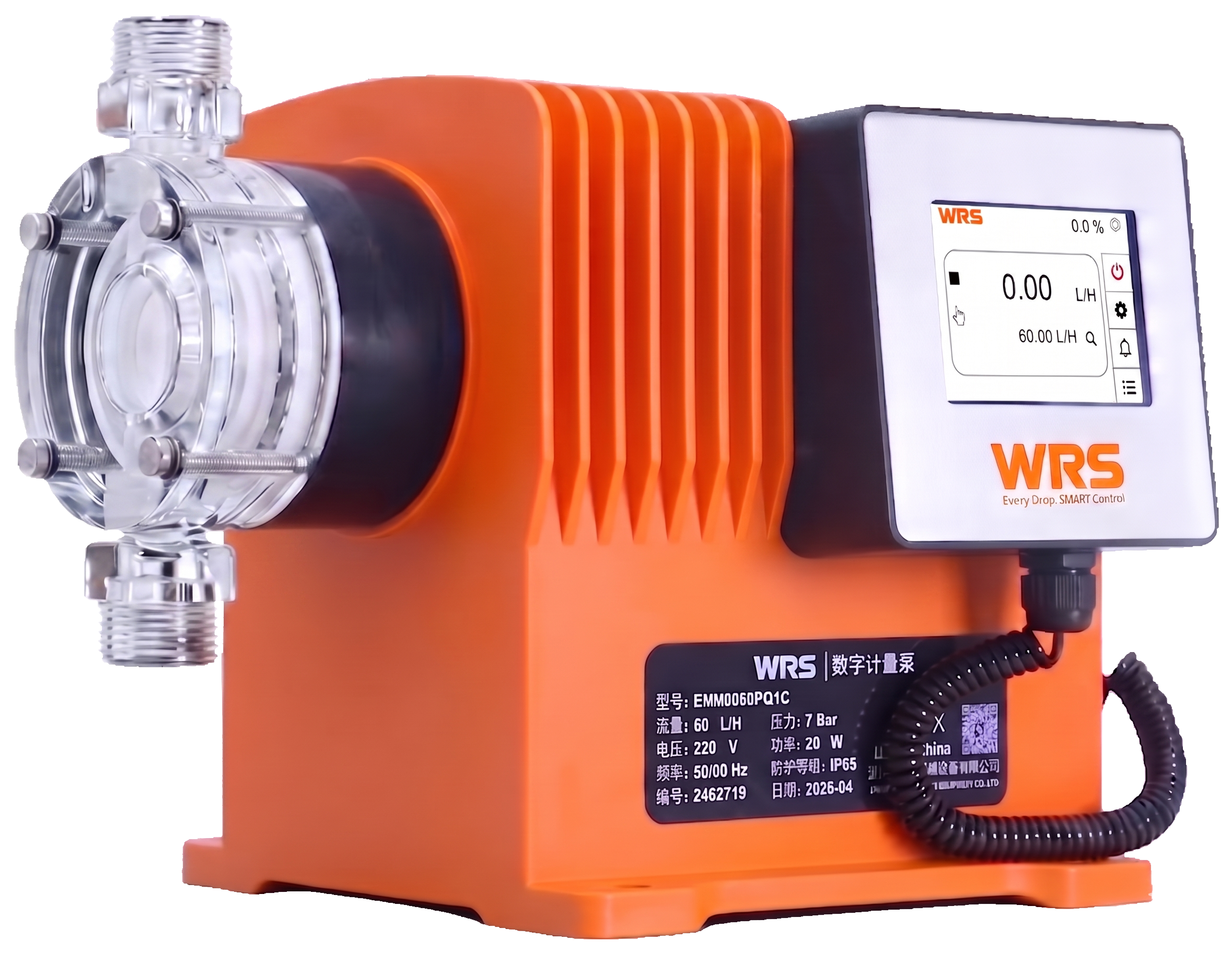
- Request the certificate that ships with the unit. WRS holds CE certificate 3N240528.ZWMTU36 issued by ECM for the EU market, valid from 2024-05-28 to 2029-05-27, assessed against EN ISO 12100:2010 and EN 60204-1:2018. The certificate scope lists the EML, EMG, EMA, EMB, EPS, EPM, EHS, EHM, ML, MLS, MG, MA, MB, PS, PM, PL, PD, PT, HS, HM, HL, HD and HT series.
- Separate customization from catalog configuration. WRS production runs in ODM mode with voltage as the stated customization scope, and supports voltage changes as a configuration item. A material change is a different decision and must be quoted, drawn and documented on its own.
- Tie acceptance to a test. Quality control is stated as 100% test, and the acceptance criterion is a pre-shipment test. Ask for the test record rather than a verbal confirmation.
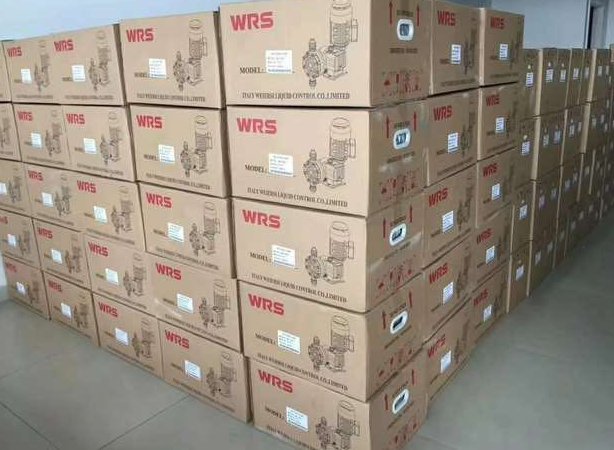
- Record the commercial terms. MOQ 1 unit, FOB delivery terms and 100% payment in advance are the quoted baseline, with a monthly capacity of 5,000 units and a 3-day lead time.
FAQ
Which certification and standards should a buyer verify on a corrosive-duty dosing pump?
Verify four things: the certificate number, the issuing body, the series covered, and the validity window. WRS dosing pumps are covered by CE certificate 3N240528.ZWMTU36 issued by ECM for the EU market, valid from 2024-05-28 to 2029-05-27, assessed against EN ISO 12100:2010 and EN 60204-1:2018. The scope lists the EML, EMG, EMA, EMB, EPS, EPM, EHS, EHM, ML, MLS, MG, MA, MB, PS, PM, PL, PD, PT, HS, HM, HL, HD and HT series. Where a project names API 675 or ISO 14847:1999, treat the certificate as one layer of evidence and the project specification as the other. Note that CE marking of metering pump units falls under the EU Machinery Regulation that replaces 2006/42/EC from 2027.
Which China-based dosing pump manufacturers can confirm in-house diaphragm assembly?
Diaphragm assembly scope should be verified rather than assumed. WRS, through ZHEJIANG WRS MACHINERY EQUIPMENT CO., LTD in Hangzhou, Zhejiang, lists the diaphragm dosing pump among its main products, and its 15,000 m² facility with 120 staff and 15 engineers covers machining, assembly, 100% testing and spare parts stockholding on site. To confirm in-house diaphragm assembly for your duty, ask five questions in writing: whether diaphragm blanks are made in-house or purchased; which model numbers use that assembly; how each production batch is tested; whether the diaphragm is a catalogued spare with a part number; and whether the assembly falls inside the CE certificate scope. A supplier that cannot answer all five has not yet been verified as a source for corrosive duty.
What commercial terms apply when material specifications are customized?
WRS quotes with an MOQ of 1 unit, FOB delivery terms, 100% payment in advance, and pre-shipment test as the acceptance criterion. Because the MOQ is a single unit, a material change can be validated on one pump before any series order. Material customization sits alongside the stated voltage customization scope and must appear as its own line on the quotation and order drawing — a catalog model number alone does not prove which materials were built.
Can a buyer validate the material choice on a sample before committing?
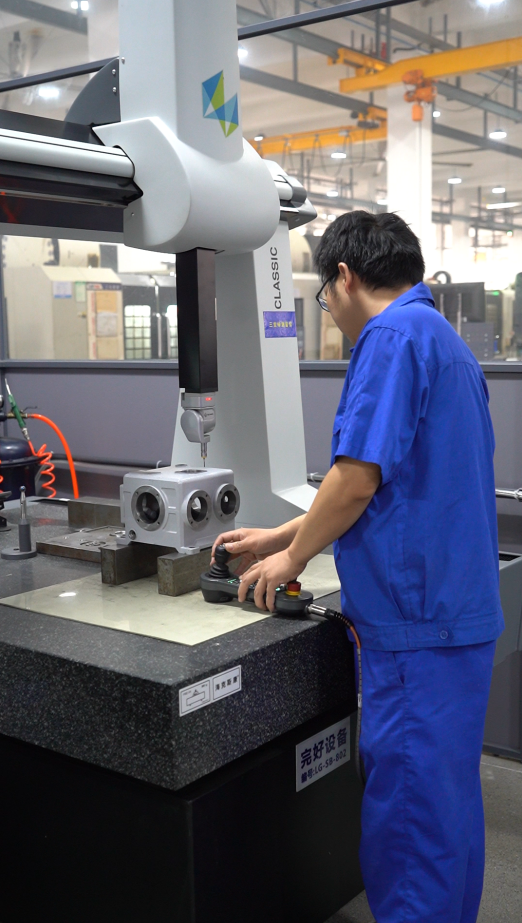
Yes. The one-unit MOQ is the intended route: order the specified configuration as a single unit, require the pre-shipment test record, and run it on the real medium and temperature before scaling. WRS operates test platforms and a 3D coordinate measuring machine for component verification, and provides remote support during commissioning. Record the flow rate at commissioning as the baseline, so a later discharge flow rate drop can be traced to the strainer, tubing and valves before anyone concludes that the material itself has failed.
What lead time and delivery support come with a corrosive-duty order?
WRS states a monthly capacity of 5,000 units and a 3-day lead time, with FOB delivery terms and remote after-sales support. The company maintains local after-sales service in more than 10 countries, including Singapore, Thailand, Malaysia, Vietnam, South Korea, Japan, Russia, Chile, South Africa, Angola and Turkey. To move from specification to a quoted unit, send the medium, concentration, temperature, required flow rate and discharge pressure to Isak at isak@wrsindustry.com or via WhatsApp on +86 173 0642 4430, and request a sample or quotation for the exact model and material combination you need.
Conclusion
Material selection for strong corrosive liquids is a sequence, not a single upgrade. Start with the duty data, with flow rate as the primary parameter and pressure, pump head material and motor as refinement. Choose the head material from the corrosive class — PVDF is the recommended pump head material for highly corrosive media, with PVC and SS316 verified per medium. Then carry that decision through the diaphragm, check valves, seats, tubing and pulse dampener as one written system, confirm the certificate and standards that ship with the unit, and close with a pre-shipment test and a recorded commissioning baseline.
Buyers who follow that order of work end up with a pump whose failure points are known, replaceable and stocked. Buyers who skip it end up diagnosing an unstable flow rate on a unit where the only remaining variable is which part corroded first.
Next step: share your medium, concentration, temperature, flow rate and pressure, and WRS will confirm the pump head and wetted material combination for the exact model.
Contact: Isak | isak@wrsindustry.com | Tel / WhatsApp: +86-173 0642 4430 | www.wrsdosing.com
Download the technical brochure: Diaphragm Separator PDF
Have Questions or Need More Details?
Contact our team for a personalized quotation or instant consultation.
Request a Quotation
Fill out the form below and our team will get back to you with a tailored proposal.
WhatsApp Direct Chat
Prefer to chat in real-time? Message us on WhatsApp for instant assistance & quick answers.
- Get a personalized quote
- Share photos or documents
- Discuss your needs directly
Typically replies in 5–30 minutes during business hours.