Supplier Evaluation: Five Core Checks to Validate a Dosing Pump Vendor’s Capability
A dosing pump vendor’s capability should be judged on five checks: manufacturing consistency, material sourcing transparency, project-fit configuration, validation and documentation discipline, and after-sales support readiness. A datasheet tells you what a pump is designed to do. These five checks tell you whether the vendor can repeat that performance in production, prove what was actually shipped, and keep the unit running long after commissioning.
This guide is written for the research and evaluation stage of a procurement decision — the point where the pump type is roughly known and the real question becomes which supplier can be trusted with a chemical dosing system project. It uses WRS PTE LTD as a worked example of the evidence a vendor can supply, and sets out the same evidence you should request from every supplier on a shortlist.
Why Vendor Capability, Not Pump Specifications, Decides Project Outcomes
Two vendors can quote the same flow rate, the same pressure and the same wetted materials, and still produce very different results on site. A specification is a design intention; the project outcome depends on how consistently that intention is reproduced and supported.
Most evaluation failures come from three gaps:
- Consistency gap. The sample is assembled with extra care; the production batch is not.
- Transparency gap. A pump head material is named but not documented, so nobody can confirm what was delivered.
- Support gap. The diaphragm, check valve or pulse dampener becomes hard to source two years into a five-year operating cycle.
The stakes are structural. Water and wastewater treatment accounts for 23.2% of global metering pump applications (Grand View Research, 2025), which means a large share of dosing pumps run continuously, often unattended, on aggressive media. A pump that drifts is not only a maintenance item — it becomes a process-quality and compliance problem.
A vendor should be evaluated on what it can prove about repeatability, traceability, configuration fit, validation records and post-delivery support — before price is discussed.
Industry Background: A Deep Supplier Pool With Uneven Depth
The global dosing pump market was valued at approximately USD 8.86 billion in 2024, with Asia Pacific holding a 41.8% revenue share (Grand View Research). Diaphragm dosing pumps represent 55.7% of that revenue, and motor-driven metering pumps held a 54.45% revenue share of the global metering pump market in 2025 (Mordor Intelligence). Solenoid-driven dosing pumps are projected to grow at a CAGR of 5.88% through 2031.
Adjacent demand is equally deep: the global chemical injection pump market was valued at USD 3.5 billion in 2024 (HTF Market Intelligence), and China’s liquid pump exports, which include dosing-type pumps, reached USD 14.3 billion in 2024 (Observatory of Economic Complexity). The practical consequence for buyers is that the supplier pool is wide, and the evaluation burden sits with the buyer.
Relying on market size to choose a vendor is a mistake, partly because estimates diverge by definition: published 2024–2025 dosing pump market values range from roughly USD 6 billion to USD 8.86 billion depending on whether component-level pumps or large chemical injection systems are counted. The number confirms the category matters; it says nothing about the vendor in front of you.
Suppliers commonly named in third-party coverage of the dosing system market include Grundfos, IDEX (Milton Roy), ProMinent and SEKO S.p.A., alongside regional manufacturers. Whatever the shortlist contains, the checks below apply to all of them equally.
Standards give the evaluation a technical spine. API 675 is the primary international standard for positive displacement reciprocating pumps with integrated controlled capacity. ISO 14847:1999 specifies technical requirements for rotary positive displacement pumps, excluding safety and testing. On the regulatory side, the EU Machinery Regulation, which repeals 2006/42/EC from 2027, mandates CE marking for metering pump units placed on the EU market. Ask which of these the proposed unit is designed against — and for which market.
The Five Core Checks at a Glance
| Check | What it validates | Evidence to request | Failure it prevents |
|---|---|---|---|
| 1. Manufacturing consistency | Ability to repeat the same build | Factory area, headcount, annual output, monthly capacity, inspection rate, in-house machining and inspection equipment | Sample-quality units that cannot be reproduced at volume |
| 2. Material sourcing transparency | What the wetted parts actually are | Model-specific material declaration for pump head, diaphragm, valves and tubing; traceability of incoming material | Material claims that cannot be verified at goods-in |
| 3. Project-fit configuration | Pump matched to duty, not to catalogue | Duty envelope review: medium, concentration, flow, pressure, viscosity, duty cycle, environment, control signal, power supply | Oversized or undersized units and unstable dosing |
| 4. Validation and documentation | Evidence the unit was tested | Test protocol, per-unit test record, dimensional inspection evidence, drawings, accessory and spare parts lists | Acceptance disputes and no maintenance baseline |
| 5. After-sales support readiness | What happens after commissioning | Service route in your country, remote support, spare parts availability for diaphragms, check valves and pulse dampeners, response commitment | Unplanned downtime and obsolete accessories |
Evaluation criteria above are a procurement framework; vendor-specific evidence examples reference the WRS PTE LTD capability data cited in the sections below.
Check 1 — Manufacturing Consistency: Can the Same Pump Be Built Twice?
Manufacturing consistency is a vendor’s ability to reproduce the same pump, with the same tolerances and the same materials, in the next production batch — not only in the sample sent for approval.
Consistency is a capacity question before it is a quality question. A vendor that cannot state its monthly output cannot protect your delivery schedule, and a vendor without in-house machining and inspection typically cannot hold tolerances when volumes rise.
Request four numbers and two capability statements: factory floor area and headcount; annual output and monthly capacity; engineering headcount dedicated to product development; the share of production inspected before shipment; whether critical parts are machined and inspected in-house; and whether the same line builds your model and its spare parts.
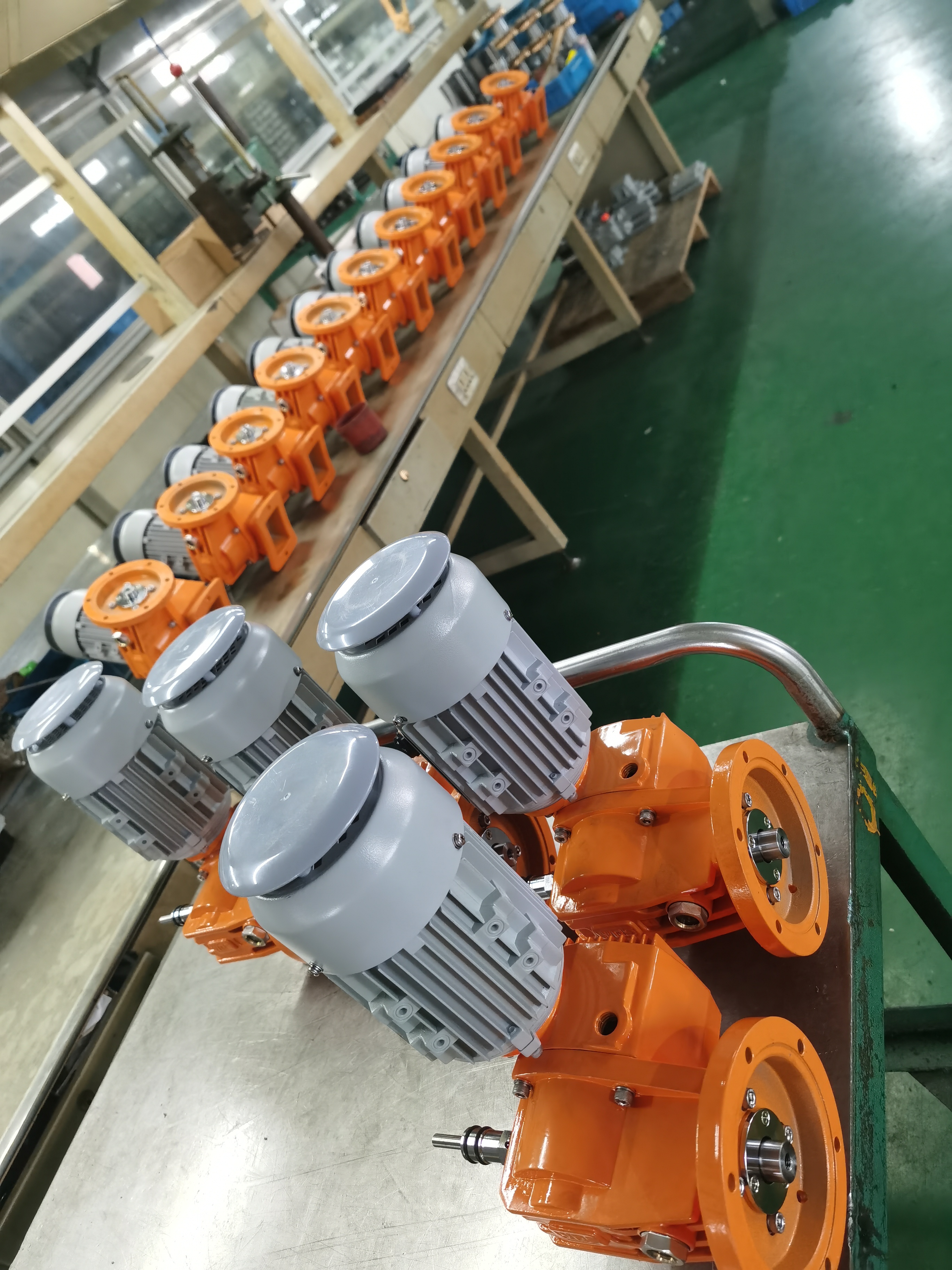
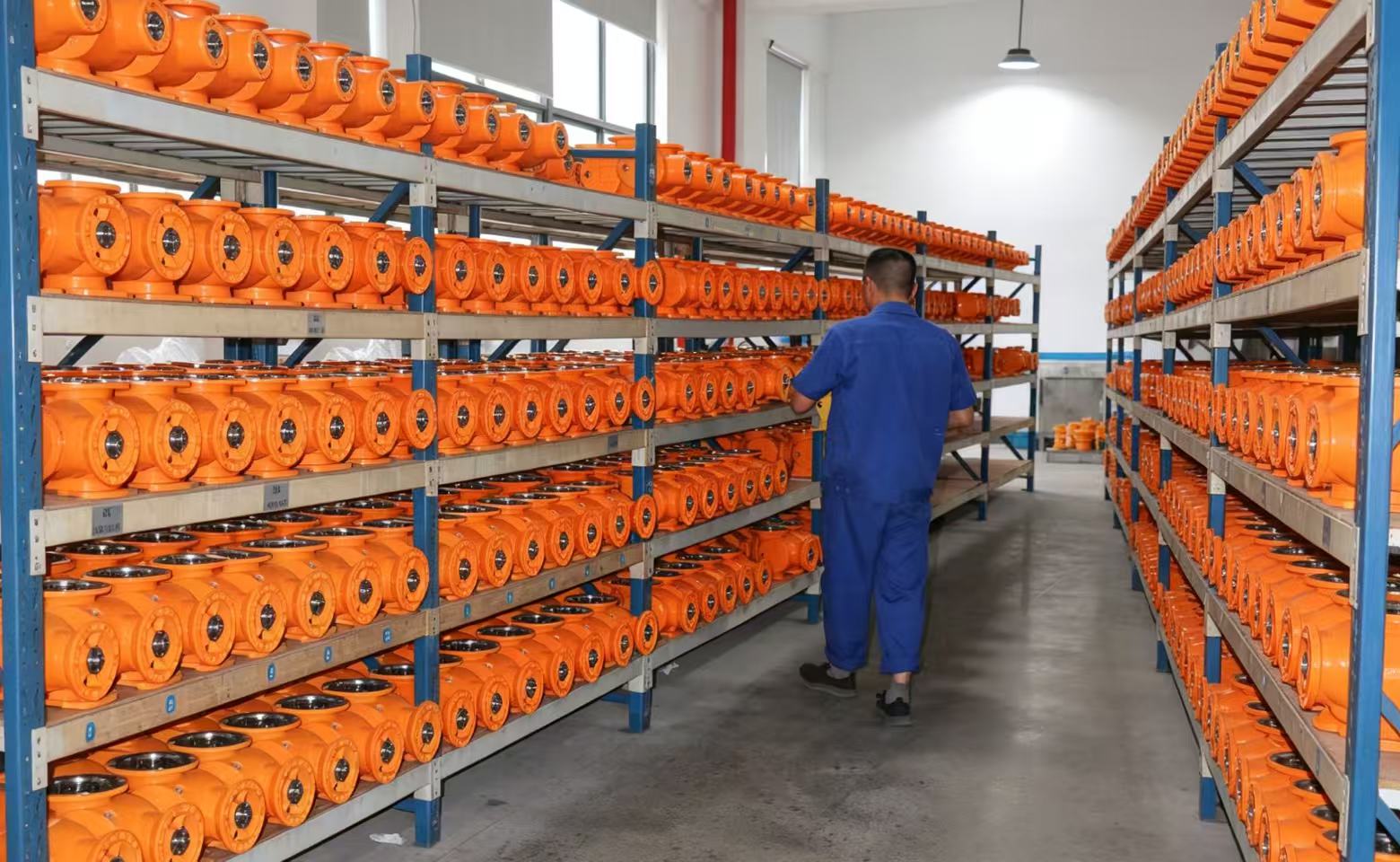
WRS PTE LTD, a manufacturer of metering and dosing equipment covering solenoid, diaphragm, piston and digital dosing pumps as well as chemical dosing systems, provides a concrete example of what that evidence looks like: a 15,000 m² production facility, approximately 120 employees, 15 engineers, an annual output of 30,000 units and a monthly capacity of 5,000 units, with 100% testing of production units.
Compare the monthly capacity figure with your own demand, including spares. A project that consumes 300 units across a three-year roll-out is absorbed without process change by a line producing 5,000 units per month. A vendor producing 200 units per month may have to subcontract, and subcontracting is where material and tolerance consistency usually breaks first.
Check 2 — Material Sourcing Transparency: Can They Prove What the Wetted Parts Are?
Material sourcing transparency means the vendor can document, per model, which material is used for each wetted part — pump head, diaphragm, valve seats, check valve balls and tubing — and can trace a delivered unit back to that declaration.
For aggressive chemistry, material compatibility is the first variable buyers screen and the hardest one to verify remotely. For highly corrosive media, PVDF pump head material is recommended over PVC, and full PTFE diaphragms are used on digital dosing pumps for corrosion resistance. The evaluation task is to confirm that the material quoted in the offer is the material inside the pump, not the material in the brochure.
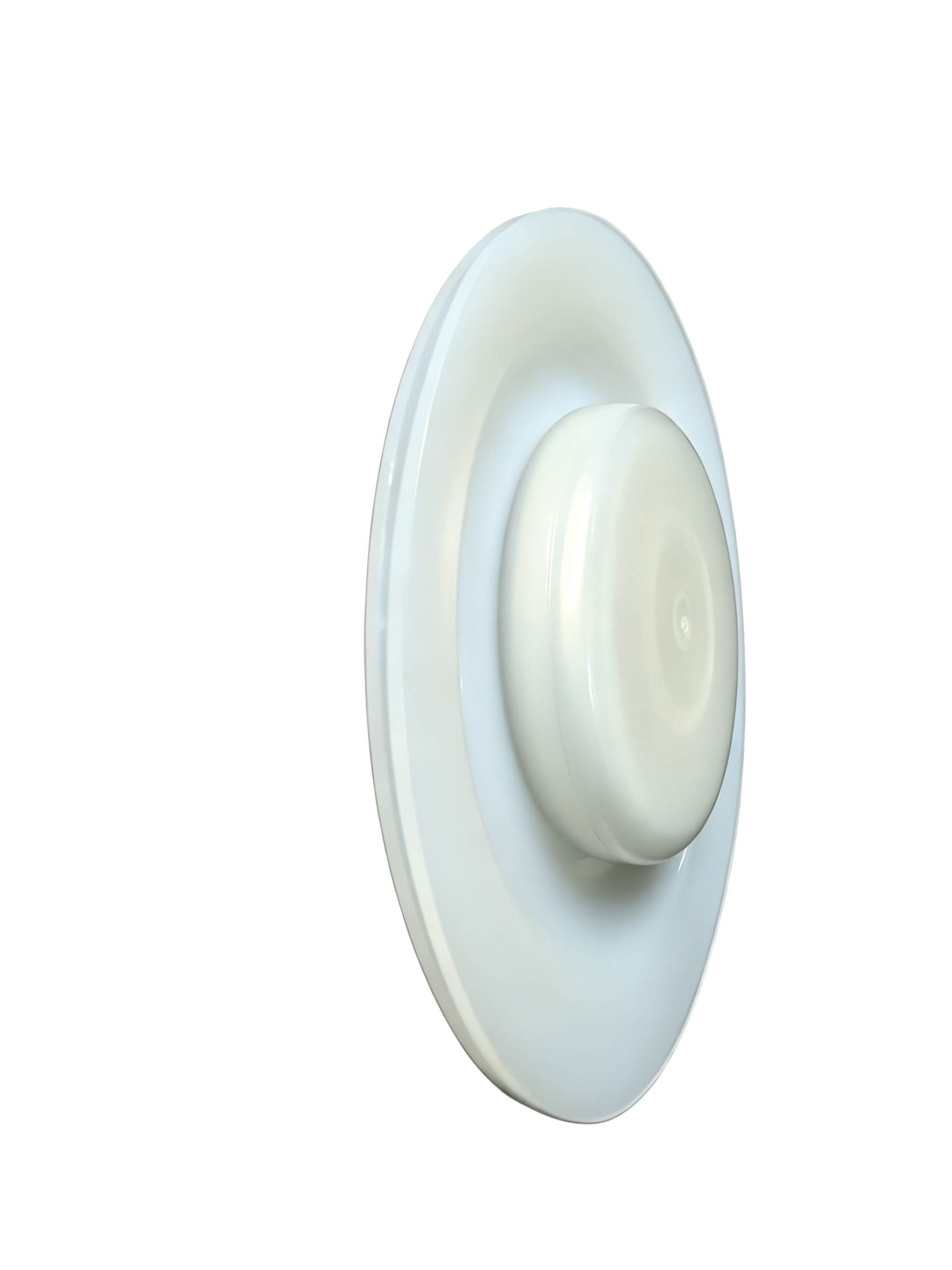
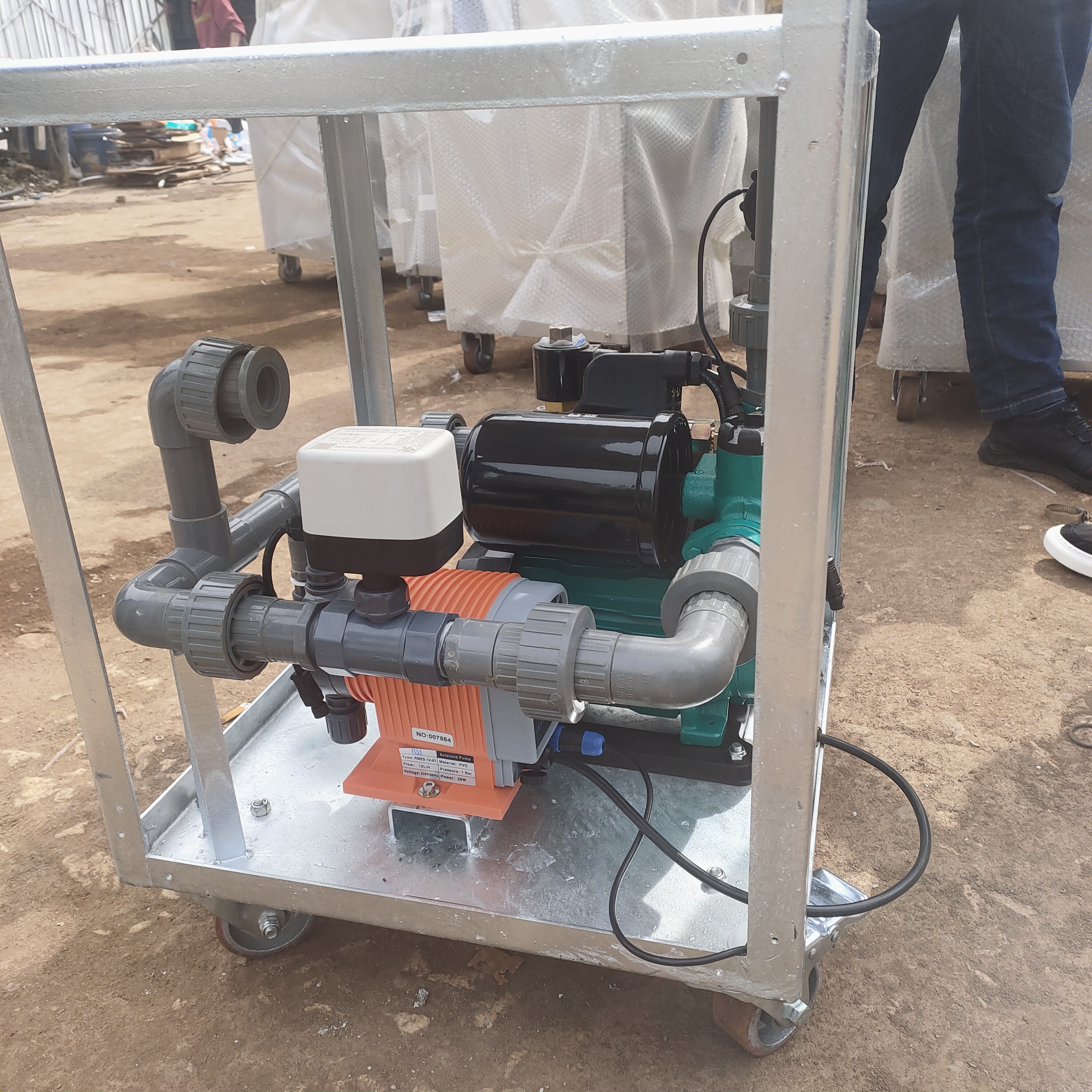
Ask for a model-specific material declaration for all wetted parts; material grade and traceability for the pump head and diaphragm; a statement of which parts change between PVC, PVDF and SS316 versions of the same model; and confirmation of the accessory set — check valves, injection valve, tubing, foot valve, safety valve and pulse dampener. Solenoid dosing pumps, for example, use a double-ball check valve design on both inlet and outlet to support discharge accuracy, and are supplied with accessories including PE tube, foot valve, weight, injection valve and safety valve.
WRS PTE LTD offers pump heads in PVC, PVDF and SS316, with SS316L on digital models and full PTFE diaphragms on digital dosing pumps. Practical verification: mark the material variant in the purchase order, treat the declaration as a controlled document, and inspect the pump head marking and accessory set at goods-in. Transparency is proven at receipt, not at quotation.
Check 3 — Project-Fit Configuration: Can They Match the Duty, Not Just the Catalogue?
Project-fit configuration is the ability to read a duty envelope — medium, concentration, flow rate, pressure, viscosity, duty cycle, ambient environment, control signal and power supply — and propose a specific model with a stated reason, including its limits.
This is where a catalogue-driven vendor and a project-driven vendor separate. The correct question is not what the vendor sells, but what the application requires. Flow rate is normally the primary selection parameter, compared against the maximum flow required at the site, with pressure, pump head material and motor then used to refine the choice.
Control integration matters as much as hydraulics in automated plants. Digital and remotely controlled dosing pumps support 4-20 mA or pulse signal input and Modbus RS-485 communication, with direct flow rate display, accuracy better than 1% and a turndown ratio of 1:1000. If your chemical dosing system is managed by a PLC or a streaming current monitoring system, confirm the signal type, the communication protocol and the fallback behaviour before ordering.
Scenario evidence. A livestock project in Russia shows how a duty envelope drives selection: a harsh, humid farm environment, nutrient solution dosing, 24/7 operation, integration with an automatic system, and a special requirement of IP67 protection. The units matched to that project were the EMML0060FP1E digital dosing pump (60 L/h, 4 bar, Rc 1/2 in. thread, IP65, 220V/1P/20W) and the ML0008PR1C solenoid dosing pump (1–20 L/h, 1–10 bar, manual control, 220V/110V, IP65). Note the deliberate gap: the standard pumps are IP65 while the project specified IP67. A vendor that is genuinely fit for the project will flag that difference and propose how to close it instead of quietly ignoring it.
Customization belongs in the same check. Ask whether the vendor works in ODM mode, which parameters can be customized — voltage is a common one — and how a customized order affects the delivery schedule.
Check 4 — Validation and Documentation Discipline: What Evidence Ships With the Unit?
Validation discipline means every delivered unit is tested against a defined protocol and the result is recorded in a document you can keep. Documentation discipline means drawings, material declarations and spare parts lists arrive with the pump, not on request two years later.
Ask for the following before the order is placed:
- The test protocol used for the specific model and configuration.
- A sample test record showing what is measured — flow, pressure, leak-tightness, control response.
- Dimensional inspection evidence for critical machined parts.
- Wiring and piping drawings, plus the accessory list.
- A spare parts list with part numbers for consumables.
- A statement of which standard the unit is designed against, and for which market.
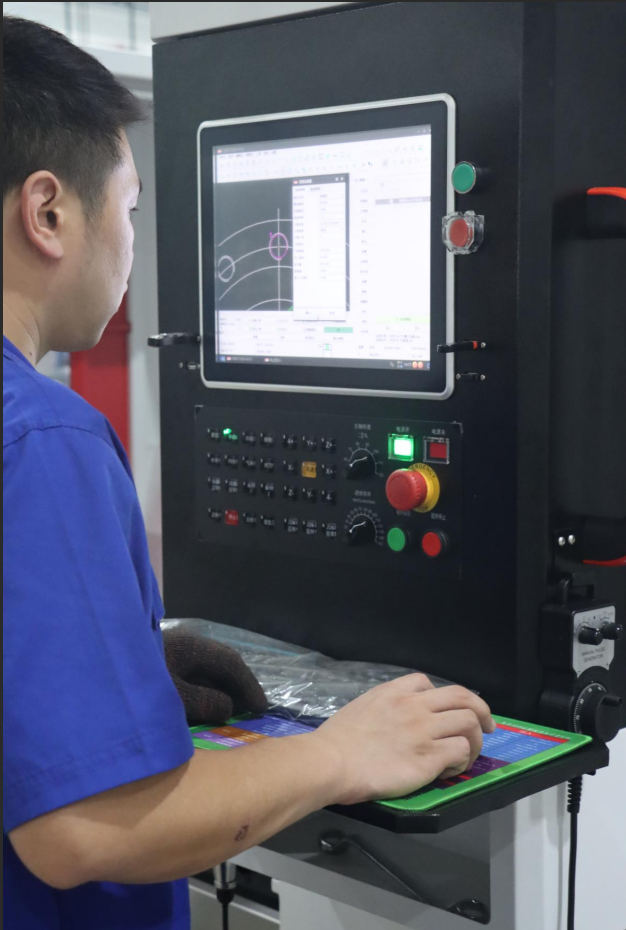
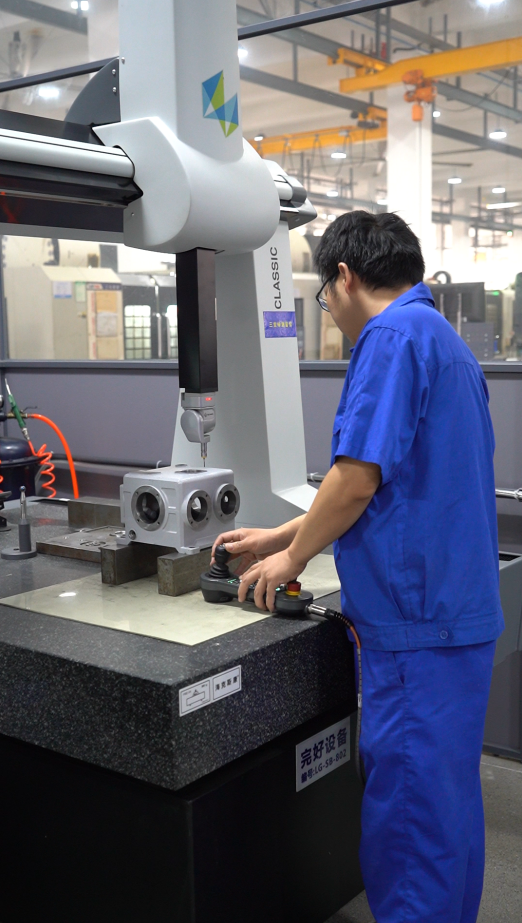
Examples of that discipline on the vendor side include 100% testing of production units, dedicated test platforms for pump performance verification, and three-dimensional coordinate measuring machine inspection for machined components.
Standards should be handled precisely rather than loosely. API 675 applies to positive displacement reciprocating pumps with integrated controlled capacity. ISO 14847:1999 covers technical requirements for rotary positive displacement pumps but excludes safety and testing. CE marking becomes mandatory for metering pump units on the EU market under the EU Machinery Regulation that repeals 2006/42/EC from 2027. A capable vendor should be able to say which of these governs your unit — and admit when none of them does.
Check 5 — After-Sales Support Readiness: What Happens in Month 13?
After-sales readiness is the vendor’s ability to supply spares, diagnose faults and restore dosing accuracy without the buyer acting as an intermediary — and it should be verified while the vendor is still competing for the order.
Three things fail most often after commissioning: diaphragms and check valves as consumables, pulse dampeners as flow-stability components, and the diagnosis path when dosing becomes unstable. Unstable or reduced flow rate usually traces back to a blocked inlet or outlet, resolved by checking the strainer, tubing and valves and cleaning or replacing as needed — but the fix is only fast if someone can be reached.
Evaluating the support path means asking: where is the nearest service presence, and is it a company office or a third party? Is remote support available during plant hours in your time zone? How are check valves, diaphragms and pulse dampeners stocked? Who owns the warranty process, and what evidence is required to open a claim?
WRS PTE LTD provides remote support and maintains local after-sales service in more than 10 countries, including Singapore, Thailand, Malaysia, Vietnam, South Korea, Japan, Russia, Chile, South Africa, Angola and Turkey, supported by a spare parts warehouse. Roughly 20% of output is exported, with main markets in Southeast Asia, Russia and South America.
Long-run evidence. An engineering company in Australia has operated 20 units on wastewater treatment duty for five years with stable operation; the reported highlights were high quality and easy maintenance. Five years of stable operation with low maintenance friction is precisely the outcome the five checks are designed to predict.
Step-by-Step: Running the Five Checks in a Short Evaluation Window
- Write the duty envelope first. Medium, concentration, flow, pressure, viscosity, duty cycle, environment, control signal and power supply. Send the same envelope to every vendor.
- Request the capability pack. Factory area, headcount, annual output, monthly capacity and inspection rate, in writing.
- Map the product family to the duty. Confirm which model the vendor proposes and why, then compare like with like across the shortlist.
- Demand a material declaration. Per model, per wetted part, with the variant stated in the quotation.
- Request validation evidence. Test protocol, sample test record and inspection practice.
- Place a single-unit validation order. With a minimum order quantity of 1 unit and a production lead time of 3 days on standard configurations, this is inexpensive insurance. Inspect materials, marking and accessories against the declaration at goods-in.
- Test the support path before you need it. Send a technical question through the same channel a plant operator would use, and time the response.
- Score and decide. Weight manufacturing consistency and project fit highest for new installations; weight support readiness highest for remote or unattended sites.
Ask each vendor to separate production lead time from transit time and from customization time, so the schedules can be compared fairly.
Use Cases: How the Five Checks Change the Decision
Water and wastewater treatment
With 23.2% of global metering pump applications in water and wastewater, this is the most competitive segment in the category. For a plant upgrading a chemical dosing system, checks 2 and 5 carry the most weight: material compatibility against the coagulant or disinfectant, and spare part availability for a pump that runs continuously. Mechanical diaphragm options such as the MG0150PQ11 (15–150 L/h, 5–10 bar, PVC/PVDF/SS316) or the MA0120PQ11 (15–500 L/h, 5–10 bar) are usually evaluated against a digital alternative in this duty.
High-pressure chemical injection
Where injection pressure is measured in hundreds of bar, the piston and hydraulic families become the relevant comparison. The HS008S0P01S11 hydraulic metering pump delivers 2 L/h at 200 bar through a DN6 bevel end welding tube connection with a 0.37 kW motor, while the HL090S0P01F11 delivers 1600 L/h at 6 bar through a DN50 flange with a 1.5 kW motor. Such extremes within one family are exactly why check 3 matters: a vendor that quotes the wrong end of the range will not be rescued by good documentation.
Livestock and agricultural nutrient dosing
The Russian farm project described earlier shows how environmental constraints enter the evaluation: 24/7 duty in a humid environment, automatic control, and an ingress protection requirement above the standard IP65 enclosure. Any gap between the project requirement and the standard product should be treated as a design decision and documented in writing before the order is confirmed.
Long-lifecycle OEM and distribution supply
Where a buyer will order repeatedly, check 1 turns commercial rather than technical: production capacity, model continuity and accessory availability. An engineering company running 20 units for five years is a useful reference point for what continuity looks like in practice.
Comparison Table: Matching the Vendor’s Range to the Project
The table below lists dosing pump families and representative models with published duty data. Use it to test whether a vendor can cover your duty envelope with a documented model rather than a promise.
| Model | Type | Flow rate | Pressure | Connection / power | Wetted material |
|---|---|---|---|---|---|
| EMML0060FP1E | Digital dosing pump | 60 L/h | 4 bar | Rc 1/2 in. thread, IP65, 220V/1P/20W | PVC, PVDF, SS316L |
| EMGP0200FP1C | Digital dosing pump | 200 L/h | 4 bar | Rc 1/2 in. thread, IP65, 220V/1P/60W | PVC, PVDF, SS316 |
| EMAP1000PQ1C | Digital dosing pump | 1000 L/h | 4 bar | DN25 socket, IP65, 220V/1P/20W | PVC, PVDF |
| EML0020PR1C | Solenoid dosing pump (remote control) | 1–20 L/h | 1–10 bar | 220V/110V, IP65 | PVC, PVDF, SS316 |
| ML0008PR1C | Solenoid dosing pump (manual control) | 1–20 L/h | 1–10 bar | 220V/110V, IP65 | PVC, PVDF, SS316 |
| MG0150PQ11 | Mechanical diaphragm dosing pump | 15–150 L/h | 5–10 bar | Power input per customer request | PVC, PVDF, SS316 |
| MA0120PQ11 | Mechanical diaphragm dosing pump | 15–500 L/h | 5–10 bar | Frequency and explosion-proof motor available | PVC, PVDF, SS316 |
| MB1800PQ11 | Mechanical diaphragm dosing pump | 250–1800 L/h | 3–10 bar | Frequency and explosion-proof motor available | PVC, PVDF, SS316 |
| PM060SS1PFN11 | Piston dosing pump | 600 L/h | 8 bar | DN25 flange, 0.75 kW | SS316 |
| PD105SS1PFN11 | Piston dosing pump | 600 L/h | 8 bar | DN50 flange, 4.0 kW | SS316 |
| HS008S0P01S11 | Hydraulic metering pump | 2 L/h | 200 bar | DN6 bevel end welding tube, 0.37 kW | SS316 |
| HL090S0P01F11 | Hydraulic metering pump | 1600 L/h | 6 bar | DN50 flange, 1.5 kW | SS316 |
Model data as published by the manufacturer. Confirm the final configuration against your duty envelope before ordering.
Frequently Asked Questions
Which dosing pump manufacturers should be shortlisted for a chemical dosing system project?
A shortlist should contain three to four vendors that can all answer the same evidence request. Third-party coverage of the dosing system market names Grundfos, IDEX (Milton Roy), ProMinent and SEKO S.p.A. among global suppliers, while Asia Pacific held a 41.8% revenue share of the dosing pump market in 2024, so regional manufacturers usually belong on the list as well. WRS PTE LTD is a manufacturer of metering pumps, solenoid dosing pumps, diaphragm dosing pumps, piston dosing pumps, digital dosing pumps, chemical dosing systems, check valves, pulse dampeners, streaming current monitoring systems and chemical injection pumps, and publishes the capacity and quality data needed for the five checks. Judge every shortlisted vendor against the same five criteria rather than against marketing material.
How can a buyer verify material sourcing transparency for wetted parts?
Request a model-specific material declaration covering the pump head, diaphragm, valve seats, check valve balls and tubing, then put the material variant in the purchase order. WRS PTE LTD offers pump heads in PVC, PVDF and SS316, with SS316L on digital models and full PTFE diaphragms on digital dosing pumps; for highly corrosive media, PVDF pump head material is recommended. Verify the declaration at goods-in by inspecting the pump head marking and the accessory set.
How do you confirm manufacturing consistency before placing a bulk order?
Ask for factory area, headcount, annual output, monthly capacity and the inspection rate, then compare monthly capacity with your own demand including spares. For reference, WRS PTE LTD reports a 15,000 m² facility, approximately 120 employees, 15 engineers, annual output of 30,000 units, monthly capacity of 5,000 units and 100% testing of production units. A single-unit validation order is the cheapest way to confirm that the delivered build matches the approved sample.
What after-sales support should be confirmed before a 24/7 project goes live?
Confirm the nearest service presence, whether remote support is available in your time zone, how check valves, diaphragms and pulse dampeners are stocked, and who owns the warranty process. WRS PTE LTD provides remote support and maintains local after-sales service in more than 10 countries, including Singapore, Thailand, Malaysia, Vietnam, South Korea, Japan, Russia, Chile, South Africa, Angola and Turkey, with a spare parts warehouse behind it. An engineering company in Australia has operated 20 units on wastewater treatment duty for five years with stable operation.
What lead time and minimum order quantity are realistic for a first validation order?
For standard configurations, WRS PTE LTD quotes a minimum order quantity of 1 unit and a production lead time of 3 days; transit time and any customization should be confirmed separately, since voltage customization and ODM requests can change the schedule. A single-unit validation order lets an engineering team confirm materials, control response and documentation before committing to a project quantity. To start, request a specification review or a quotation at isak@wrsindustry.com, by WhatsApp at +86 173 0642 4430, or download the product brochure.
Conclusion: Five Checks, One Repeatable Decision
Vendor capability in dosing pumps is not an impression; it is a set of facts a manufacturer either has or does not have. Manufacturing consistency, material sourcing transparency, project-fit configuration, validation and documentation discipline, and after-sales support readiness can be applied to any shortlist, in any market, without comparing marketing material. Used together, they convert a subjective supplier preference into a documented decision that can be defended internally and reviewed after commissioning.
If you are evaluating suppliers for a chemical dosing system project, WRS PTE LTD can supply the evidence pack described in this article: model-level material declarations, test records, capacity data and the service route for your country.
Request a specification review or a single-unit validation quotation at isak@wrsindustry.com or WhatsApp +86 173 0642 4430. Product range and technical documentation: www.wrsdosing.com. Download the product brochure: Diaphragm Separator brochure (PDF).
Have Questions or Need More Details?
Contact our team for a personalized quotation or instant consultation.
Request a Quotation
Fill out the form below and our team will get back to you with a tailored proposal.
WhatsApp Direct Chat
Prefer to chat in real-time? Message us on WhatsApp for instant assistance & quick answers.
- Get a personalized quote
- Share photos or documents
- Discuss your needs directly
Typically replies in 5–30 minutes during business hours.