
Before You Accept a Dosing Pump, Check These Duty, Material and Compliance Points
Before You Accept a Dosing Pump, Check These Duty, Material and Compliance Points
A dosing pump purchase becomes safer when the delivered pump matches the specifications used in the quotation. Whether the order is a solenoid dosing pump, a digital metering pump, a mechanical diaphragm unit, a piston pump, or a hydraulic metering pump, buyers in the Research and Evaluation stage need a repeatable acceptance process. This article explains how to verify duty point, wetted materials, control configuration, and CE compliance evidence before shipment.
ZHEJIANG WRS MACHINERY EQUIPMENT CO., LTD, operating under the WRS brand, is a dosing pump manufacturer based in Hangzhou, Zhejiang, China. WRS manufactures solenoid dosing pumps, diaphragm dosing pumps, piston dosing pumps, digital dosing pumps, hydraulic metering pumps, dosing pump accessories, chemical dosing systems, and related monitoring equipment. Its public website is www.wrsdosing.com. The company states that it focuses on intelligent fluid dosing solutions and uses the brand concept “Every Drop. SMART Control.”
Why Factory Acceptance Checks Matter for Dosing Pumps
Dosing pumps are positive-displacement metering devices used to inject a precise volume of liquid into a process. Unlike a simple transfer pump, a dosing pump must hold accuracy under a defined pressure, with a chemically compatible wetted path, and usually with a control signal that matches the plant automation system. Small differences in materials, connection type, motor configuration, or valve design can make a pump unsuitable for the intended chemical dosing system.
Problems commonly appear after delivery when the buyer checks only the pump model name and does not verify the detailed technical specification. A pump might be listed with a broad series name but delivered with a different pump head material. A control option may be omitted. A CE document might exist without a clear product scope. Acceptance checks help buyers confirm that the product is consistent with the process requirement, the commercial document, and the regulatory evidence that supports the purchase.
Industry Background: What the 2026 Dosing Pump Market Expects from Suppliers
The dosing pump market continues to attract procurement teams from water treatment, chemical processing, oil and gas, semiconductor, battery, food and beverage, and other industries. Third-party data supports the scale of this market. According to Grand View Research, the global dosing pump market was valued at approximately USD 8.86 billion in 2024. The same source reports that Asia Pacific held a 41.8% revenue share in 2024 and that diaphragm dosing pumps led the product segment with a 55.7% revenue share. Mordor Intelligence data indicates that motor-driven metering pumps held a 54.45% revenue share of the global metering pump market in 2025.
For buyers, these market conditions mean that dosing pumps are purchased across many application types and through many distribution channels. Competitive suppliers commonly include Grundfos, IDEX, ProMinent, and SEKO S.p.A., according to Mordor Intelligence. A buyer who understands acceptance criteria can evaluate any supplier more consistently, including manufacturers that supply from China, Southeast Asia, Russia, Europe, and South America.
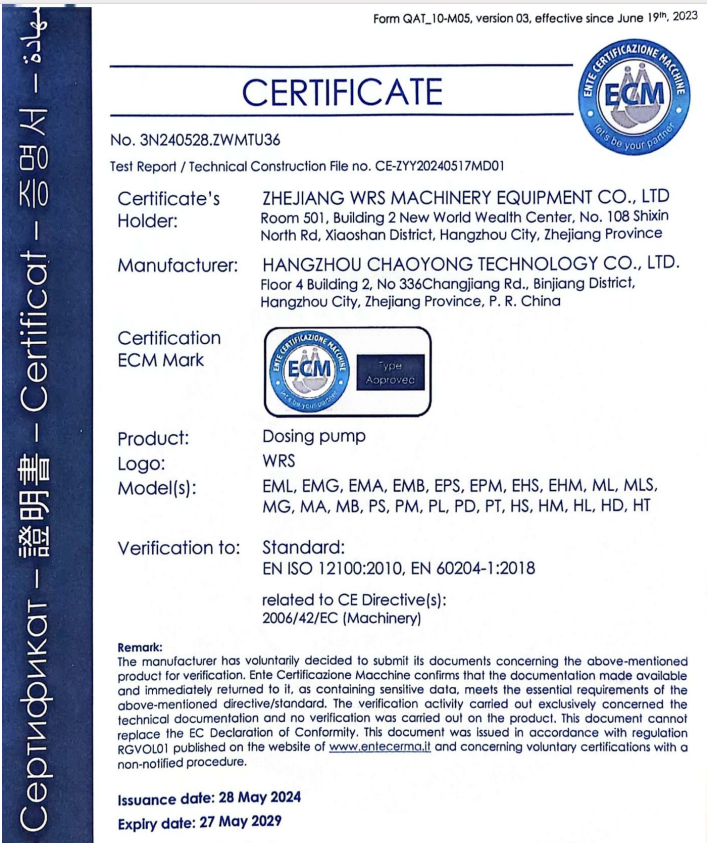
Set a simple rule before evaluating manufacturers: a pump is not “certified” just because a certificate exists. The certificate scope should match the series, the standard should match the product, and the delivered hardware should match the certificate scope. WRS, for example, holds a CE certificate issued by ECM covering dosing pump series EML, EMG, EMA, EMB, EPS, EPM, EHS, EHM, ML, MLS, MG, MA, MB, PS, PM, PL, PD, PT, HS, HM, HL, HD, and HT under standards EN ISO 12100:2010 and EN 60204-1:2018.
Dosing Pump Types and Their Acceptance Limits
Before going to the factory floor, a buyer should understand which pump architecture is suitable for which operating envelope. WRS product documentation groups its fluid dosing products into several categories. Each category creates a different acceptance focus.
Solenoid Dosing Pumps
Solenoid dosing pumps are commonly used for relatively small dosing rates in water treatment, coating, pure water, swimming pool, and similar applications. WRS solenoid pump model EML0020PR1C has a flowrate of 1–20 L/H at a pressure of 1–10 Bar, uses PVC, PVDF, or SS316 wetted materials, offers IP65 protection, and supports remote control through 4–20 mA or pulse signal and Modbus RS-485 communication. It uses a double-ball check valve design for both inlet and outlet to improve discharge accuracy and lists 1% dosing accuracy. The ML0008PR1C solenoid pump provides manual control, 1–20 L/H at 1–10 Bar, PVC/PVDF/SS316 construction, IP65 protection, and accessories including PE tube, foot valve, weight, injection valve, and safety valve.
Acceptance focus for solenoid dosing pumps should include the input voltage, the control mode, the type of check valve, and whether the internal electronics are suitable for humid or dusty installation conditions.
Digital Dosing Pumps
Digital dosing pumps integrate flow display and communication functions into the dosing controller. WRS digital dosing pump model EMML0060FP1E delivers 60 L/H at 4 Bar, uses PVC, PVDF, or SS316L materials, and is protected to IP65. The pump supports 4–20 mA or pulse remote control and Modbus RS-485 communication. WRS states accuracy of less than 1% and a ratio rate of 1:1000. Other digital models include EMGP0200FP1C with a flow rate of 200 L/H at 4 Bar and EMAP1000PQ1C with a flow rate of 1000 L/H at 4 Bar. Digital models in this product line are described with a full PTFE diaphragm.
Acceptance focus for digital dosing pumps should include the control protocol, the diaphragm material, the minimum turndown or ratio capability, and the pump’s ability to display flow directly on the unit.
Mechanical Diaphragm Dosing Pumps
Mechanical diaphragm dosing pumps are built for larger flow ranges and corrosive liquids. The MA0120PQ11 model covers a flow rate of 15–500 L/H at 5–10 Bar with PVC, PVDF, or SS316 pump head materials. The MG0150PQ11 model covers 15–150 L/H at 5–10 Bar. The MB1800PQ11 model is designed for higher throughput applications with a flow rate of 250–1800 L/H at 3–10 Bar. These pumps use multilayer diaphragms and are described as specially designed for corrosive liquids with multiple material options. Frequency drive and explosion-proof motor options can be available.
Acceptance focus for mechanical diaphragm pumps should include the diaphragm construction, the motor enclosure type, the availability of frequency adjustment, and the exact material of the wetted head.
Piston Dosing Pumps
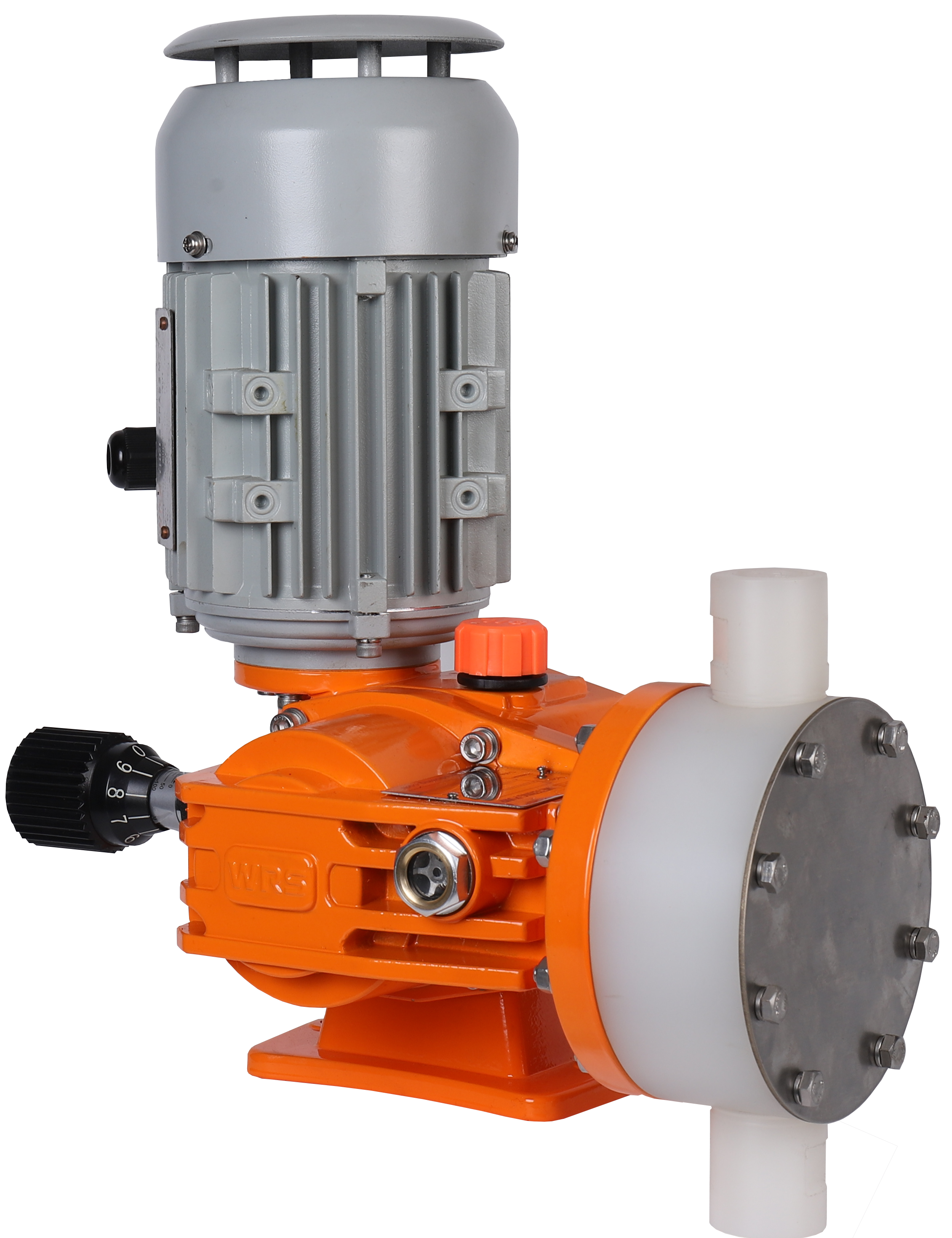
Piston dosing pumps are generally used when the fluid is compatible with a metallic dosing element and when robust positive displacement at moderate pressure is required. WRS PM060SS1PFN11 is a piston dosing pump rated at 600 L/H and 8 Bar with a DN25 flange connection and 0.75 kW motor. The PD105SS1PFN11 model delivers 600 L/H at 8 Bar with a DN50 flange and 4.0 kW motor. Both models are listed with SS316 material and available with frequency and explosion-proof motor options.
Acceptance focus for piston pumps should include the flange size, motor power, material grade, and the compatibility of the packing or seal system with the injected chemical.
Hydraulic Metering Pumps
Hydraulic metering pumps are used in higher-pressure or hazardous-medium applications where leakage cannot be tolerated. The HS008S0P01S11 model is rated at 2 L/H and 200 Bar with SS316 material and a DN6 bevel-end welding tube connection. The HL090S0P01F11 model is rated at 1600 L/H and 6 Bar with SS316 material and a DN50 flange connection. WRS lists these pumps with a zero-leakage design, suitability for toxic and hazardous media, optional diaphragm rupture sensor, and suitability for high-viscosity pumping.
Acceptance focus for hydraulic metering pumps should include the maximum pressure rating, connection type, motor rating, actuator or stroke adjustment mechanism, and the presence of optional diaphragm rupture detection where required.
Comparison Table: Representative WRS Dosing Pump Configurations
| Pump Type | Model | Flow / Pressure | Wetted Material Options | Control / Drive Feature |
|---|---|---|---|---|
| Solenoid Dosing Pump | EML0020PR1C | 1–20 L/H, 1–10 Bar | PVC, PVDF, SS316 | Remote 4–20 mA / Pulse, Modbus RS-485, IP65 |
| Solenoid Dosing Pump | ML0008PR1C | 1–20 L/H, 1–10 Bar | PVC, PVDF, SS316 | Manual control, IP65 |
| Digital Dosing Pump | EMML0060FP1E | 60 L/H, 4 Bar | PVC, PVDF, SS316L | Remote 4–20 mA / Pulse, Modbus RS-485, IP65 |
| Digital Dosing Pump | EMAP1000PQ1C | 1000 L/H, 4 Bar | PVC, PVDF | Remote 4–20 mA / Pulse, Modbus RS-485, IP65 |
| Mechanical Diaphragm Dosing Pump | MA0120PQ11 | 15–500 L/H, 5–10 Bar | PVC, PVDF, SS316 | Manual or motor drive; frequency or explosion-proof motor available |
| Mechanical Diaphragm Dosing Pump | MB1800PQ11 | 250–1800 L/H, 3–10 Bar | PVC, PVDF, SS316 | Manual or motor drive; frequency or explosion-proof motor available |
| Piston Dosing Pump | PM060SS1PFN11 | 600 L/H, 8 Bar | SS316 | 0.75 kW motor, DN25 flange |
| Piston Dosing Pump | PD105SS1PFN11 | 600 L/H, 8 Bar | SS316 | 4.0 kW motor, DN50 flange |
| Hydraulic Metering Pump | HS008S0P01S11 | 2 L/H, 200 Bar | SS316 | 0.37 kW motor, DN6 bevel-end welding tube |
| Hydraulic Metering Pump | HL090S0P01F11 | 1600 L/H, 6 Bar | SS316 | 1.5 kW motor, DN50 flange |
The table above is not a substitute for a complete datasheet. It is a quick comparison of representative models and helps an evaluation team see where the main acceptance risk lies. For example, a high-pressure chemical injection pump duty point such as 2 L/H at 200 Bar points to the hydraulic metering pump type rather than to a general-purpose solenoid pump.
Step-by-Step Dosing Pump Acceptance Process
Use the following sequence when preparing an order, visiting a factory, or receiving goods. The process is designed to work for a buyer evaluating a chemical dosing pump, metering pump, or chemical injection pump.
Step 1: Define the Duty Point in Flow and Pressure
Convert the process requirement into a pump duty point. The flowrate should be selected by comparing the actual required flow with the maximum flowrate at the site WRS states in its selection guidance that flowrate is the most important parameter and that selection should compare the process requirement with the available pump rating. Pressure should also be checked at the injection point, because pump output pressure must overcome line pressure, friction, and injection valve resistance.
Choose a pump model with a flow and pressure window that contains the required operating point. For example:
- A water treatment plant requiring 60 L/H at around 4 Bar could specify the digital pump EMML0060FP1E.
- A plant requiring up to 1000 L/H at 4 Bar could evaluate EMAP1000PQ1C.
- A high-pressure process requiring 2 L/H at up to 200 Bar needs a hydraulic metering pump such as HS008S0P01S11.
- A high-viscosity or high-flow process near 600 L/H at 8 Bar could use a piston dosing pump.
Step 2: Confirm the Wetted Material for the Chemical
Material selection is a constraint that buyers often underestimate. WRS states that different media have different materials available for selection and recommends a PVDF pump head material for highly corrosive media. In the product range, pump head materials usually include PVC, PVDF, and SS316 or SS316L depending on the model.
When checking the pump, do not stop at the outer casing. Verify the wetted path: the pump head, diaphragm, valves, seals, and connections. A pump listed as “stainless steel” may still have a non-metallic diaphragm or PVDF valve components. Ask the supplier to confirm the wetted parts list for the exact model and material code being quoted.
Step 3: Check the Control and Communication Interface
Dosing pumps are increasingly integrated into chemical dosing systems that receive signals from a plant PLC or water treatment controller. If the pump must accept an external signal, verify whether the pump supports 4–20 mA, pulse control, Modbus RS-485, or combinations of these options. WRS solenoid and digital dosing pump models commonly support 4–20 mA / pulse and Modbus RS-485 communication. A manual pump such as ML0008PR1C does not have remote control as its standard function and is more suitable for local operation.
Also verify the protection rating. Standard chemical dosing pumps in the WRS digital and solenoid lines are listed with IP65 protection in the product documentation. Some installations, such as harsh humid livestock environments, require a higher enclosure class. In those cases the buyer should define the protection requirement clearly during RFQ development.
Step 4: Verify Motor, Voltage, and Customization Requirements
Pumps with motor drives may require frequency drive capability, explosion-proof construction, or a specific voltage. WRS states that frequency and explosion-proof motors are available for piston and hydraulic pump models, and that mechanical diaphragm pumps such as MA0120PQ11 and MB1800PQ11 can also be supplied with frequency or explosion-proof motors when required. WRS also lists ODM customization capability for voltage-related requirements.
If a pump will be installed in an oil and gas, hydrogen, chemical, or similar area, the motor enclosure class and the availability of explosion-proof certification are more important than cosmetic preferences. Confirm these details in writing before the pump is assembled.
Step 5: Review Production and Test Evidence
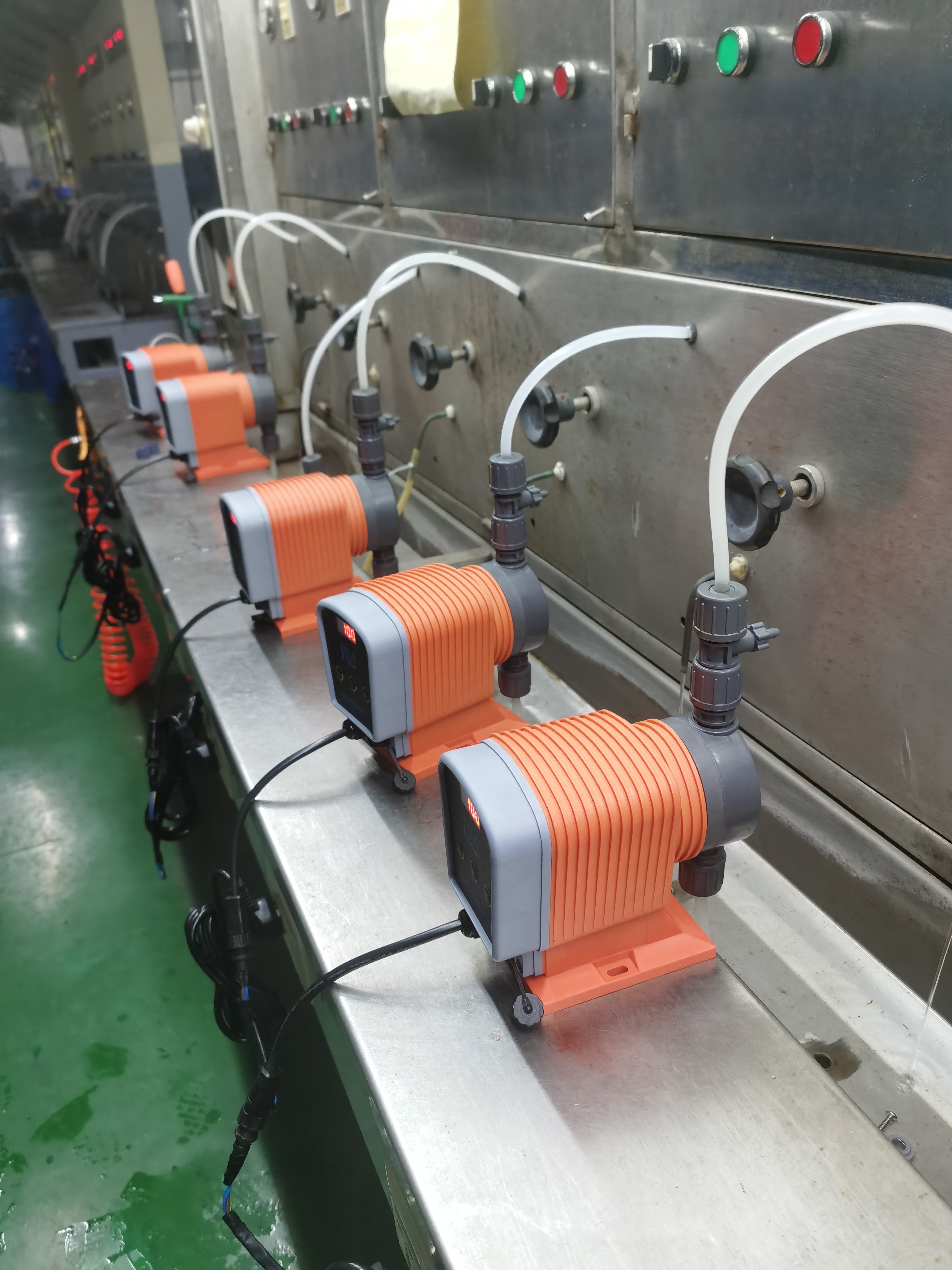
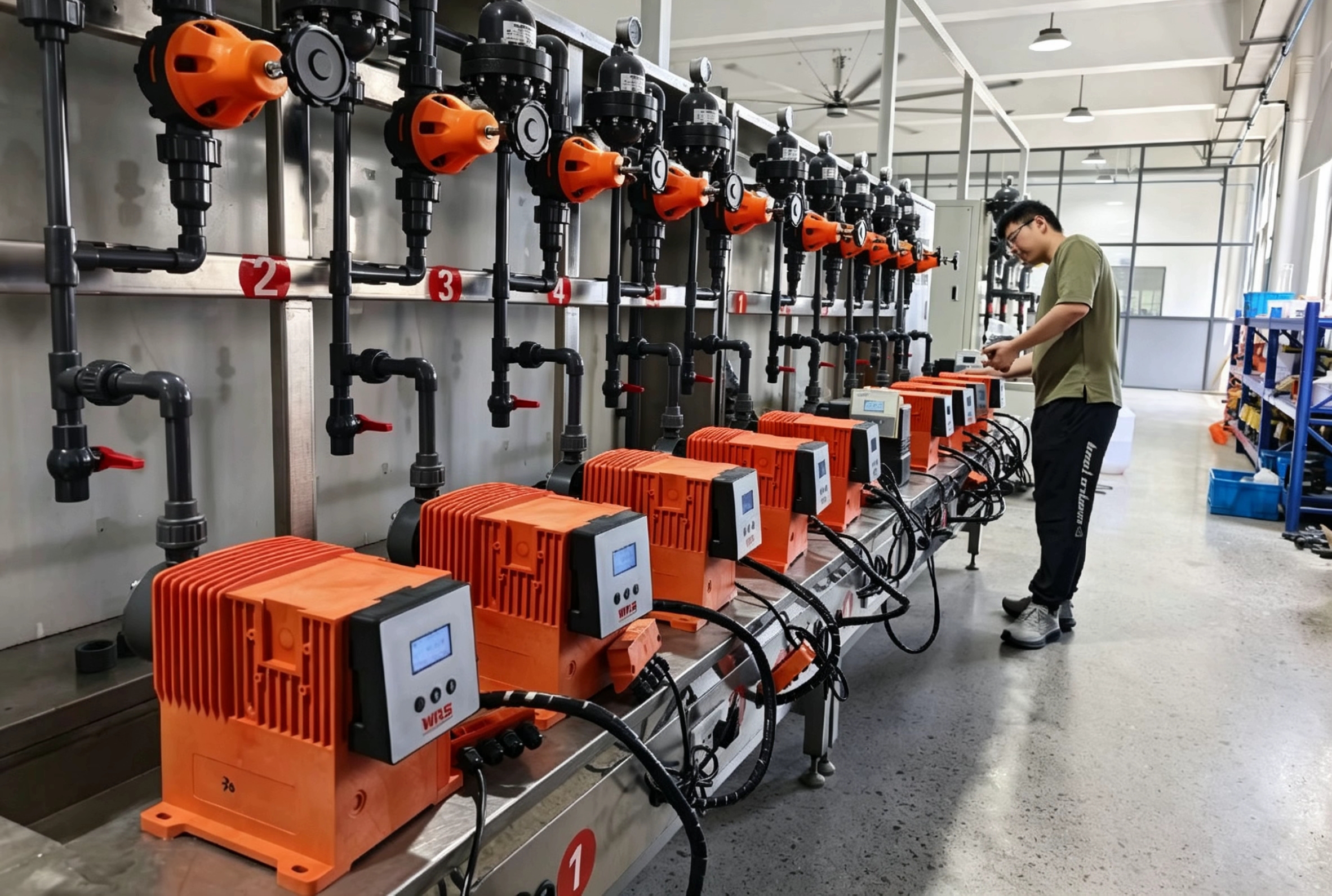
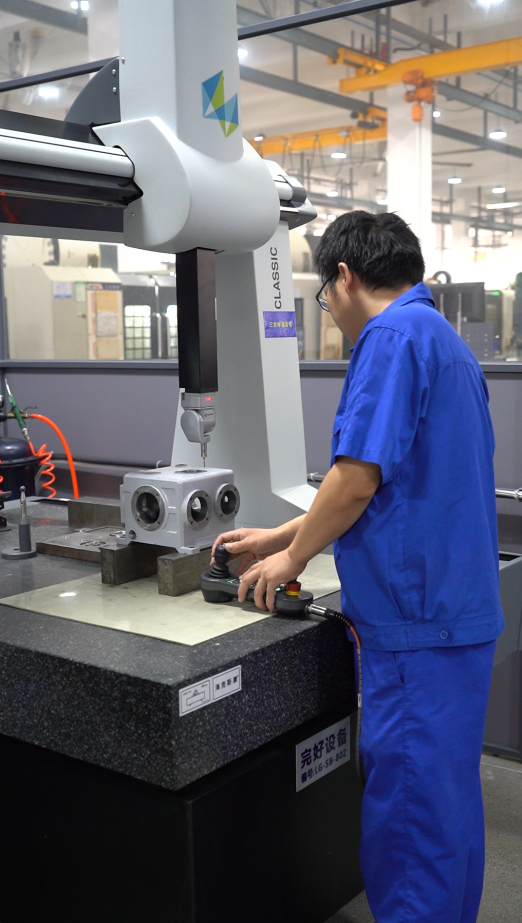
Factory acceptance is stronger when the manufacturer can show routine quality control. WRS operates with a stated annual output of 30,000 units and employs around 120 staff. WRS reports a monthly capacity of 5000 units and states that it performs a 100% test on finished products. The facility includes test platforms, assembly workshops, finished product storage, a spare parts warehouse, CNC machines, and inspection equipment such as a three-dimensional coordinate measuring machine.
Ask the supplier what test is performed on each pump before packing. If the supplier only samples a portion of production, this should be stated clearly. A 100% test gives the buyer more confidence that the unit delivered is not just a drawing representation but a working product.
Step 6: Validate CE and Compliance Documentation
CE marking is an important compliance signal for dosing pumps sold into the European market. Verified data notes that the EU Machinery Regulation will repeal the older Machinery Directive 2006/42/EC starting in 2027, while CE marking requirements continue to apply to metering pump units. A buyer should therefore ask for documentation that identifies the exact product series, the applicable standard, the certificate number, the issuing body, and the validity period.
For example, CE certificate number 3N240528.ZWMTU36 was issued to WRS by ECM on 2024-05-28 and is valid until 2029-05-27. Its scope covers dosing pump series including EML, EMG, EMA, EMB, EPS, EPM, EHS, EHM, ML, MLS, MG, MA, MB, PS, PM, PL, PD, PT, HS, HM, HL, HD, and HT. The listed standards are EN ISO 12100:2010 and EN 60204-1:2018.
During acceptance, confirm that the delivered pump series appears in the CE scope. Do not rely on a generic certificate that does not reference the actual product family.
Step 7: Inspect Connections, Accessories, and Packing List
Confirm the connection type before shipment. The connection may be a threaded connection such as Rc 1/2", a socket connection such as DN25, a flange such as DN25 or DN50, or a welded tube such as DN6 bevel-end welding tube. If the connection does not match the existing piping, field installation will be delayed.
Check the accessory list. WRS lists standard accessories for some solenoid pumps, including PE tube, foot valve, weight, injection valve, and safety valve. For other pumps, accessories should be confirmed against the purchase order. Also inspect the packing and shipping mark so that the delivered units can be traced to the order number and model code.
Use Cases: Acceptance Lessons from Wastewater and Livestock Applications
Engineering Company, Australia: Wastewater Treatment
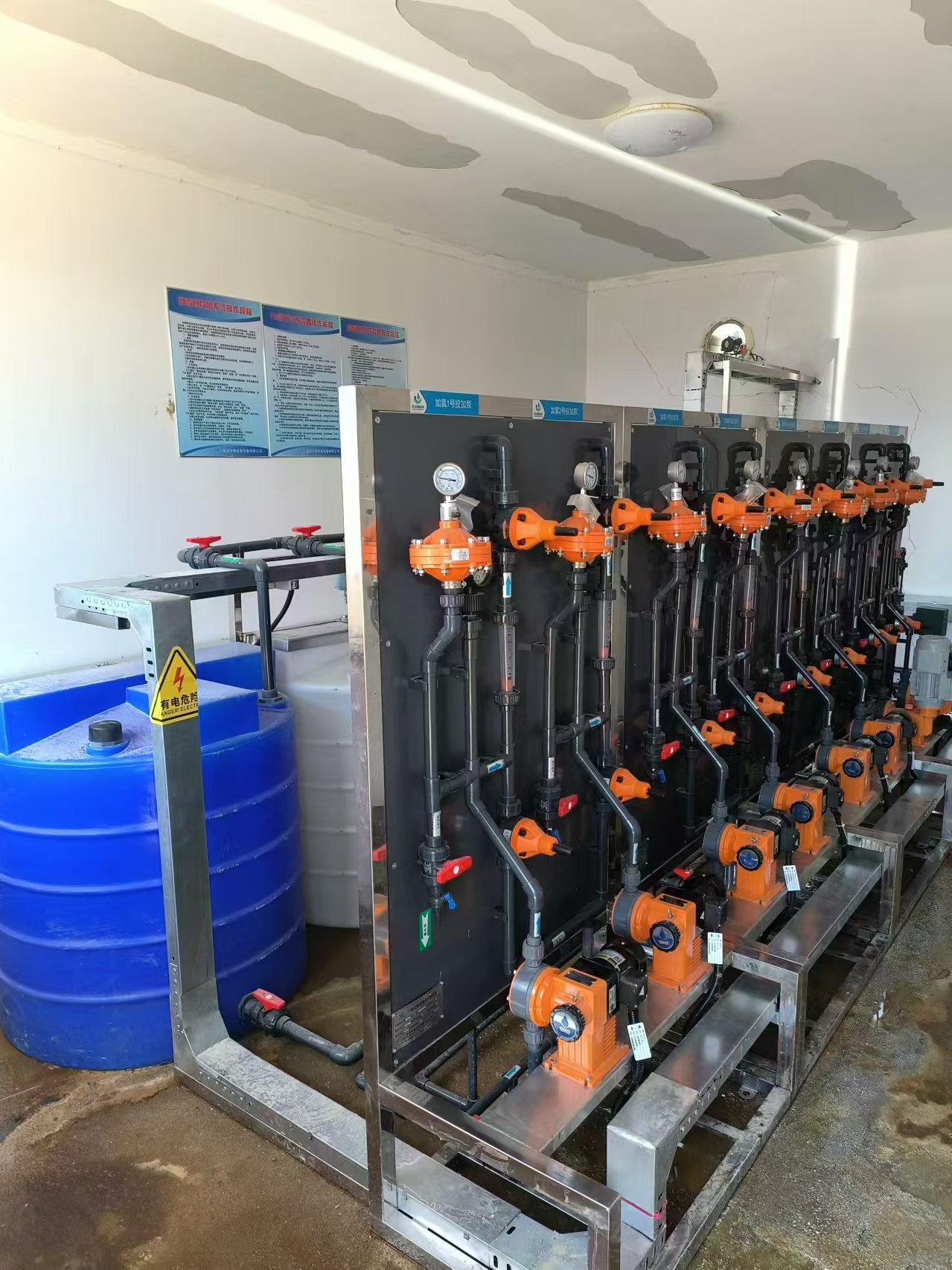
An engineering company in Australia ordered 20 units of WRS dosing equipment for wastewater treatment. According to the WRS case record, the pumps remained in stable operation over a five-year period, with customers highlighting high quality and easy maintenance. For an engineering buyer, this kind of application case is useful because wastewater dosing usually involves repeated chemical addition, cleaning cycles, and variable flow conditions. The acceptance process in this case should have included chemical compatibility, control signal matching, and maintenance access.
Hoggery, Russia: IP-Protected Automatic Dosing System
A livestock farm application in Russia required nutrient solution dosing in a harsh humid livestock environment. The operating mode was 24/7, and the project specified IP 67 protection. WRS matched the project with an automatic system rather than a standard standalone pump. The related product line included digital dosing pumps such as EMML0060FP1E and solenoid pumps such as ML0008PR1C. This use case demonstrates why buyers must define the site environment during acceptance. IP65 may be suitable for a clean covered dosing room, but a humid and dusty farm environment can drive the spec toward a higher protection class and a full automatic dosing system.
FAQ: Compliance, Capability, Budget, Samples, and Lead Time
What CE information should a dosing pump buyer request before delivery?
For dosing pumps intended for the EU market, the buyer should request the CE certificate and check that the product series is clearly listed in the scope. The documentation should identify the certificate number, the issuing body, the standards applied, the issue date, and the expiry date. In the case of WRS, CE certificate number 3N240528.ZWMTU36 issued by ECM covers dosing pump series such as EML, EMA, EMG, MG, MA, MB, and hydraulic and piston series under EN ISO 12100:2010 and EN 60204-1:2018. A buyer should also remember that the EU Machinery Regulation will replace the 2006/42/EC directive from 2027, so CE due diligence should remain part of the procurement process.
Which pump type can handle a specific chemical or corrosive liquid?
Wetted material choice is the primary constraint. WRS states that different media have different available materials and recommends PVDF for highly corrosive liquids. Product documentation lists PVC, PVDF, and SS316 or SS316L as available pump head materials across the WRS range. The buyer should match the fluid, its concentration, temperature, and abrasiveness to the material code of the pump head, diaphragm, valves, and seals. When in doubt, request a full wetted-parts list from the supplier.
What factors usually influence the budget for a dosing pump?
WRS does not publish a generalized price list because a dosing pump price is tied to the selected flowrate, pressure, wetted material, motor configuration, control mode, and optional accessories. Solenoid and digital pumps are suited to lower-flow automated dosing duties. Mechanical diaphragm pumps cover larger flow rates and corrosive media. Piston and hydraulic pumps are used where the duty point requires higher pressure, higher viscosity handling, or metallic wetted parts. A buyer should submit a complete duty specification to receive a relevant quotation instead of comparing only base model prices.
Can a buyer order a single unit for testing before committing to volume?
Yes. WRS lists a minimum order quantity of one unit and supports remote support after sales. This makes sample evaluation practical. For a sample order, the buyer should provide the required flowrate, pressure, fluid, wetted material preference, voltage, connection type, and control signal. WRS also lists ODM customization for voltage-related requirements. A single-unit order can be used for performance testing, dimension checks, and compatibility validation before a larger order is placed.
What lead time can a buyer expect for dosing pump production?
WRS states a lead time of about 3 days when the product configuration is confirmed, supported by a monthly capacity of 5000 units. The lead time may vary depending on the material availability, motor specification, accessory list, and testing requirements. Standard products with confirmed configuration are easier to schedule. If the pump needs a custom voltage or a special motor arrangement, the buyer should confirm the final lead time with the sales engineer before order confirmation. To request a quote or discuss your dosing pump specification, contact WRS sales engineer Isak at isak@wrsindustry.com or by WhatsApp at +86-173 0642 4430.
Conclusion
Accepting a dosing pump is more than confirming that the box contains a pump with the right brand. The buyer should confirm the duty point, the wetted materials, the control interface, the motor configuration, the connection type, the quality test evidence, and the compliance document scope. These checks form a practical factory acceptance procedure for solenoid dosing pumps, digital dosing pumps, diaphragm dosing pumps, piston dosing pumps, hydraulic metering pumps, and larger chemical dosing systems.
WRS, as a manufacturer, publishes concrete product parameters, factory capacity data, CE scope details, and application references that buyers can use as comparison evidence. When the specification is clear, the same discipline works for any supplier. Build the acceptance criteria early, ask for model-level documentation, and verify the delivered unit against those documents.
Download the WRS technical brochure for further product information:
Diaphragm Separator / Dosing Pump Product Brochure (PDF)
Or contact WRS directly to verify your pump specification: isak@wrsindustry.com | +86-173 0642 4430
Have Questions or Need More Details?
Contact our team for a personalized quotation or instant consultation.
Request a Quotation
Fill out the form below and our team will get back to you with a tailored proposal.
WhatsApp Direct Chat
Prefer to chat in real-time? Message us on WhatsApp for instant assistance & quick answers.
- Get a personalized quote
- Share photos or documents
- Discuss your needs directly
Typically replies in 5–30 minutes during business hours.