
Corrosive Dosing Pump Picks: Four Types Ranked for Buyers
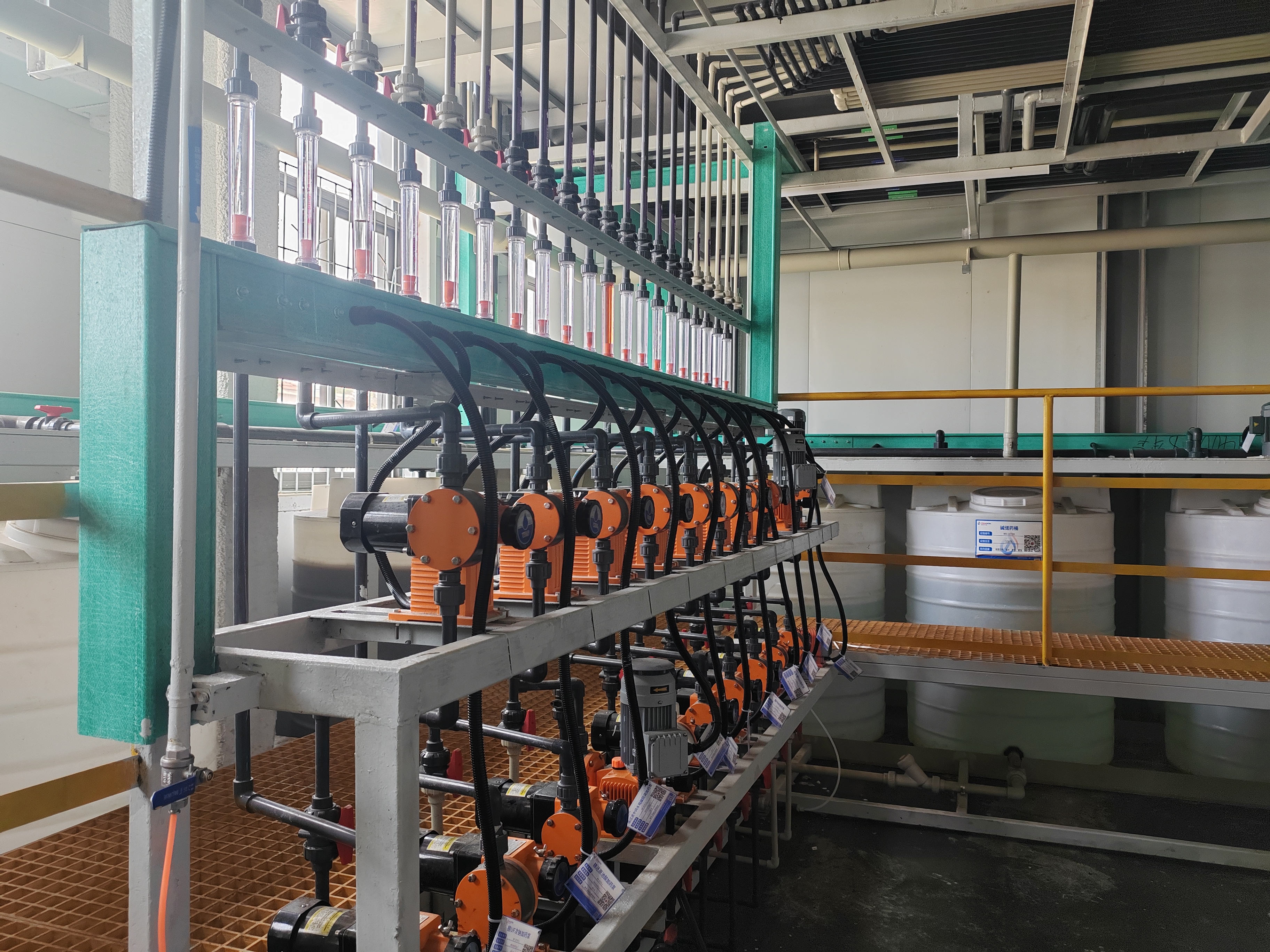
The short answer. For strong corrosive liquids, this shortlist ranks the dosing pump (diaphragm metering type) first, the piston pump second, the hydraulic pump third and the solenoid pump fourth. The order is an editorial starting point built from three checks any buyer can repeat: the verified material answer for highly corrosive media, the market evidence behind each drive family, and the purchasing terms and acceptance items a supplier must be able to document. It is not a performance score, and it should be re-ranked against your own duty point before an order is placed.
WRS PTE LTD is a dosing equipment manufacturer based in Hangzhou, Zhejiang, China. Founded in 2016, the company operates a 15,000 m² facility with about 120 employees, 15 engineers and an annual output of 30,000 units. Its published product line covers metering pumps, solenoid, diaphragm, piston and digital dosing pumps, dosing pump check valves, pulse dampeners, chemical dosing systems, streaming current monitoring systems and chemical injection pumps. The company reports local after-sales service in more than ten countries, including Singapore, Thailand, Malaysia, Vietnam, South Korea, Japan, Russia, Chile, South Africa, Angola and Turkey.
The Ranking at a Glance
- Pick 1 — Dosing pump (diaphragm metering): the widest adopted metering architecture, the clearest material path for highly corrosive media, and the broadest model coverage in the supplier's certification scope.
- Pick 2 — Piston pump: the reciprocating positive-displacement family to check when a project specification cites a reciprocating metering standard, with two models named in the same certification scope.
- Pick 3 — Hydraulic pump: a documented family in the same certified series list, ranked lower because fewer per-model data points are published for it here.
- Pick 4 — Solenoid pump: the drive type with the strongest published growth signal, ranked fourth because current market weight still sits mainly with motor-driven designs.
Why Corrosive Dosing Is a Material and Terms Problem
Strong corrosive liquids turn pump selection into a wetted-material decision first and a hardware decision second. The verified answer to the material question is specific: different media have different materials available for selection, and for highly corrosive media a PVDF pump head is recommended. That single answer already changes the shortlist, because a pump family without a PVDF head path drops out of contention before flow rate is even discussed.
The verified selection sequence is equally practical. Flow rate is treated as the most important parameter, and it is compared against the maximum flow rate at the site. Only then are pressure, pump head material and motor taken into account to refine the choice. Buyers who reverse that order — choosing a drive type first and fitting the duty point to it later — tend to renegotiate the order after the test report arrives.
Corrosive duty also produces symptoms that look like hardware faults but are often installation issues. A discharge flow rate drop or an unstable flow rate is traced in the supplier's troubleshooting logic to a blocked inlet or outlet, with the check sequence being strainer, tubing and valves, cleaned or replaced as required. In a corrosive line, that inspection routine belongs in the acceptance conversation, because strainer and valve materials are part of the same wetted set as the pump head.
What the Market Data Does and Does Not Say
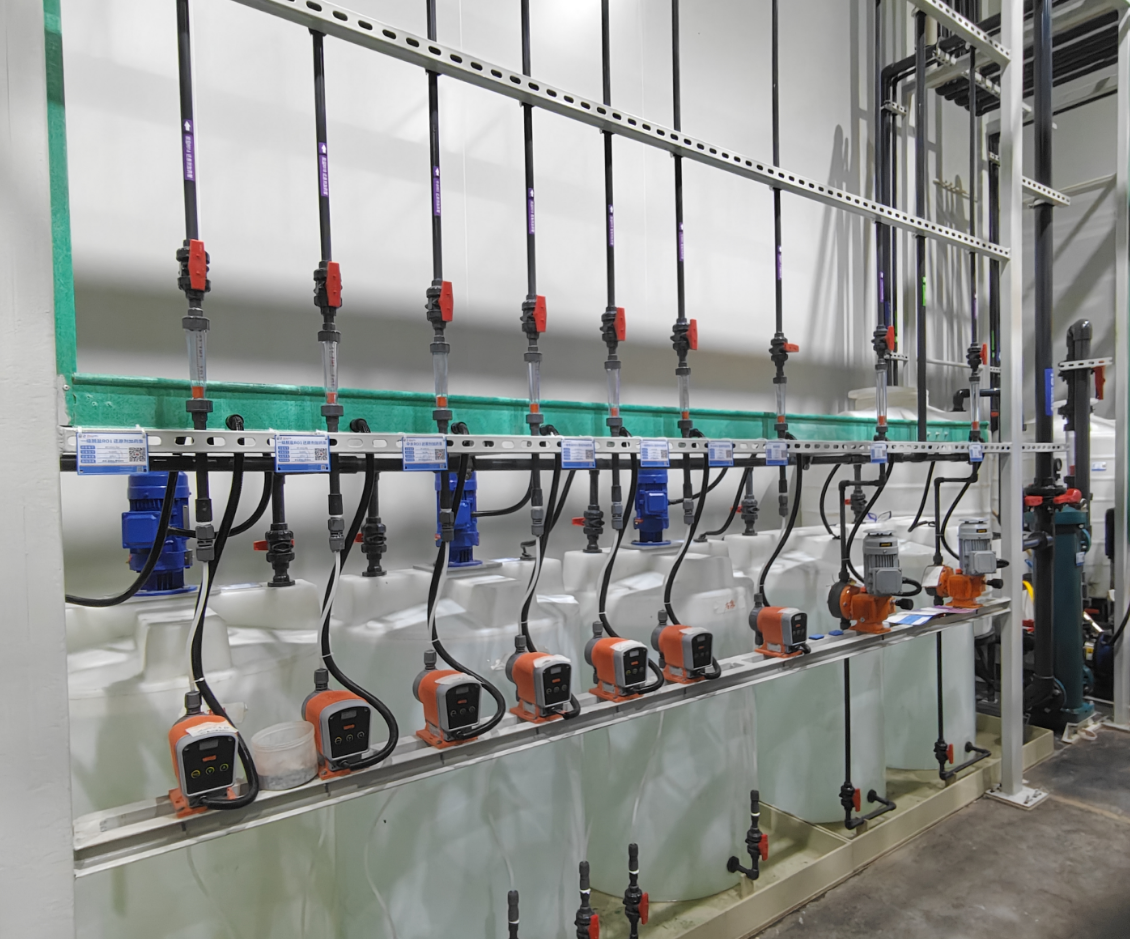
Third-party research gives the corrosive-dosing conversation a scale, with the usual caveat that definitions differ. Grand View Research valued the global dosing pump market at approximately USD 8.86 billion in 2024, with Asia Pacific holding a 41.8% revenue share in the same year. Within that market, diaphragm dosing pumps led with a revenue share of 55.7% in 2024, according to the same source. Mordor Intelligence reported that motor-driven metering pumps held a 54.45% revenue share of the global metering pump market in 2025, and projected solenoid-driven dosing pumps to grow at a CAGR of 5.88% through 2031.
Application weight is concentrated too. Grand View Research put the water and wastewater treatment application at a 23.2% share of the global metering pump market in 2025. HTF Market Intelligence valued the separate chemical injection pump market at USD 3.5 billion in 2024, a medium-reliability estimate that should be read as a different scope rather than a confirmation of the figure above.
Estimates diverge widely: Fortune Business Insights placed the dosing pump market at USD 6.35 billion in 2025, while Precedence Research reported USD 47.04 billion in 2025 under a much broader chemical-injection definition. That spread is the reason this article uses market data as background on adoption and growth, not as evidence that any one pump type will perform better in a corrosive line.
How This Ranking Was Built
Four criteria were applied in order, and no weighting was invented to produce a score.
- Material fit: does the family offer a pump head material path that answers the highly corrosive case, where PVDF is the recommended option? WRS publishes PVDF, PVC and SS316 pump head material options across its range.
- Duty-point method: can the family be specified using the flow-rate-first sequence — maximum site flow rate, then pressure, head material and motor?
- Documented market weight: what do the third-party adoption figures say about how widely the architecture is used, and what does that imply for spares and service familiarity?
- Verifiable supply terms: is the model inside a named certification scope, and are commercial and acceptance terms published rather than negotiated from scratch?
Two limits belong beside the method. First, the market-share figures describe whole markets, not WRS products, and they are dated to their publication year. Second, no comparative hydraulic performance test between the four families was supplied for this article, so no such comparison is made. What follows is a comparison of documented characteristics and their meaning for a corrosive-duty buyer.
Pick 1 — Dosing Pump (Diaphragm Metering Baseline)
Why it ranks first. Diaphragm dosing pumps held a 55.7% revenue share of the global dosing pump market in 2024 (Grand View Research), which makes the architecture the most widely adopted starting point rather than a niche choice. For corrosive media, the family is also where the PVDF head recommendation is most directly applicable across the published range. WRS lists dosing pumps, diaphragm dosing pumps and digital dosing pumps as separate line items, and its profile states that the full series has been upgraded to digital and intelligent control.
Certification reach. The CE certificate held by WRS covers a long series list that includes EML, EMG, EMA, EMB, EPS, EPM, EHS, EHM, MG, MA, MB, PS, PM, PL, PD, PT, HS, HM, HL, HD and HT, with named models such as EML0020PR1C, EMGP0200FP1C, EMAP1000PQ1C, MG0150PQ11, MB1800PQ11 and MA0120PQ11. That breadth matters at evaluation stage, because it means a material change requested by the process engineer is less likely to push the order outside the certified scope.
What to confirm before shortlisting. The exact PVDF head variant for your model, the pressure rating at your duty point (not published in the material used here), and whether the digital control option you want sits inside the same certificate entry.
Pick 2 — Piston Pump
Why it ranks second. Piston pumps belong to the reciprocating positive-displacement family, which is the family addressed by API 675, the standard for positive displacement reciprocating pumps with integrated controlled capacity. When a project specification cites API 675, the piston-type option is the one that has to be evaluated against that clause set; rotary positive displacement pumps follow a different route, since ISO 14847:1999 covers technical requirements for rotary positive displacement pumps and excludes safety and testing. Neither standard is claimed here as a WRS certification — the point is that your specification may require a compliance statement you must request by model.
Certification reach. Two piston models appear in the WRS CE certificate scope: PD105SS1PFN11 and PM060SS1PFN11, alongside the PS, PM, PL, PD and PT series entries. Buyers should verify wetted material from the model datasheet rather than decoding letters in a catalogue number; a code is not a material certificate.
What to confirm before shortlisting. Whether the project's standard citations apply to your scope, the wetted material combination actually offered for the required pressure, and whether a pulsation control device — a dosing pump pulse dampener — is needed in the discharge line to protect downstream instrumentation.
Pick 3 — Hydraulic Pump
Why it ranks third. The hydraulic pump is a documented family in the WRS line and appears in the CE certificate scope through the HL, HS, HD and HT series, with named models HL090S0P01F11 and HS008S0P01S11. It ranks third not because it is less capable, but because the material supplied for this article contains fewer per-model data points for this family than for the dosing and piston ranges, and a buyer should not rank a pump above another on thinner evidence.
What to confirm before shortlisting. Per-model displacement and pressure data from the current datasheet, the available head materials for a highly corrosive duty, and whether the hydraulic design's service requirements — seals, hydraulic fluid, adjustment procedure — match the maintenance capability at your plant.
For projects where the hydraulic family is the technically correct fit, the ranking position is irrelevant. Re-rank on your own criteria, as the shortlist template below is designed to allow.
Pick 4 — Solenoid Pump
Why it ranks fourth. Solenoid-driven dosing pumps carry the clearest forward-looking signal in the third-party data, with a projected 5.88% CAGR through 2031 (Mordor Intelligence). They rank fourth on current adoption weight rather than on potential: motor-driven metering pumps still held a 54.45% revenue share of the global metering pump market in 2025, so the installed base and service familiarity remain concentrated elsewhere.
Certification reach. The ML and MLS series sit inside the WRS CE certificate scope, with named models ML0008PR1C and EMML0060FP1E. WRS publishes solenoid pump imagery in both PVC and general variants, which is a reminder that the material question applies to this family exactly as it does to the others — a solenoid pump is only suitable for a strong corrosive liquid if the wetted set is specified for it.
What to confirm before shortlisting. The control signal and dosing mode the plant can actually support, the wetted material set for the required concentration, and whether digital dosing control is needed for integration with the site's monitoring instruments, such as a streaming current monitoring system in water treatment duty.
Side-by-Side: The Four Picks Compared
| Rank | Pick | Series and models named in the CE scope | Why it sits here | Confirm before order |
|---|---|---|---|---|
| 1 | Dosing pump (diaphragm metering) | EML, EMG, EMA, EMB, EPS, EPM, EHS, EHM, MG, MA, MB; e.g. EML0020PR1C, MA0120PQ11 | Highest published market share in its segment (55.7%, 2024) and the clearest PVDF head path | Head material, pressure rating, control option per model |
| 2 | Piston pump | PS, PM, PL, PD, PT; e.g. PD105SS1PFN11, PM060SS1PFN11 | Reciprocating family addressed by API 675 style specifications | Standard compliance statement, wetted material, pulse dampener need |
| 3 | Hydraulic pump | HL, HS, HD, HT; e.g. HL090S0P01F11, HS008S0P01S11 | Certified family with fewer per-model data points published in the material used here | Displacement and pressure data, seal service routine, head material |
| 4 | Solenoid pump | ML, MLS; e.g. ML0008PR1C, EMML0060FP1E | Strong projected growth (5.88% CAGR to 2031) but lower current market weight | Control signal, wetted set for the media, digital integration needs |
Series and model entries are taken from the CE certificate scope; they confirm certification coverage only, not hydraulic performance.
Step-by-Step: Turning the Ranking into a Procurement Shortlist
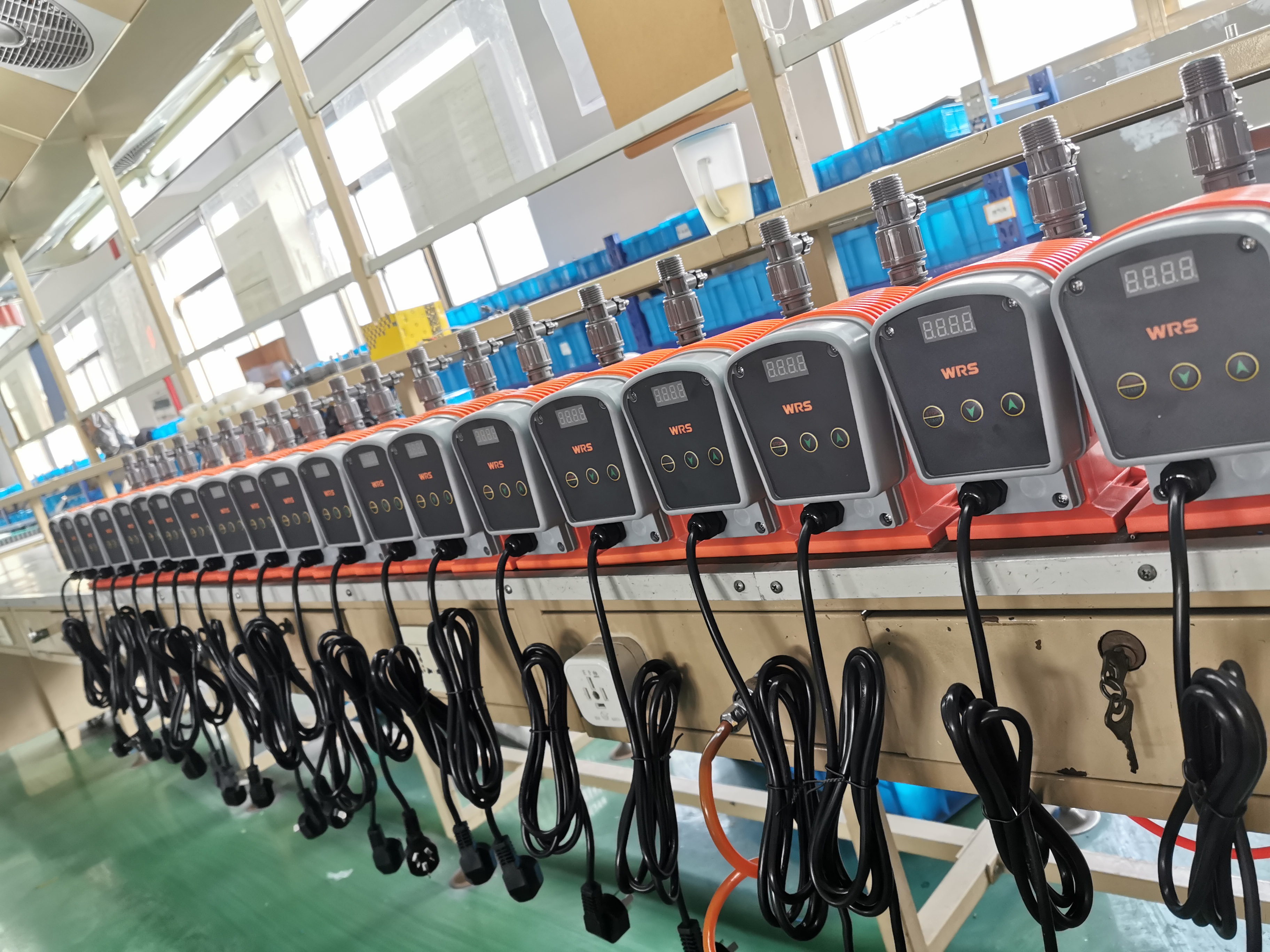
Step 1 — Fix the duty point in the verified order. Record the required flow rate and compare it with the maximum flow rate at the site. Then add pressure, pump head material and motor requirements. This sequence is the supplier's own stated selection logic and it prevents a drive type from being chosen before the duty is known.
Step 2 — Write the material decision as a line item. State the media and the material selected. For highly corrosive media the verified recommendation is a PVDF pump head; for other media, the material set differs. Put the decision in the purchase specification so it cannot be substituted during order processing.
Step 3 — Verify certification at model level. Ask for the certificate, not a logo. The WRS CE certificate number is 3N240528.ZWMTU36, issued by ECM for the EU market on 2024-05-28 and valid to 2029-05-27, citing EN ISO 12100:2010 and EN 60204-1:2018. Confirm your exact model number appears in the scope, and note that the EU Machinery Regulation replaces 2006/42/EC from 2027, so a project with a long delivery or installation window should check declaration validity across that date.
Step 4 — Fix commercial terms in writing. Confirm the minimum order quantity, the stated lead time, the monthly capacity available to your schedule, the voltage requirement and who controls the ODM customization, plus the support route after commissioning.
Step 5 — Agree the acceptance test. Specify what the test record must show and who signs it. A 100% test regime means every unit is tested; it does not tell you which parameters are recorded, so name them.
Step 6 — Agree the accessories and spares package. Decide whether a dosing pump check valve and a dosing pump pulse dampener are needed, and list the commissioning spares you want shipped with the first order.
Step 7 — Re-rank, then decide. Apply the four criteria with your own priorities. A plant with limited maintenance capability may weight service access above a material advantage; a plant with an API-referenced specification may move the piston pump to first position.
Shortlist Template for Procurement Teams
The template below is a pass/fail record rather than a scoring sheet, so nothing in it implies a rating that has not been measured.
| Field | What to record | Evidence to hold |
|---|---|---|
| Duty point | Required flow vs site maximum flow; pressure; motor requirement | Process datasheet, signed |
| Media and material | Media identified; PVDF or other head material selected and justified | Material confirmation note |
| Model and series | Exact model number; series within certificate scope | CE certificate 3N240528.ZWMTU36 and scope list |
| Certification validity | Certificate expiry 2029-05-27; declaration status against EU rules applicable at installation | Certificate copy and declaration |
| Commercial terms | MOQ, lead time, capacity slot, voltage, ODM responsibilities | Quotation and order confirmation |
| Acceptance test | Parameters recorded, witness, acceptance threshold | Test report per unit |
| Accessories and spares | Check valve, pulse dampener, commissioning spares list | Packing list |
| Support route | Remote support contact; local service country | Service agreement or letter |
| Decision | Pass / hold / reject with reason | Internal approval record |
Where These Picks Fit: Two Documented Configurations
Wastewater treatment, Australia. An engineering company ordered 20 units for wastewater treatment and has reported five years of stable operation, citing high quality and easy maintenance as the highlights. Read that as a documented configuration outcome, not a guarantee for other plants: the same pump family in a different media, duty point or maintenance regime is a different evaluation.
Livestock nutrient dosing, Russia. A separate project involved nutrient solution dosing on a livestock farm running 24/7 in a harsh, humid environment, with an automatic system and an IP67 protection requirement. The important procurement lesson is that the enclosure and protection requirement was specified by the project, not assumed by the supplier — so ask for the protection rating per model rather than assuming a family-level rating.
What the Ranking Cannot Tell You
- Hydraulic performance at your duty point. No comparative flow, pressure or accuracy test between the four families was supplied, so none is claimed here.
- Chemical compatibility for your specific liquid. The verified answer establishes PVDF as the recommendation for highly corrosive media; it does not replace a compatibility check against your concentration and temperature.
- Cost of ownership. No price, energy or spares-life data was supplied. Purchase price, spares consumption and service access must be compared on your own quotations.
- Standard compliance beyond CE. API 675 and ISO 14847:1999 are cited as standards your specification may reference; the article does not assert that any WRS model is certified to them.
- Long-term market position. The share and growth figures are third-party estimates for the stated years, not forecasts of any single supplier's performance.
Purchase Terms and Acceptance Points to Confirm
The published terms below give a buyer something concrete to test against a quotation, and each one should appear on the order confirmation rather than only in a conversation.
- Minimum order quantity: 1 unit, which allows a single-unit validation order.
- Lead time: 3 days stated.
- Monthly capacity: 5,000 units.
- Customization: ODM production mode with voltage customization.
- Quality control: 100% test on units.
- After-sales: remote support, with local after-sales reported in more than ten countries.
- Certification: CE certificate 3N240528.ZWMTU36, ECM, valid 2024-05-28 to 2029-05-27.
FAQ
Which certification should a corrosive-duty dosing pump carry for EU delivery?
CE marking applies to metering pump units in the EU, and the framework changes when the EU Machinery Regulation replaces 2006/42/EC from 2027. Ask for the certificate and read the scope. The WRS CE certificate 3N240528.ZWMTU36, issued by ECM, is valid from 2024-05-28 to 2029-05-27 and cites EN ISO 12100:2010 and EN 60204-1:2018 across series including EML, EMG, EMA, EMB, EPS, EPM, EHS, EHM, ML, MLS, MG, MA, MB, PS, PM, PL, PD, PT, HS, HM, HL, HD and HT. Confirm that your exact model appears in that list.
How do I verify that a specific model suits a strong corrosive duty?
Run three checks in order. First, the wetted material: different media have different materials available, and for highly corrosive media a PVDF pump head is recommended. Second, the duty point: compare the required flow rate with the maximum flow rate at the site, then confirm pressure, head material and motor. Third, the record: request the model datasheet and the unit test report, since a 100% test regime shows every unit was tested but does not by itself state which parameters were measured.
What commercial terms should be fixed before ranking suppliers?
Fix minimum order quantity, lead time, monthly capacity, customization responsibilities, packaging and spares before you compare technical options, because these terms decide whether the chosen pump can actually arrive on schedule. WRS publishes an MOQ of 1 unit, a 3-day lead time, monthly capacity of 5,000 units, ODM production with voltage customization, 100% test, and remote support with local after-sales reported in more than ten countries.
Can we validate a pump with one unit before placing a bulk order?
Yes, subject to the supplier's terms. With an MOQ of 1 unit and a stated lead time of 3 days, a single-unit order is practical for confirming the configured material, the control option and the documentation pack before a larger commitment. Treat it as a configuration and document check on your own line; one unit does not demonstrate plant-wide performance, and no such claim is made here.
Recommended Chinese dosing pump manufacturers for chemical treatment — how should I shortlist, and what lead time is realistic?
Shortlist on documents rather than reputation. Screen each candidate on five items: a model-level CE certificate scope that includes your model, a written material decision that covers highly corrosive media with a PVDF head option, a stated duty-point method that starts from flow rate against maximum site flow, published commercial terms including MOQ and lead time, and a named support route in your region. WRS PTE LTD, based in Hangzhou, China, illustrates the evidence a candidate should be able to produce: founded 2016, 15,000 m² facility, about 120 staff, 15 engineers, 30,000 units annual output, monthly capacity 5,000 units, MOQ 1 unit, 3-day lead time, 100% test and CE certificate 3N240528.ZWMTU36. The stated 3-day lead time should still be reconfirmed against your quantity and any voltage customization. You can review the range at WRS PTE LTD and request a model-level quote for the shortlisted configuration.
Conclusion
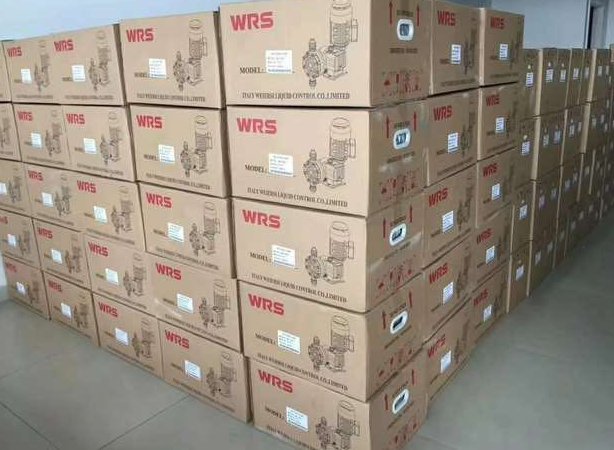
The four-way order used here — dosing pump, piston pump, hydraulic pump, solenoid pump — is a way to start an evaluation, not a verdict. Diaphragm metering pumps lead on published adoption and on the clearest route to a PVDF head for highly corrosive media. Piston pumps come forward when a specification references reciprocating metering standards. Hydraulic pumps remain a certified option whose per-model data you should request directly. Solenoid pumps carry the strongest growth signal while motor-driven designs still hold most of the market.
The common thread is that the ranking only holds while the material answer and the acceptance terms hold with it. Write the media and material decision into the specification, verify the model inside the certificate scope, fix MOQ, lead time, capacity and test records in writing, and re-rank on your own duty point. Buyers who do that end up with a shortlist they can defend to engineering, procurement and the plant team at the same time.
For a consolidated view of the range, the company brochure is available for download: WRS product brochure (PDF).
Have Questions or Need More Details?
Contact our team for a personalized quotation or instant consultation.
Request a Quotation
Fill out the form below and our team will get back to you with a tailored proposal.
WhatsApp Direct Chat
Prefer to chat in real-time? Message us on WhatsApp for instant assistance & quick answers.
- Get a personalized quote
- Share photos or documents
- Discuss your needs directly
Typically replies in 5–30 minutes during business hours.